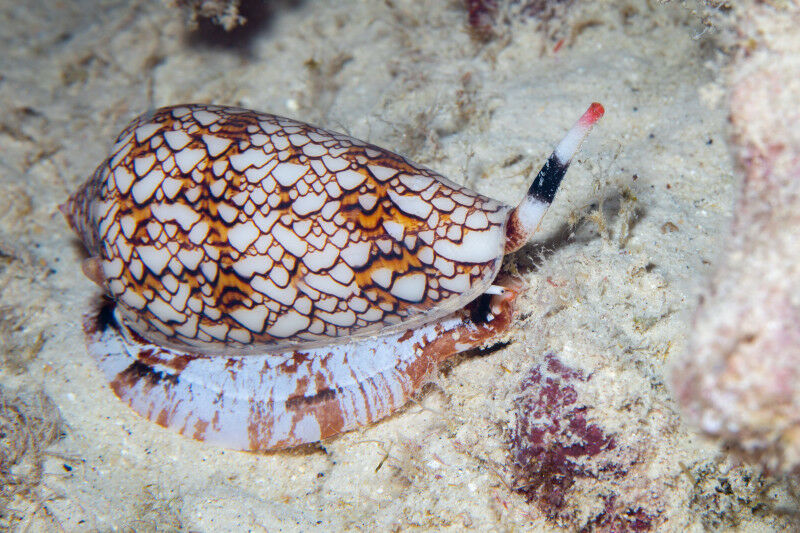
The deadly venom of a poisonous sea snail could hold the key to developing new medicines including more effective, less addictive forms of pain relief. A team led by researchers from the University of Glasgow is setting out to learn more about the unique form of venom produced by cone snails, predatory marine animals found in warm seas and oceans throughout the word. The cone snail's venom contains chemicals called conotoxins -highly potent neurotoxic peptides which it uses to paralyse its prey by blocking parts of their nervous systems. While that effect is often fatal to the cone snail's prey, modified peptides based on the venom could form the basis of future drugs capable of safely blocking pain receptors in the human body. While humans are rarely seriously injured by cone snails, there have been documented cases where stings from large cone snails have been fatal to people. Currently, there is no anti-toxin available, meaning that serious stings cannot be effectively treated. The researchers hope that their project could also help lead to the development of the first-ever treatments for conotoxin poisoning in the future.
TO READ THIS ARTICLE, CREATE YOUR ACCOUNT
And extend your reading, free of charge and with no commitment.