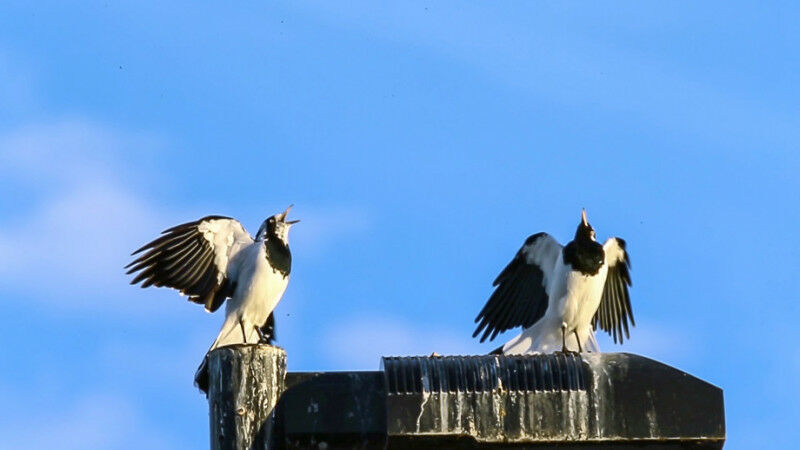
Magpie-lark pair duetting. Image: Pawel Rek.
Magpie-lark pair duetting. Image: Pawel Rek. A new study shows Australian magpie-larks may use a ventriloquial illusion to make their vocal duets more threatening. Co-author Professor Rob Magrath from The Australian University (ANU) said that during their duets, magpie-lark pairs coordinate loud calls and wing movements to use both audio and visual cues to communicate. Animals use a large variety of signals to communicate, with some species calling, while others use bright colours, flashy dance moves or seductive perfumes. "We found that the wing movement of magpie-larks helps to enhance duets by revealing where the sound is coming from," Professor Rob Magrath said. Co-author Dr Pawel Rek from the Adam Mickiewicz University and Visiting Fellow at ANU added that both male and female magpie-larks regularly sing, but when they become a mated pair they coordinate their songs to perform a duet.
TO READ THIS ARTICLE, CREATE YOUR ACCOUNT
And extend your reading, free of charge and with no commitment.