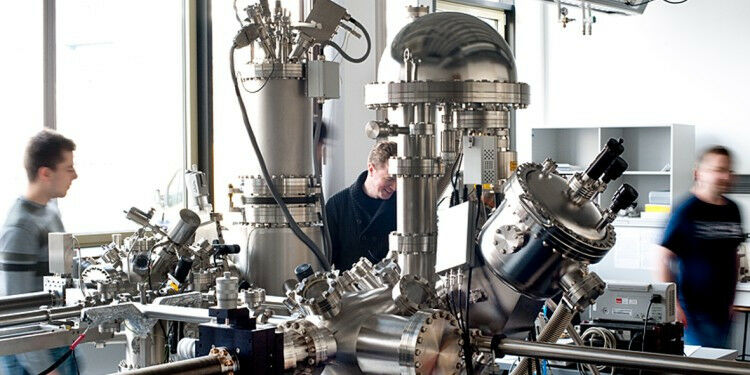
 Ultra-high vacuum system at the Center for Nanotechnology (CeNTech) with a low-temperature atomic force microscope which is operated at five Kelvin, connected to a setup for photoelectron spectroscopy.
Ultra-high vacuum system at the Center for Nanotechnology (CeNTech) with a low-temperature atomic force microscope which is operated at five Kelvin, connected to a setup for photoelectron spectroscopy. Mönig Fuel cells convert chemical reaction energy into electric power and heat. They are used, for example for the development of electric vehicles, in aviation and aeronautics or for sustainable energy supplies. During the conversion of energy, the catalytic reduction of oxygen plays an important role. Therefore, the development of efficient, inexpensive catalysts is extremely important. Researchers at the University of Münster have now made progress in the research field of single-atom catalysts. Together with colleagues at the Max Planck Institute of Colloids and Interfaces in Potsdam and at the University of Paderborn, they have developed a method which combines the atomic-scale characterisation directly with the electrochemical properties in the reduction of oxygen.
TO READ THIS ARTICLE, CREATE YOUR ACCOUNT
And extend your reading, free of charge and with no commitment.
Your Benefits
- Access to all content
- Receive newsmails for news and jobs
- Post ads