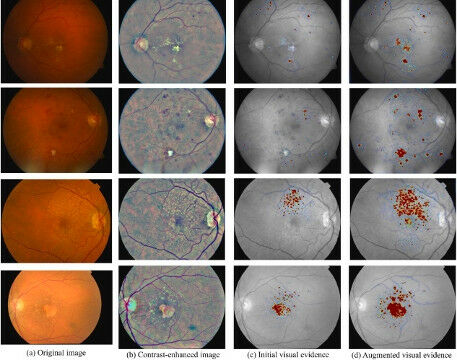
Visual evidence for AI-based grading of diabetic retinopathy (González-Gonzalo et al., 2020)
Visual evidence for AI-based grading of diabetic retinopathy (González-Gonzalo et al. As artificial intelligence continues to seep slowly into medical practices around the world, how can we bridge the gap between the systems being developed by research and industry, and the clinics, where take-up is not yet widespread? A team of University of Amsterdam researchers looking at the use of AI in ophthalmology believes the key lies in the trustworthiness of the AI, as well as in involving all relevant stakeholders at every stage of the production process. Their study, already available in an open access version, will soon appear in the prestigious publication Progress in Retinal and Eye Research. In ophthalmology there are currently only a small number of systems regulated and even those are very seldom used. Despite achieving performance close to or even superior to that of experts, there is a critical gap between the development and integration of AI systems in ophthalmic practice. The research team looked at the barriers preventing use and how to bring them down. They concluded that if the systems were finally to see widespread use in actual medical practice, the main challenge was to ensure trustworthiness.
TO READ THIS ARTICLE, CREATE YOUR ACCOUNT
And extend your reading, free of charge and with no commitment.