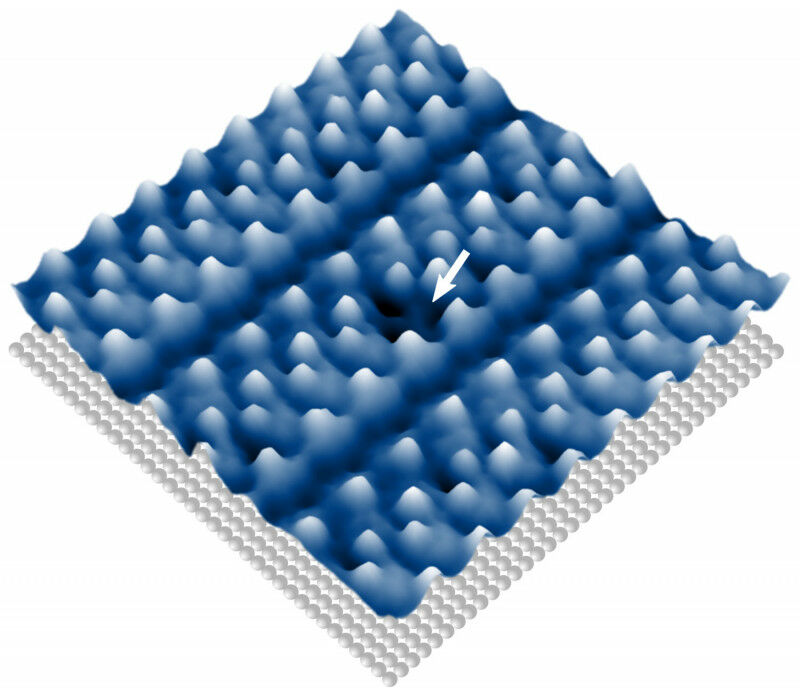
Topography of periodically arranged molecules on a silver surface. Photo: Ole Bunjes
Topography of periodically arranged molecules on a silver surface. Photo: Ole Bunjes Research team investigates reactivity of single molecules under controlled conditions Researchers around the world are working to develop efficient materials to convert CO2 into usable chemical substances. This is especially important in light of global warming. A team from the University of Göttingen and the Ulsan National Institute for Science, South Korea, has found a promising approach: Catalytically active molecules are anchored to a surface that serves as a conductive electron supplier. The molecules promote the chemical reaction. Such hybrid systems harness both the properties of the molecules and the properties of the support material. The results have appeared in the journal Science Advances .
TO READ THIS ARTICLE, CREATE YOUR ACCOUNT
And extend your reading, free of charge and with no commitment.