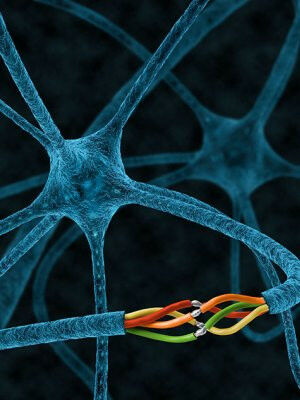
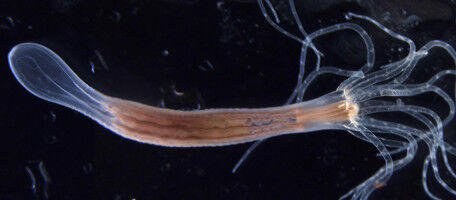
Injured axons of the nematode C. elegans and other invertebrate species are able to rejoin with their separated segments, preventing degeneration and restoring the original axonal tract in a process known as axonal fusion. Credit: Nick Valmas
Injured axons of the nematode C. elegans and other invertebrate species are able to rejoin with their separated segments, preventing degeneration and restoring the original axonal tract in a process known as axonal fusion. Credit: Nick Valmas Researchers at The University of Queensland have identified a molecule essential for regulating the repair of injured nerves, which could help people recover from nerve damage. The finding was made using the nematode worm C. elegans which has long been studied by researchers for its ability to self-repair nerve cells. Professor Massimo Hilliard and his team at UQ's Queensland Brain Institute (QBI ) have identified that the enzyme ADM-4 is an essential protein regulating the molecular glue, or fusogen, needed for nerve repair. "We have shown that animals lacking ADM-4 cannot repair their nerves by fusion," Professor Hilliard said. "ADM-4 must function within the injured neuron to stabilise the fusogen EFF-1 and allow the membranes of the separated nerves to merge. "An exciting part of this discovery is that ADM-4 is similar to a mammalian gene, opening up the possibility that one day we may harness this process in humans." Study first author, Dr Xue Yan Ho , said the nematode provided a great platform for these studies.
TO READ THIS ARTICLE, CREATE YOUR ACCOUNT
And extend your reading, free of charge and with no commitment.