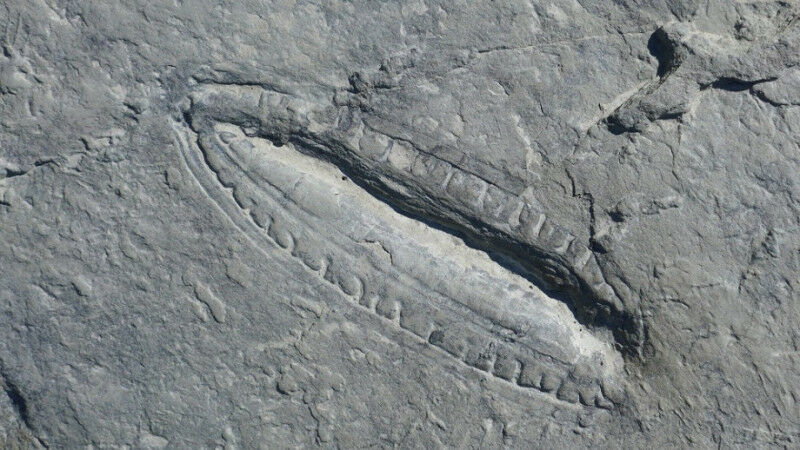
The ancient animal known as Kimberella. Photo: Dr Ilya Bobrovskiy
The ancient animal known as Kimberella. Photo: Dr Ilya Bobrovskiy - The contents of the last meal consumed by the earliest animals known to inhabit Earth more than 550 million years ago has unearthed new clues about the physiology of our earliest animal ancestors, according to scientists from The Australian National University (ANU). Ediacara biota are the world's oldest large organisms and were first discovered in the Ediacara Hills in South Australia's Flinders Ranges. They date back 575 million years. ANU researchers found the animals ate bacteria and algae that was sourced from the ocean floor. The findings, published in Current Biology , reveal more about these strange creatures, including how they were able to consume and digest food. The scientists analysed ancient fossils containing preserved phytosterol molecules - a type of fat found in plants - that remained from the animals' last meal. By examining the molecular remains of what the animals ate, the researchers were able to confirm the slug-like organism, known as Kimberella, had a mouth and a gut and digested food the same way modern animals do.
TO READ THIS ARTICLE, CREATE YOUR ACCOUNT
And extend your reading, free of charge and with no commitment.