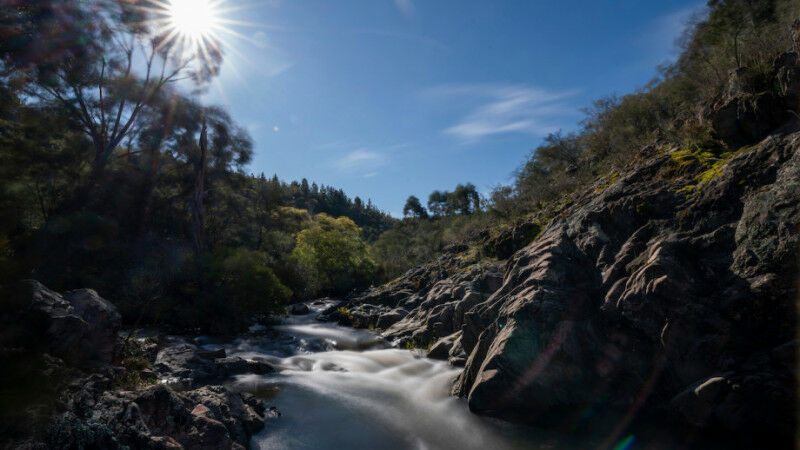
Condor Creek in the Uriarra Forest, ACT. Photo: Lannon Harley/ANU.
Condor Creek in the Uriarra Forest, ACT. Photo: Lannon Harley/ANU. The third La Niña year in a row intensified existing droughts in the Americas, while causing floods in parts of Asia and Oceania, according to a first-of-its-kind report released today by the Global Water Monitor Consortium, led by researchers at The Australian National University (ANU). The report found global warming is changing the water cycle across the planet, while also warning that events like flash droughts will become more frequent in the coming years. Lead author Professor Albert Van Dijk said the report offers a unique snapshot of global water availability. "Normally, it takes many months for this kind of data to be collected, collated, analysed and interpreted," Professor Van Dijk from the ANU Fenner School of Environment and Society said. "By making the best possible use of satellite instruments orbiting the Earth and by automating the whole data analysis and interpretation process, our team has been able to reduce that time to a few days." The group combined water measurements made at thousands of ground stations and by satellites to produce up-to-date information on rainfall, air temperature and humidity, soil water, river flows and the volume of water in natural and artificial lakes. Globally, in 2022 the water cycle was dominated by relatively warm ocean waters in the western Pacific and the eastern and northern Indian Ocean. As a result, a severe heatwave developed in South Asia early in the year, followed by a very wet monsoon that caused massive floods in Pakistan.
TO READ THIS ARTICLE, CREATE YOUR ACCOUNT
And extend your reading, free of charge and with no commitment.