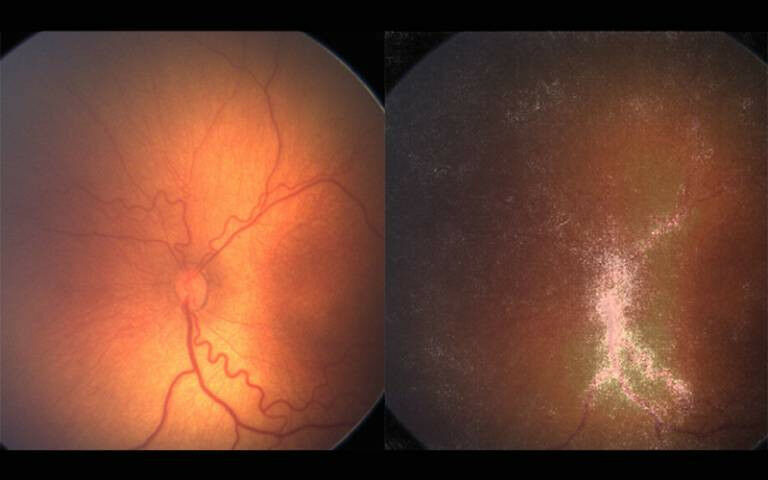
AI model for ROP - On the left, a photograph of the left retina of a neonate (newborn infant) with retinopathy of prematurity. The image on the right has an overlaid saliency map generated by the AI algorithm, which shows the parts of the image most influencing the algorithm decision-making.
AI model for ROP - On the left, a photograph of the left retina of a neonate (newborn infant) with retinopathy of prematurity. The image on the right has an overlaid saliency map generated by the AI algorithm, which shows the parts of the image most influencing the algorithm decision-making. An artificial intelligence (AI) tool could be an effective way of identifying retinopathy of prematurity (ROP), the leading cause of childhood blindness in middle-income countries, finds a new study led by UCL and Moorfields Eye Hospital researchers. The team developed a deep learning AI model that can identify which at-risk infants have ROP that may lead to blindness if left untreated, and they hope their technique could improve access to screening in the many areas with limited neonatal services and few trained ophthalmologists. The study, by an international team of scientists and clinicians in the UK, Brazil, Egypt and the US, supported by the National Institute for Health and Care Research (NIHR) Biomedical Research Centre at Moorfields Eye Hospital NHS Foundation Trust and UCL Institute of Ophthalmology, is published in The Lancet Digital Health . Lead author Dr Konstantinos Balaskas (Director, Moorfields Ophthalmic Reading Centre & Clinical AI Lab, Moorfields Eye Hospital and Associate Professor, UCL Institute of Ophthalmology) said: "Retinopathy of prematurity is becoming increasingly common as survival rates of premature babies improve across the globe, and it is now the leading cause of childhood blindness in middle-income countries and in the US.
TO READ THIS ARTICLE, CREATE YOUR ACCOUNT
And extend your reading, free of charge and with no commitment.