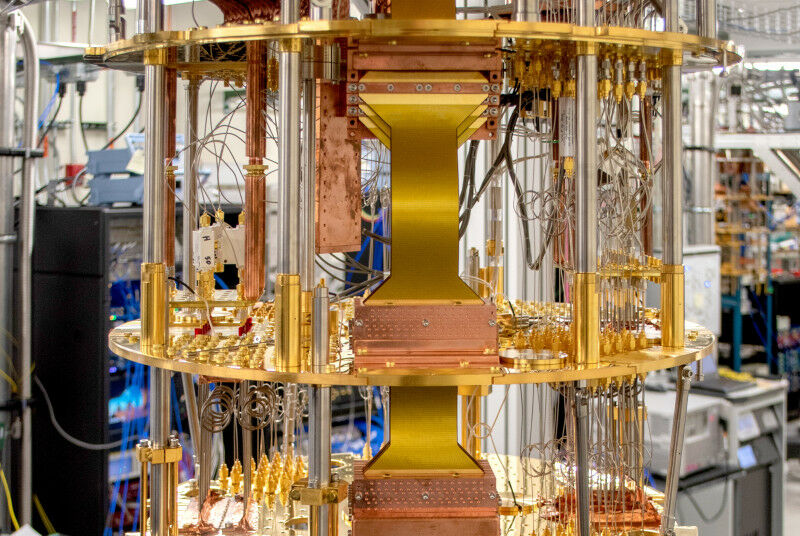
Scientists show that even a few simple examples are enough for a quantum machine-learning model, the -quantum neural networks-, to learn and predict the behavior of quantum systems, bringing us closer to a new era of quantum computing. Imagine a world where computers can unravel the mysteries of quantum mechanics, enabling us to study the behavior of complex materials or simulate the intricate dynamics of molecules with unprecedented accuracy. Thanks to a pioneering study led by Professor Zoe Holmes and her team at EPFL, we are now closer to that becoming a reality. Working with researchers at Caltech, the Free University of Berlin, and the Los Alamos National Laboratory, they have found a new way to teach a quantum computer how to understand and predict the behavior of quantum systems, even with a few simple examples. ..we might be able to learn about and understand quantum systems using smaller, simpler computers [..] we're likely to have in the coming years, instead of needing large and complex ones, which may be decades away. Zoë Holmes, EPFL Quantum neural networks (QNNs). The researchers worked on -quantum neural networks- (QNNs), a type of machine-learning model designed to learn and process information using principles inspired by quantum mechanics in order to mimic the behavior of quantum systems.
TO READ THIS ARTICLE, CREATE YOUR ACCOUNT
And extend your reading, free of charge and with no commitment.