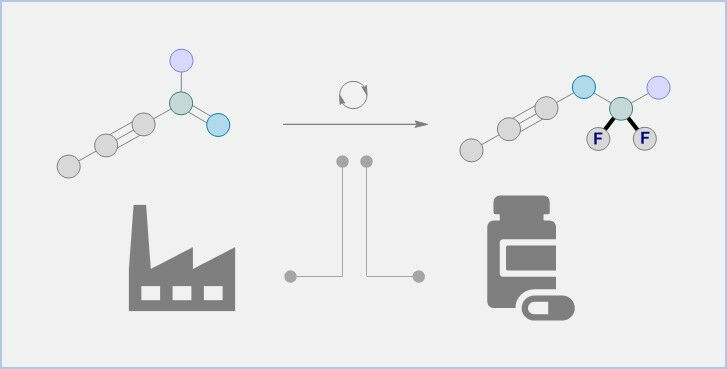
 Enynes are easily prepared substrates comprised mainly of carbon and hydrogen. They can be processed to rearranged difluorinated products using a simple catalysis platform involving organic materials. The products are highly versatile and can be processed to a range of biologically active small molecules.
Research team from the University of Münster presents synthesis method in Nature Chemistry. Enynes are easily prepared substrates comprised mainly of carbon and hydrogen. They can be processed to rearranged difluorinated products using a simple catalysis platform involving organic materials. The products are highly versatile and can be processed to a range of biologically active small molecules. Copyright: Gilmour Group Fluorinated small molecules are very often used to produce medicines or agrochemicals. However, they rarely occur naturally. The societal importance of fluorinated substances, combined with the lack of natural sources, has created a demand for effective, sustainable methods to generate new fluorinated motifs - molecular structures containing one or more fluorine atom - from relatively simple starting materials.
TO READ THIS ARTICLE, CREATE YOUR ACCOUNT
And extend your reading, free of charge and with no commitment.
Your Benefits
- Access to all content
- Receive newsmails for news and jobs
- Post ads