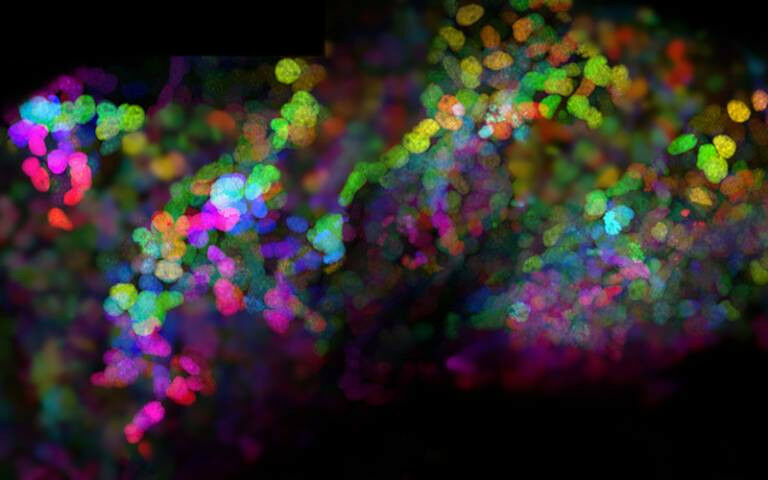
Neural crest - Migrating neural crest
Neural crest - Migrating neural crest A cleft lip or palate arises from the combined effects of genes and inflammatory risk factors experienced during pregnancy, such as smoking or infections, finds a new study led by UCL researchers. The study, published in Nature Communications , has revealed for the first time how genetic and environmental factors come together to form a cleft lip or palate in a developing foetus. Cleft lip, with or without cleft palate, is the most common craniofacial malformation seen at birth, affecting one in 700 live births. It can have devastating consequences for babies and their families, as the infants may experience difficulty feeding, speaking, and hearing, and may be at increased risk for ear infections and dental problems. Senior author Professor Roberto Mayor (UCL Cell & Developmental Biology) said: "It has been known for some time that there is a genetic component to cleft lip, and that some environmental factors such as smoking, stress, infections and malnutrition during pregnancy can also increase the risk of cleft lip. Here, for the first time we have shown how these two factors work together, and why both genetic and environmental risk factors are necessary for a child to be born with cleft lip." The researchers, based at UCL and the University of São Paulo, were studying families who carry mutations in the e-cadherin gene, which is known to be implicated in cleft lip, but noted that not everyone with the mutation develops a cleft lip.
TO READ THIS ARTICLE, CREATE YOUR ACCOUNT
And extend your reading, free of charge and with no commitment.