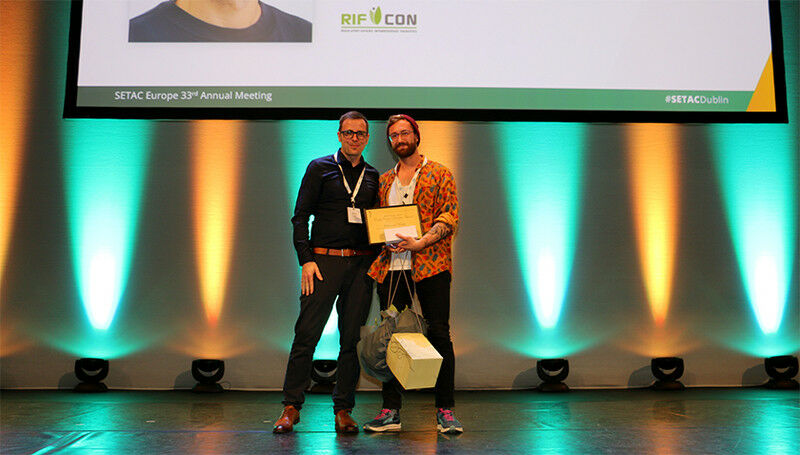
Eawag researcher Johannes Raths (right) has won the SETAC Europe Rifcon Early Career Scientist Award for his paper on the toxicokinetics of amphipods at increased water temperatures. Here, receiving the award in Dublin. (Photo: SETAC)
Eawag researcher Johannes Raths ( right ) has won the SETAC Europe Rifcon Early Career Scientist Award for his paper on the toxicokinetics of amphipods at increased water temperatures. Here, receiving the award in Dublin. (Photo: SETAC) - Pesticides and other chemicals harm biodiversity, and climate change is also threatening many habitats. With his study, Eawag researcher Johannes Raths has shown that these two challenges for our society may even worsen. Amphipods absorbed pollutants faster as water temperatures rose. The researcher has received an award from the Society of Environmental Toxicology and Chemistry for his paper on the toxicokinetics of amphipods in combination with increased water temperatures. Environmental pollution and climate change are two of the greatest threats to ecosystems and biodiversity.
TO READ THIS ARTICLE, CREATE YOUR ACCOUNT
And extend your reading, free of charge and with no commitment.