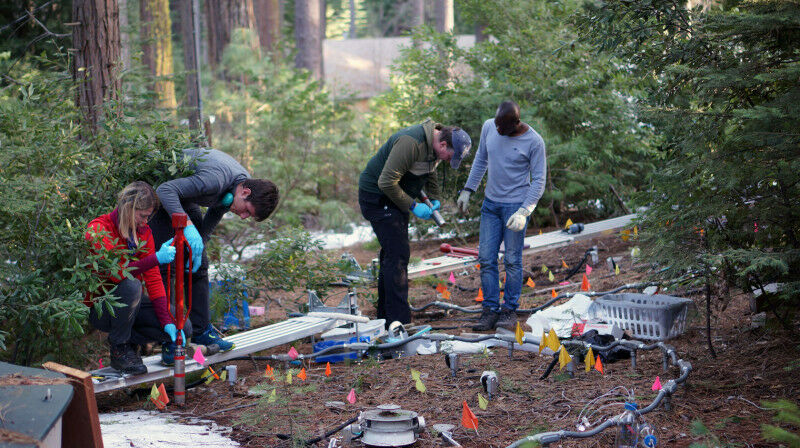
Researchers from the University of Zurich measure the soil’s carbon content in the Sierra Nevada National Forest. (Picture: Michael W.I. Schmidt)
Researchers from the University of Zurich measure the soil's carbon content in the Sierra Nevada National Forest. (Picture: Michael W.I. Schmidt) - Subsoils are the largest storehouses for carbon, as well as one of the most important sources of carbon dioxide in the atmosphere. Global warming is accelerating the decomposition of soil humus. It is also affecting the waxy and woody compounds which help plants store carbon in their leaves and roots and were previously thought to be stable. These are the findings of a study conducted by researchers from the University of Zurich's Department of Geography in the Sierra Nevada National Forest. Around a quarter of the world's carbon emissions are sequestered by forests, grasslands and pasture land. Plants use photosynthesis to store carbon in their cell walls and in the soil.
TO READ THIS ARTICLE, CREATE YOUR ACCOUNT
And extend your reading, free of charge and with no commitment.