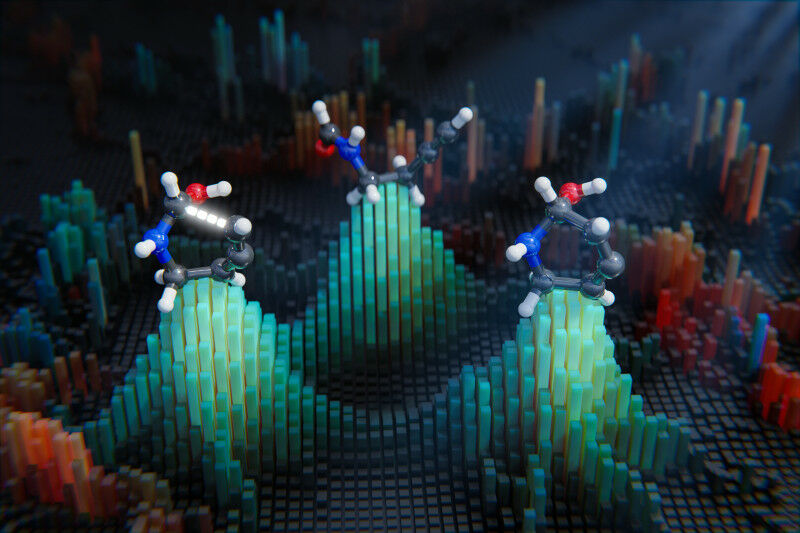
MIT chemists have developed a computational model that can rapidly predict the structure of the transition state of a reaction (left structure), if it is given the structure of a reactant (middle) and product (right). Credits : Image: David W. Kastner
MIT chemists have developed a computational model that can rapidly predict the structure of the transition state of a reaction ( left structure ), if it is given the structure of a reactant ( middle ) and product ( right ). Credits : Image: David W. Kastner Using generative AI, MIT chemists created a model that can predict the structures formed when a chemical reaction reaches its point of no return. During a chemical reaction, molecules gain energy until they reach what's known as the transition state - a point of no return from which the reaction must proceed. This state is so fleeting that it's nearly impossible to observe it experimentally. The structures of these transition states can be calculated using techniques based on quantum chemistry, but that process is extremely time-consuming. A team of MIT researchers has now developed an alternative approach, based on machine learning, that can calculate these structures much more quickly - within a few seconds. Their new model could be used to help chemists design new reactions and catalysts to generate useful products like fuels or drugs, or to model naturally occurring chemical reactions such as those that might have helped to drive the evolution of life on Earth.
TO READ THIS ARTICLE, CREATE YOUR ACCOUNT
And extend your reading, free of charge and with no commitment.