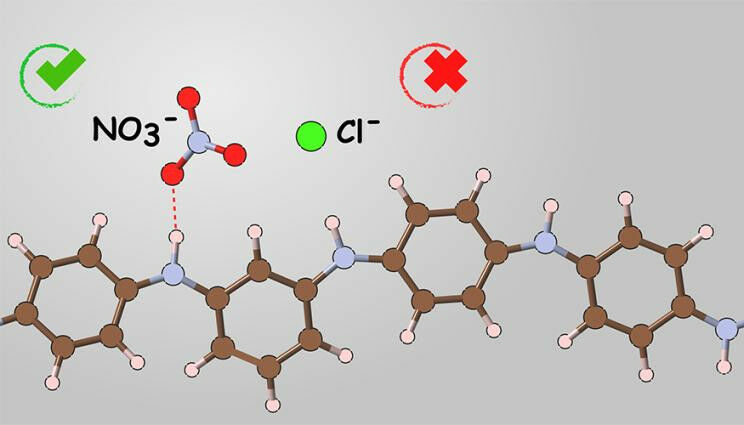
A team of researchers including LLNL scientists developed and electrode that converts nitrogen (NO3) from agricultural runoff into ammonia (Cl) that could transform back to a fertilizer or sell be sold as a chemical feedstock.
A team of researchers including LLNL scientists developed and electrode that converts nitrogen (NO3) from agricultural runoff into ammonia (Cl) that could transform back to a fertilizer or sell be sold as a chemical feedstock. The nitrate runoff problem, a source of carcinogens and a cause of suffocating algal blooms in U.S. waterways, may not be a harbinger of doom. A new study led by the University of Illinois Urbana-Champaign and researchers from Lawrence Livermore National Laboratory (LLNL) demonstrates an approach for the integrated capture and conversion of nitrate-contaminated waters into valuable ammonia within a single electrochemical cell. The study shows a device capable of an eightfold concentration of nitrate, a 24-times enhancement of ammonium production rate and a greater than tenfold enhancement in energy efficiency, compared with previous nitrate-to-ammonia electrocatalysis methods. By combining separation with reaction, the team overcame previously existing limitations of producing ammonia directly from groundwater, where the concentrations of nitrate are very low, and makes the conversion step inefficient. The findings appear in the journal Nature Communications . "The goal of this study was to use as little energy as possible to remove nitrate from agricultural runoff before it hits our waterways, and transform it back to a fertilizer or sell it as a chemical feedstock," said chemical and biomolecular engineering professor Xiao Su from the University of Illinois Urbana-Champaign (U.
TO READ THIS ARTICLE, CREATE YOUR ACCOUNT
And extend your reading, free of charge and with no commitment.