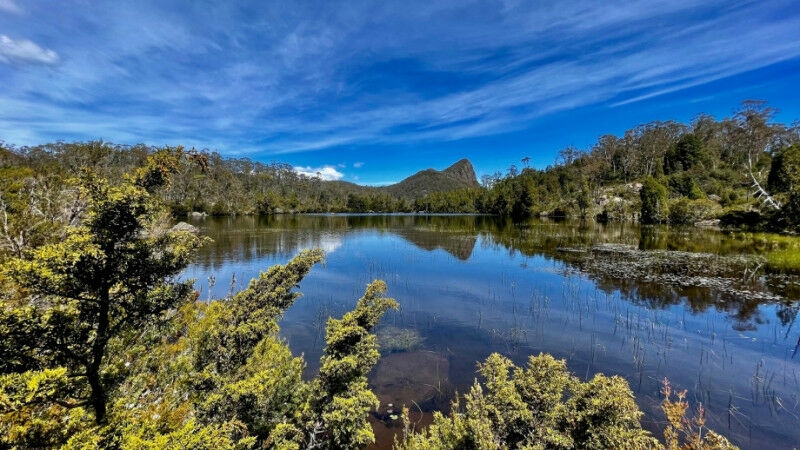
Mt Pillinger, Tasmania. Photo: Professor Simon Haberle
Mt Pillinger, Tasmania. Photo: Professor Simon Haberle - A new study led by researchers at The Australian National University (ANU) has shown that ecosystems in western parts of southeastern Australia - including western Victoria and western Tasmania - may be most at risk of feeling the impacts of climate change in the coming decades. The study compared the traits of plants currently growing in southeast Australia to species that have existed in the region over the past 12,000 years. Lead author of the study, Dr Matthew Adeleye, said many ecosystems in Australian are already facing rising habitat loss and species extinction. "We looked at traits like the height of the plants, the surface area of their leaves and the size of their seeds," Dr Adeleye said. "These things can show us how plants have adapted to different environments." Dr Adeleye and the research team found that up until around 6,000 years ago, plants in southeast Australia were functionally diverse with more productive growth strategies. "Drier and unstable conditions over the last 4,000 years have triggered a marked change in plant function in some of the area's ecosystems, including in western Tasmania's World Heritage rainforest," Dr Adeleye said.
TO READ THIS ARTICLE, CREATE YOUR ACCOUNT
And extend your reading, free of charge and with no commitment.