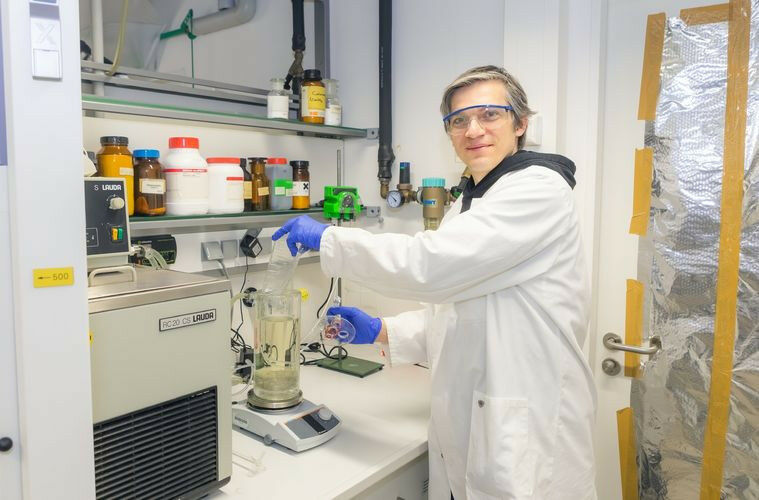
Dr Christian Sonnendecker from the Institute for Analytical Chemistry at Leipzig University at work in the laboratory, Photo: Swen Reichhold
Dr Christian Sonnendecker from the Institute for Analytical Chemistry at Leipzig University at work in the laboratory , Photo: Swen Reichhold One of the most widely used plastics in the world is polyethylene terephthalate, or PET for short. It is everywhere in our daily lives in the form of reusable PET drinks bottles. At the end of the lifecycle of a product containing PET, the environmentally friendly reuse of the PET components through the activity of enzymes is an economically and ecologically interesting alternative to incineration, landfill or purely chemical recycling. A team of researchers from Leipzig University has discovered how an enzyme that can break down PET works, and has further increased the efficiency of this biocatalyst. The scientists report their findings in the current issue of the prestigious journal Nature Communications . -Our previous article on the discovery of this enzyme in the summer of 2021 already made big waves,- says Dr Christian Sonnendecker, who played a key role in the first publication. -This outstanding teamwork became the most successful research article to date in the journal ChemSusChem .
TO READ THIS ARTICLE, CREATE YOUR ACCOUNT
And extend your reading, free of charge and with no commitment.