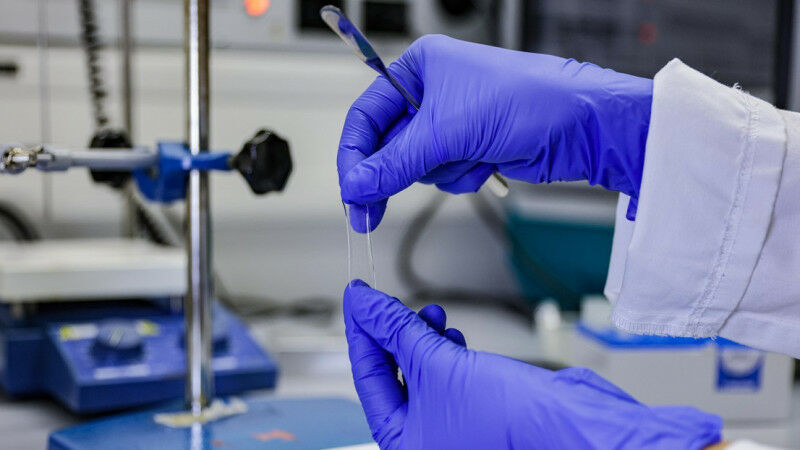
© 2023 Murelle Gerber / EPFL In collaboration with CHUV, EPFL engineers propose wrapping an adhesive hydrogel patch around a collapsed trachea for treatment of Tracheomalacia. Researchers at the EPFL have achieved a breakthrough in the treatment of tracheomalacia, a condition characterized by weak tracheal cartilage and muscles that normally keep the airway open for proper breathing. The team, composed of EPFL engineers and CHUV pediatric airway surgeons, has successfully developed a novel adhesive hydrogel patch that can effectively alleviate tracheomalacia, providing hope for improved treatment options for this challenging condition. The proof of concept was recently published in iScience. Tracheomalacia is a relatively frequent congenital condition that often results in excessive collapse of the airway in newborns and infants. Current treatment methods such as tracheal reconstruction, tracheoplasty, and stenting often result in extensive, long-lasting damage to this vital organ. To address these limitations, the researchers and surgeons focused on developing a new strategy: to wrap a non-invasive adhesive hydrogel patch around the damaged trachea to open the airway.
TO READ THIS ARTICLE, CREATE YOUR ACCOUNT
And extend your reading, free of charge and with no commitment.
Your Benefits
- Access to all content
- Receive newsmails for news and jobs
- Post ads


