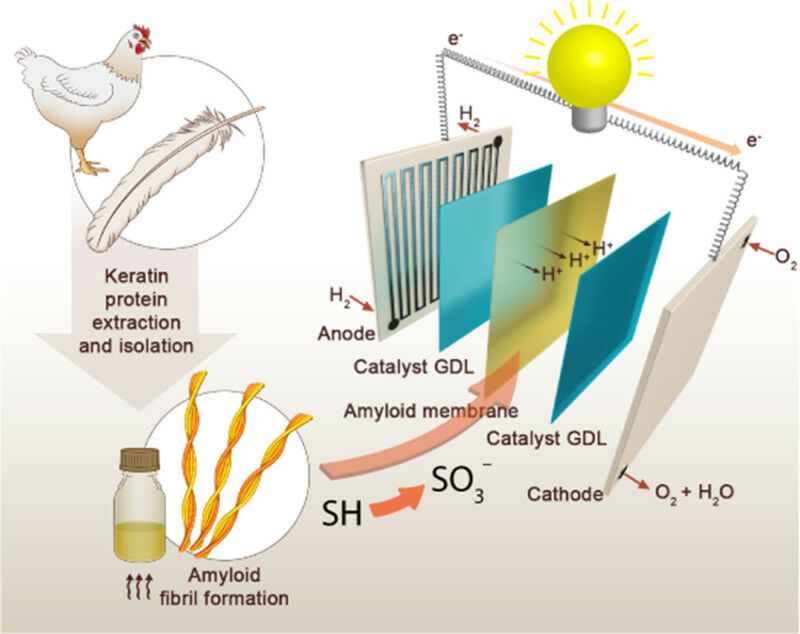
A sustainable membrane is produced from the keratin in chicken feathers for use in a fuel cell. (Graphic: ETH Zurich / NTU)
A sustainable membrane is produced from the keratin in chicken feathers for use in a fuel cell. (Graphic: ETH Zurich / NTU) Turning unused waste from food production into clean energy: Researchers at ETH Zurich and Nanyang Technological University Singapore are using chicken feathers to make fuel cells more cost-effective and sustainable. The food industry generates enormous amounts of waste and by-products, including from poultry production. Each year, some 40 million tonnes of chicken feathers are incinerated. This not only releases large amounts of CO2, but also produces toxic gases such as sulphur dioxide. Researchers at ETH Zurich and Nanyang Technological University Singapore (NTU) have now found a way to put these feathers to good use. Using a simple and environmentally friendly process, they extract the protein keratin from the feathers and convert it into ultra-fine fibres known as amyloid fibrils.
TO READ THIS ARTICLE, CREATE YOUR ACCOUNT
And extend your reading, free of charge and with no commitment.