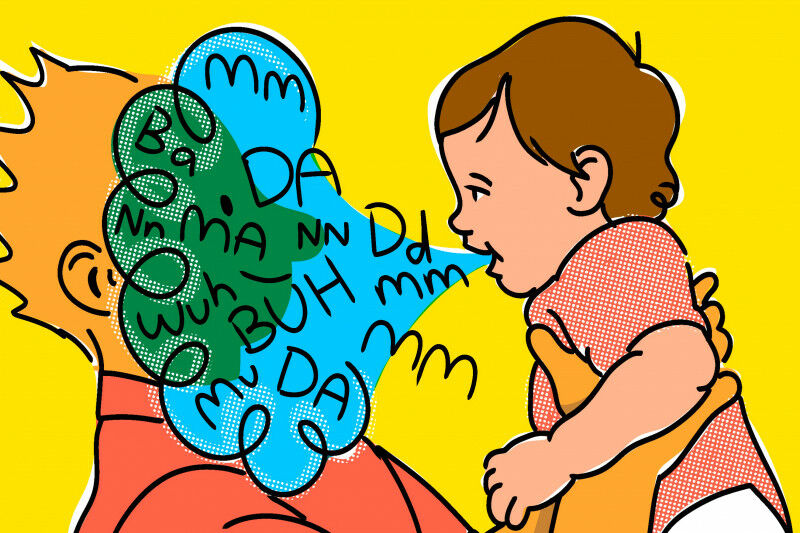
A new study from MIT and Harvard researchers has found that adult listening abilities - their ability to use conversational context and knowledge of mispronunciations that children commonly make - are critical to the ability to understand children’s early linguistic efforts. Credits : Image: Jose-Luis Olivares, MIT
A new study from MIT and Harvard researchers has found that adult listening abilities - their ability to use conversational context and knowledge of mispronunciations that children commonly make - are critical to the ability to understand children's early linguistic efforts. Credits : Image: Jose-Luis Olivares, MIT It's not easy to parse young children's words, but adults' beliefs about what children want to communicate helps make it possible, a new study finds. When babies first begin to talk, their vocabulary is very limited. Often one of the first sounds they generate is "da," which may refer to dad, a dog, a dot, or nothing at all. How does an adult listener make sense of this limited verbal repertoire? A new study from MIT and Harvard researchers has found that adults' understanding of conversational context and knowledge of mispronunciations that children commonly make are critical to the ability to understand children's early linguistic efforts. Using thousands of hours of transcribed audio recordings of children and adults interacting, the research team created computational models that let them start to reverse engineer how adults interpret what small children are saying. Models based on only the actual sounds children produced in their speech did a relatively poor job predicting what adults thought children said.
TO READ THIS ARTICLE, CREATE YOUR ACCOUNT
And extend your reading, free of charge and with no commitment.