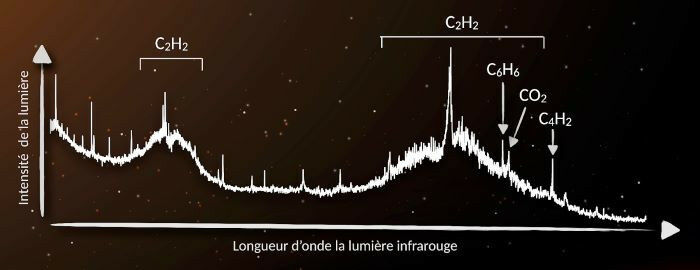
 The MIRI spectrum of star J160532. Emission lines for benzene (C2H6), diacetylene (C4H2), and carbon dioxide (CO2) appear as narrow peaks in the spectrum. Acetylene is so abundant that it produces two large humps in the spectrum. This reflects the predominance of hydrocarbons in the disc. Emissions from water, commonly observed in other discs, are weak or absent. © Benoît Tabone/MINDS consortium/
The MIRI spectrum of star J160532. Emission lines for benzene (C2H6), diacetylene (C4H2), and carbon dioxide (CO2) appear as narrow peaks in the spectrum. Acetylene is so abundant that it produces two large humps in the spectrum. This reflects the predominance of hydrocarbons in the disc. Emissions from water, commonly observed in other discs, are weak or absent. Benoît Tabone/MINDS consortium/ NASA/ESA - Young stars are surrounded by discs of material from which future planets form. The James Webb Space Telescope has revealed the chemical composition of the disc around the star J160532, which turns out to be rich in hydrocarbons.
TO READ THIS ARTICLE, CREATE YOUR ACCOUNT
And extend your reading, free of charge and with no commitment.
Your Benefits
- Access to all content
- Receive newsmails for news and jobs
- Post ads