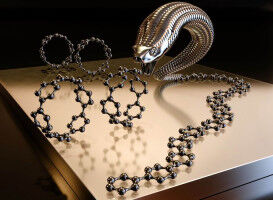
Just like our hands, certain organic molecules relate to each other like an image and its reflection - a phenomenon that chemists call ’chirality’ or ’handedness’.
Chemists from the University of Münster publish new study in -Nature-. Just like our hands, certain organic molecules relate to each other like an image and its reflection - a phenomenon that chemists call 'chirality' or 'handedness'. AG Gilmour Just like our hands, certain organic molecules relate to each other like an image and its reflection - a phenomenon that chemists call "chirality" or "handedness". The two mirror images of the same molecule, namely both enantiomers, often possess different biological properties. For example for drug discovery, many times only one of the structures is relevant. However, chemical synthesis methods often create a 1:1 mixture of both forms. Therefore, the selective conversion of these mixtures into one selected form is of great importance.
TO READ THIS ARTICLE, CREATE YOUR ACCOUNT
And extend your reading, free of charge and with no commitment.
Your Benefits
- Access to all content
- Receive newsmails for news and jobs
- Post ads