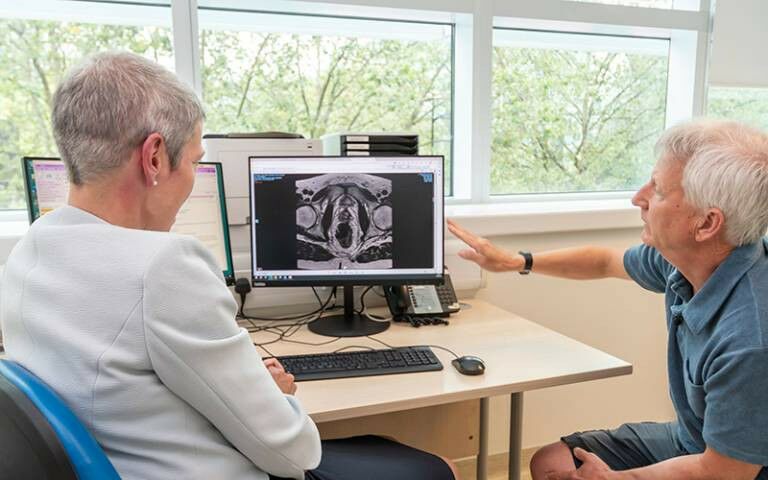
MRI scans improve prostate cancer diagnosis in screening trial - Credit: UCLH.
MRI scans improve prostate cancer diagnosis in screening trial - Credit: UCLH. Using MRI as a screening test alongside PSA density allowed detection of cancers that would have been missed by the blood test alone, according to new research from UCL, UCLH and King's College London. The REIMAGINE study, published in BMJ Oncology , is the first study to use MRI scans with prostate specific antigen (PSA) density to assess the need for further standard NHS tests. Of the 29 participants found to have serious prostate cancer, 15 had a 'low' PSA score that would have meant they were not referred for further investigation under the current system. Currently, men over 50 in the UK can ask for a PSA test if they are experiencing symptoms or are concerned about prostate cancer. Previous screening studies have used a PSA level of 3ng/ml or above as the benchmark for performing additional tests to look for prostate cancer, such as a biopsy. Though previous research found that the combination of a PSA test and/or digital rectal examination, followed by a biopsy if disease is suspected, helped to reduce prostate cancer mortality by 20% after 16 years, this approach has also been linked to overdiagnosis and overtreatment of lower risk cancers.
TO READ THIS ARTICLE, CREATE YOUR ACCOUNT
And extend your reading, free of charge and with no commitment.