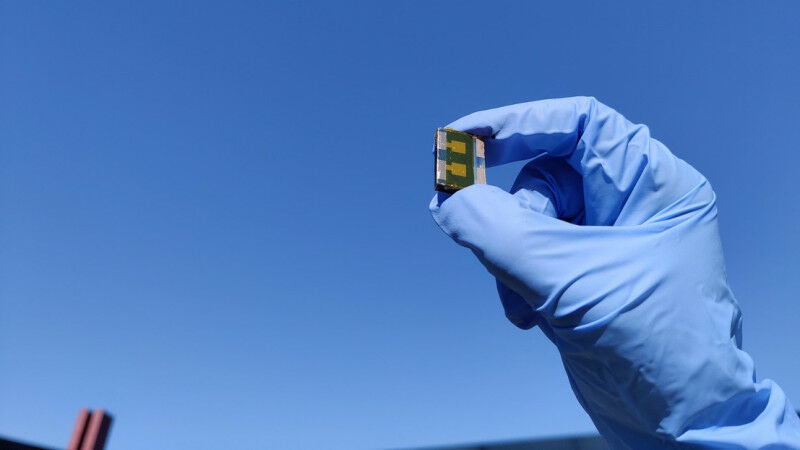
 An inverted perovskite solar cell with a new design of hole-selective contacts
An inverted perovskite solar cell with a new design of hole-selective contacts ©2023 / EPFL Felix T. Eickemeyer - CC-BY-SA 4. Researchers at EPFL and Northwestern University unveil a groundbreaking design for perovskite solar cells, creating one of the most stable PSCs with a power-conversion efficiency above 25%, paving the way for future commercialization. Perovskite solar cells (PSCs) stand at the forefront of solar energy innovation, and have drawn a lot of attention for their power-conversion efficiency and cost-effective manufacturing. But the way to commercialization of PSCs still has a hurdle to overcome: achieving both high efficiency and long-term stability, especially in challenging environmental conditions. The solution lies in the interplay between the layers of PSCs, which has proven to be a double-edged sword. The layers can enhance the cells' performance but also cause them to degrade too quickly for regular use in everyday life. Now, a collaboration between the labs of Michael Grätzel at EPFL and Edward Sargent at Northwestern University, has made a significant leap in designing PSCs with record stability and power-conversion efficiency surpassing 25% addressing two of the most pressing challenges in the solar energy sector.
TO READ THIS ARTICLE, CREATE YOUR ACCOUNT
And extend your reading, free of charge and with no commitment.
Your Benefits
- Access to all content
- Receive newsmails for news and jobs
- Post ads