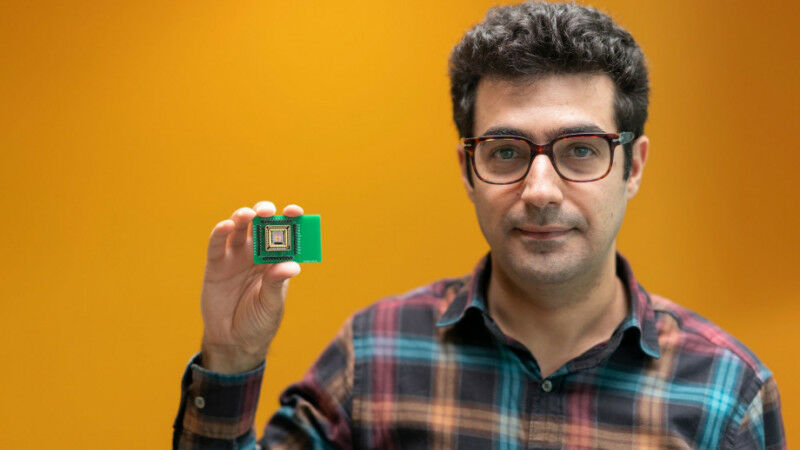
PhD scholar Khosro Zangeneh. Photo: Jamie Kidston/ANU
PhD scholar Khosro Zangeneh. Photo: Jamie Kidston/ANU Researchers have developed new technology that could usher in the "next-generation" of thinner, higher-resolution and more energy efficient screens and electronic devices. The international team from Nottingham Trent University in the United Kingdom, The Australian National University (ANU) and UNSW Canberra has created nanoparticles called "metasurfaces" that perform better than current displays like LCDs and LEDs. LCDs and LEDs rely on liquid crystal cells to create a display on TVs and other screens. The research team's metasurfaces are 100 times thinner than liquid crystal cells, offer a tenfold greater resolution and consume 50 per cent less energy. The researchers believe their technology is compatible with modern electronic displays. "We have paved the way to break a technology barrier by replacing the liquid crystal layer in current displays with a metasurface, enabling us to make affordable flat screens liquid crystal-free," lead researcher Mohsen Rahmani, Professor of Engineering at Nottingham Trent University, said.
TO READ THIS ARTICLE, CREATE YOUR ACCOUNT
And extend your reading, free of charge and with no commitment.