decorative
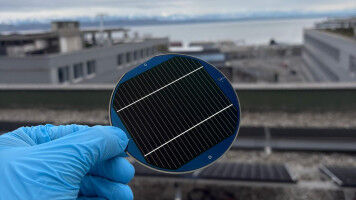
decorative Researchers at UCL have created one-atom-thick ribbons made of phosphorus alloyed with arsenic that could dramatically improve the efficiency of devices such as batteries, supercapacitors and solar cells. The research team discovered phosphorus nanoribbons in 2019. The "wonder material", predicted to revolutionise devices ranging from batteries to biomedical sensors, has since been used to increase lithium-ion battery lifetimes and solar cell efficiencies. However, phosphorus-only materials do not conduct electricity very well, hindering their usage for certain applications. In the new study, published in the Journal of the American Chemical Society , the researchers created nanoribbons made of phosphorus and tiny amounts of arsenic, which they found were able to conduct electricity at temperatures above -140 oC, while retaining the highly useful properties of the phosphorus-only ribbons. Senior author Dr Adam Clancy (UCL Chemistry) said: "Early experimental work has already shown the remarkable promise of phosphorus nanoribbons, created for the first time by our UCL team in 2019. In 2021, for instance, it was shown that adding the nanoribbons as a layer to perovskite solar cells allowed the cells to harness more energy from the Sun.
TO READ THIS ARTICLE, CREATE YOUR ACCOUNT
And extend your reading, free of charge and with no commitment.