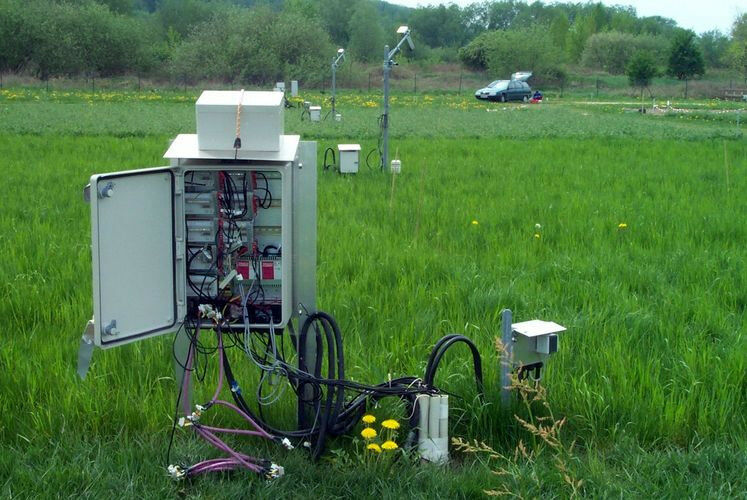
Photo: Karl Kübler, MPI for Biogeochemistry Jena
Photo: Karl Kübler, MPI for Biogeochemistry Jena - A new study has revealed a natural solution to mitigate the effects of climate change, such as extreme weather events. Researchers from Leipzig University, the Friedrich Schiller University Jena, the German Centre for Integrative Biodiversity Research Halle-Jena-Leipzig (iDiv) and other research institutions have discovered that high plant diversity acts as a buffer against fluctuations in soil temperature. This buffer can then be of vital importance to ecosystem processes. They have just published their new findings in the journal "Nature Geoscience". "Soil temperature plays a central role in controlling important ecosystem processes related to water, carbon and nutrient dynamics, microbial activity and agricultural productivity," explains the lead author of the study, Dr Yuanyuan Huang. Despite its importance, no study has yet investigated whether plant diversity in particular acts as a buffer against fluctuations in soil temperature during long-term plant community development. In their study, Huang and her colleagues present the results of a comprehensive data set collected from 2004 to 2021 in a large-scale grassland biodiversity experiment - the Jena Experiment.
TO READ THIS ARTICLE, CREATE YOUR ACCOUNT
And extend your reading, free of charge and with no commitment.