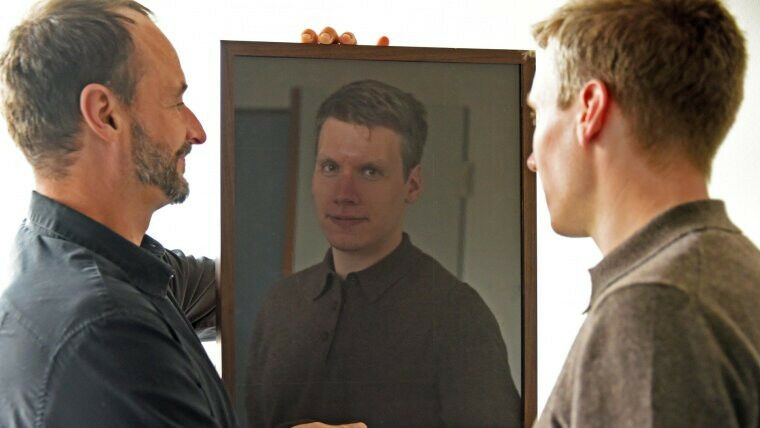
Tobias Rothmund (left) and Arne Stolp (right) are developing a self-reflection tool that anyone interested can use to determine their own political bias. Image: Anne Günther (University of Jena)
Tobias Rothmund ( left ) and Arne Stolp ( right ) are developing a self-reflection tool that anyone interested can use to determine their own political bias. Image: Anne Günther (University of Jena) For many people, science has become a question of faith - the acceptance of research results increasingly depends on whether they fit in with their own world view. This poses new challenges for science communication. Simply preparing content in an appealing and accessible way for the public in order to close gaps in knowledge and present new innovations is no longer enough. But how can political bias be overcome? This is what communication scientists at Friedrich Schiller University Jena have been investigating since this month in "We all'have a tendency to believe certain scientific findings that support our world view rather than others - this has long been known," says Tobias Rothmund from the University of Jena, who is leading the project together with Christian Thiel, describing the problem. "Issues such as climate change or the Covid-19 pandemic are and have been politically controversial - the way scientific evidence in these and other areas is handled often depends on political convictions. If scientific findings and political attitudes do not match, studies are deemed less trustworthy, scientists are denied expertise or research methods are questioned.
TO READ THIS ARTICLE, CREATE YOUR ACCOUNT
And extend your reading, free of charge and with no commitment.