decorative
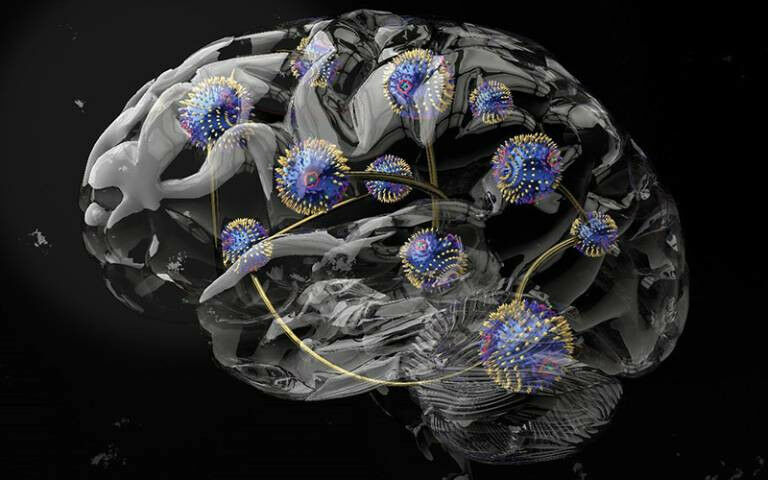
decorative A form of brain-inspired computing that exploits the intrinsic physical properties of a material to dramatically reduce energy use is now a step closer to reality, thanks to a new study led by UCL and Imperial College London researchers. Such an approach, known as physical reservoir computing, has until now been limited due to its lack of reconfigurability. This is because a material's physical properties may allow it to excel at a certain subset of computing tasks but not others. In the new study, published in the journal Nature Materials , an international team of researchers used chiral (twisted) magnets as their computational medium and found that, by applying an external magnetic field and changing temperature, the physical properties of these materials could be adapted to suit different machine-learning tasks. Dr Oscar Lee (London Centre for Nanotechnology at UCL and UCL Department of Electronic & Electrical Engineering), the lead author of the paper, said: "This work brings us a step closer to realising the full potenti al of physical reservoirs to create computers that not only require significantly less energy, but also adapt their computati onal properti es to perform opti mally across various tasks, just like our brains. "The next step is to identify materials and device architectures that are commercially viable and scalable." Traditional computing consumes large amounts of electricity. This is partly because it has separate units for data storage and processing, meaning information has to be shuffled constantly between the two, wasting energy and producing heat.
TO READ THIS ARTICLE, CREATE YOUR ACCOUNT
And extend your reading, free of charge and with no commitment.