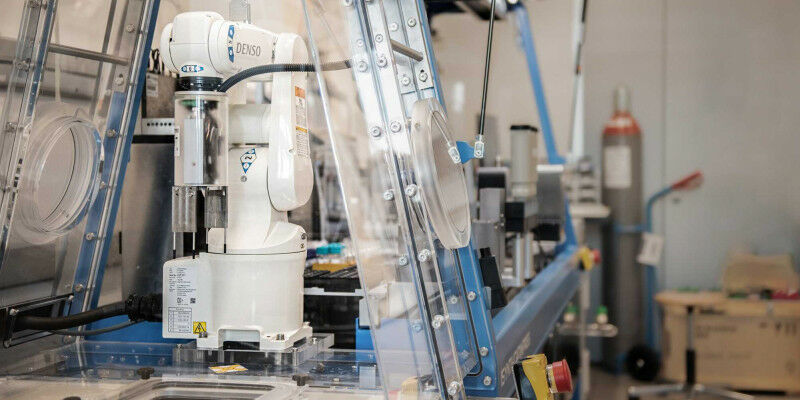
This robotic arm transfers glass vials into a centrifuge. It is part of a robot unit that produces catalysts completely autonomously according to the specifications of an AI model. (Photograph: ETH Zurich / Michel Büchel)
This robotic arm transfers glass vials into a centrifuge. It is part of a robot unit that produces catalysts completely autonomously according to the specifications of an AI model. (Photograph: ETH Zurich / Michel Büchel) - Artificial intelligence and automated laboratory infrastructure are massively accelerating the development of new chemical catalysts. With these tools, researchers at ETH Zurich are developing catalysts for efficiently and cost-effectively synthesising the energy source methanol from CO2. Catalysts are chemistry's hard-working little helpers. They accelerate reactions and reduce the energy required for a reaction to take place. The more specific and effective a catalyst is, the more effectively any undesirable side reactions are suppressed.
TO READ THIS ARTICLE, CREATE YOUR ACCOUNT
And extend your reading, free of charge and with no commitment.