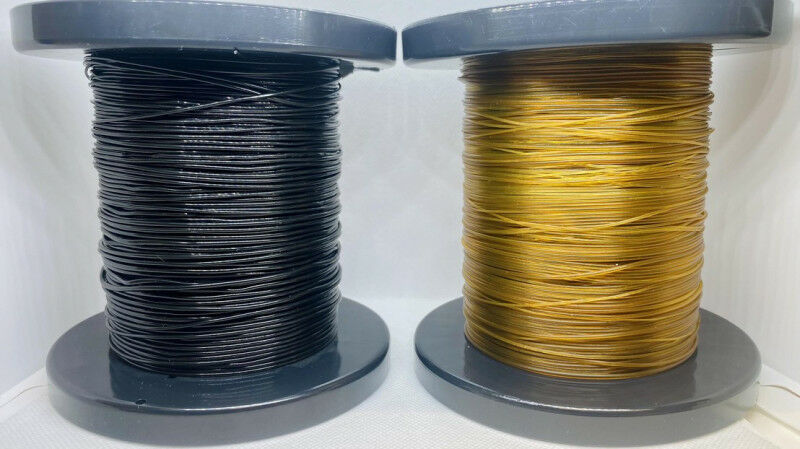
The dyed and natural polyamide fibers after extrusion. Credit: Lorenz Manker/EPFL
The dyed and natural polyamide fibers after extrusion. Credit: Lorenz Manker/EPFL Scientists have developed a sustainable method to make high-performance plastics from agricultural leftovers, turning them into valuable materials. In our rapidly industrialized world, the quest for sustainable materials has never been more urgent. Plastics, ubiquitous in daily life, pose significant environmental challenges, primarily due to their fossil fuel origins and problematic disposal. Now, a study led by Jeremy Luterbacher's team at EPFL unveils a pioneering approach to producing high-performance plastics from renewable resources. The research, published in Nature Sustainability , introduces a novel method for creating polyamides - a class of plastics known for their strength and durability, the most famous of which are nylons - using a sugar core derived from agricultural waste. ..we get similar results but use a sugar structure, which is ubiquitous in nature and generally completely non-toxic, to provide rigidity and performance properties.
TO READ THIS ARTICLE, CREATE YOUR ACCOUNT
And extend your reading, free of charge and with no commitment.