Two studies conducted by EPFL’s Soil Mechanics Laboratory open up new prospects for exploiting geothermal energy in underground infrastructures.
At a time when the energy transition is pushing engineers to redouble their ingenuity, EPFL researchers are demonstrating that the heat lost beneath our feet can become a precious resource. Their field of study: a metro station in Bucharest and an underground data center. Their common goal: to use geothermal energy to improve the energy performance of these infrastructures.
The Laboratoire de mécanique des sols (LMS) at the École polytechnique fédérale de Lausanne has published two scientific studies carried out in collaboration with Amberg Engineering, an internationally-active Swiss company. The studies, published in the journal Tunnelling and Underground Space Technology, were carried out as part of a project supported by Innosuisse, the Swiss innovation agency.
Heat under the rails
In the first study, the scientists analyzed the configuration of a Romanian metro station located 25 meters underground. They modeled the dynamic effects of passing trains, acceleration, braking and crowd movements on ventilation. Their aim: to capture excess heat using tubes inserted in the reinforced concrete walls, connected to a heat pump on the surface.
"We integrated the heat transfer between the air and the ground into our simulation, enabling us to assess the geothermal potential in a detailed and realistic way.potential," explains Sofie ten Bosch, civil engineer and first author of both studies. "The standard geometry of this station can be found in many infrastructures around the world, which makes our method generalizable."
Under the servers, the solution
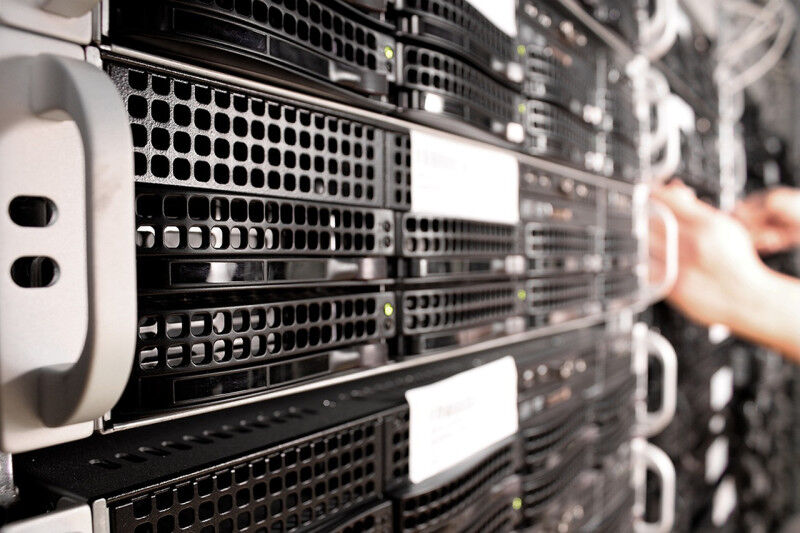
The second project focused on a 300-meter-long underground data center, where the temperature rises continuously due to the activity of the servers. The study proposed a solution: capture the heat generated and reinject it into the thermal network. The result: a geothermal system that pays for itself in three to seven years, and CO2 emissions reduced by 45%.
"Few studies address the issue of cooling data centers with geothermal energy, even though they consume up to 50% of their energy to cool themselves," Sofie ten Bosch points out. According to the study, this type of solution would both make the most of excess heat and limit the need for air-conditioning.
Ready-to-use technology
For Lyesse Laloui, director of the LMS and co-author of the studies, these results confirm the maturity of the geothermal technologies developed at EPFL. Thanks in particular to start-ups GEoeG and Enerdrape, applications are diversifying: integration in new buildings, thermal panels for existing parking lots, and now rail or digital infrastructures.
"We’re pushing back the limits of underground heat exploitation," summarizes Professor Laloui. "After heating and storage, we’re moving on to ventilation and combating buried heat islands."
These two studies pave the way for more sustainable management of underground infrastructures, combining thermal engineering, accurate modelling and a desire for energy transformation.
References:
-
Ten Bosch et al (2024), "Assessing and exploiting the interaction between ventilation and geothermal systems in an underground data center", TUST
-
Ten Bosch et al. (2025), "Evaluating the geothermal potential of a metro station considering its airflow conditions", TUST