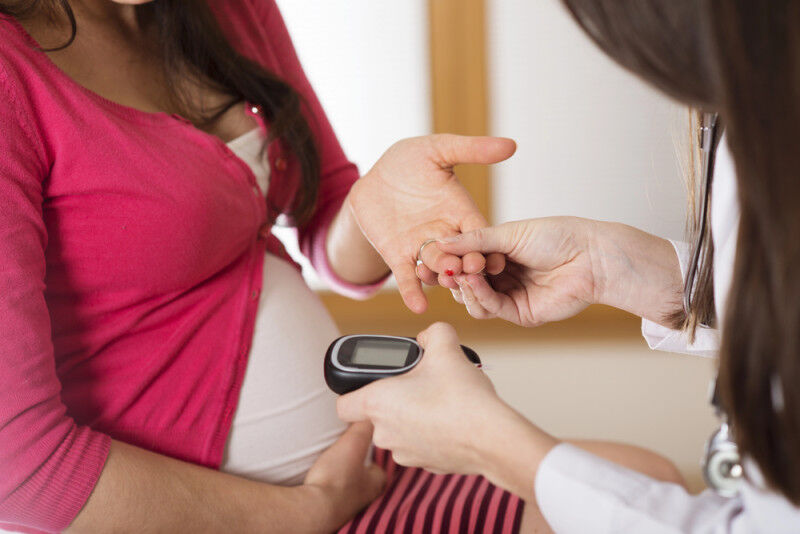
In a recent study, researchers from the University Gynecology Clinic at the Inselspital, the University Hospital of Berne and the University of Berne investigated whether continuous real-time blood glucose measurement using a sensor could be used as an alternative to conventional finger-prick blood glucose measurement in patients with gestational diabetes. The sensor method gave equivalent clinical results to the previous method, but was clearly preferred by pregnant women. These results pave the way for routine introduction of automatic blood glucose measurement in all women with gestational diabetes.
Gestational diabetes affects up to 14% of all mothers-to-be, and can increase the risk of complications such as increased birth weight, changes in amniotic fluid or hypoglycemia in the newborn. Precise blood glucose control is essential to minimize these risks. Until now, this has mainly been achieved by self-measurement (Self-Monitoring of Blood Glucose; SMBG). In addition to being unpleasant, this method only captures isolated measurement values and therefore does not allow continuous monitoring. This makes it difficult for many women to keep aï¿ 1/2 il on their blood glucose levels at all times.
Sensor-based blood glucose measurement as an alternative
A modern alternative to BGMS is real-time continuous glucose measurement (rt-CGM) using a sensor. In this case, the concentration of glucose in the blood is measured automatically and continuously by a medical device. In research, evidence of the efficacy of rt-CGM for women with gestational diabetes is controversial: while some studies show positive effects on blood glucose control and neonatal outcomes, others find no such link. What’s more, to date there is no uniform recommendation as to when and how often rt-CGM should be used in patients with gestational diabetes.
The world’s largest randomized study comparing SMBG and rt-CGM
A research team from the University Gynecology Clinic at Hôpital de l’Île therefore examined whether the rt-CGM system led to comparable pregnancy and delivery outcomes compared with the traditional SMBG method. In the world’s first randomized study comparing the two blood glucose measurement methods, they randomly assigned 302 women with gestational diabetes to either the rt-CGM group or the SMBG group. Their blood glucose levels were monitored throughout pregnancy. The primary objective of the study was to examine possible complications such as excessive birth weight, amniotic fluid changes or hypoglycemia in newborns.
Clinical equivalence of rt-CGM and benefits for patients
The study just published in ’The Lancet Diabetes & Endocrinology’ revealed that there were no significant differences between the two methods of measuring blood glucose levels. The complication rate was virtually the same in both groups: 35% in the rt-CGM group versus 36.4% in the SMBG group. Nor were there any significant differences in the need for insulin therapy, delivery methods or the need for intensive care for newborns. Clinical equivalence to the old SMBG method was therefore demonstrated.
The study also showed that participants preferred the rt-CGM method despite the absence of measurable clinical benefits. Patients found rt-CGM better and more pleasant, as the need for finger pricks was eliminated. This method could therefore benefit all women with gestational diabetes’, explains Sofia Amylidi-Mohr, Deputy Chief Medical Officer at the Center for Ultrasound and Prenatal Diagnostics and first author of the study. Daniel Surbek, head of the study, adds: ’This knowledge forms the basis for rt-CGM to be used routinely in gestational diabetes patients in the future’. The researchers stress, however, that the use of rt-CGM should be closely examined in future cost-benefit analyses before being introduced on a large scale.