What is the exact shape of the Earth - is it flattened or elongated at the poles - the question has agitated scientific circles on both sides of the Channel for several centuries. To find out all about this scientific controversy, the Académie des Sciences and the Royal Society in London are presenting the exhibition "La figure de la Terre. A Franco-English Debate (17th-20th centuries)" at the Maze Library at the Mazarine Library, in the heart of the Institut de France, Paris.
You’d think the question would be settled once and for all: the Earth is round. Yet recent surveys show that around 8% of our fellow citizens are not fully convinced that it is. This figure reflects more than just a lack of knowledge. In my opinion, it reveals a lack of confidence. It’s not so much the Earth’s roundness that’s being challenged as the authority of those who assert it. Doubt is directed at those in the know, institutions and official discourse. Faced with this phenomenon, irony or indignation are not enough. Perhaps we need to question the way we tell the story of science, what we pass on, and what we leave out.
For a long time, we taught that the Middle Ages believed the Earth to be flat, and that modern science gradually dispelled this error. This convenient story is historically false. Since Greek antiquity, scientists have known that the Earth is spherical. During lunar eclipses, the shadow cast by the Earth is always circular (it would be elliptical if the Earth were a flat disk); the visible stars change as one travels northwards; in the 3rd century BC, Eratosthenes was already measuring the Earth’s perimeter with remarkable accuracy. The Earth’s roundness is not a recent conquest: it has been part of mankind’s intellectual heritage for over two millennia.
But for a long time, this knowledge belonged to the educated. Peasants, craftsmen and ordinary sailors - those who didn’t read Aristotle or astronomical treatises - probably didn’t have a precise representation of the overall shape of the world. Their universe was that of the familiar horizon, the field, the village, the port. The Earth was lived, not thought, on a planetary scale. This was not a matter of error, but often of indifference: the question was not asked. Science progresses first in restricted circles before becoming a common culture. This historical distance between scholarly knowledge and ordinary imagination is perhaps one of the keys to the contemporary fragility of scientific consensus.
Triangulation: a matter of patience
In the 17th century, the nature of the question changed. It was no longer enough to know that the Earth was round: people wanted to measure it precisely. In France, under the impetus of the Cassini dynasty, the Académie des Sciences set out to determine the length of a degree of latitude. Latitude is measured by the angle between the North Star and the horizon: as you move north, this angle increases. So, in principle, it’s enough to measure the distance covered for a variation of one degree to estimate the size of the globe.
The method used is a masterpiece of rigor: triangulation. The length of a segment is measured with extreme care on the ground, and then, from high points - hills, towers, steeples - the angles formed with other landmarks visible dozens of kilometers away are observed. From triangle to triangle, vast distances are reconstructed. It’s a science of patience, teams, perfected instruments and carefully assessed errors. The Earth became an object that could be measured, surveyed and calculated.
At the same time, Isaac Newton published his Principia in England. In it, he expounded the theory of universal gravitation and pondered the precise shape of the globe. If the Earth turns on itself in twenty-four hours, centrifugal force should flatten it slightly at the poles and swell it at the equator. From an apparently modest observation - the difference in the period of a pendulum between the equator and Cambridge - Newton performed an extraordinary thought experiment and estimated the extent of this flattening. For the first time, a physical theory claimed to predict the very shape of the planet.
Rivalry between France and England becomes scientific
The first French measurements, however, seemed to indicate the opposite: the Earth would be elongated at the poles. Controversy ensued. Behind the scientific debate lay a long-standing rivalry between France and England, nations that were close competitors, yet closely linked by history. To settle the issue, the Académie des Sciences decided to send two expeditions: one to Lapland, near the Arctic Circle, the other to the equator. They had to measure again, compare and calculate. The conditions were extreme, the instruments fragile, the uncertainties numerous. But the verdict was in: the Earth was indeed slightly flattened at the poles. Through their own observations, French scientists confirmed Newton’s prediction.
This victory for Newtonian theory in no way diminished the scientific heroism of the expeditions. Voltaire, one of Newton’s most ardent supporters in France, famously said of Maupertuis:
"You have found in the ice, in the midst of trouble, what Newton found without leaving home
In just a few lines, he admirably sums up the fertile tension between time-consuming fieldwork and the power of theoretical abstraction. One cannot exist without the other: without hypothesis, there can be no expedition; without measurement, there can be no confirmation. This is how science advances: by accepting that facts correct hypotheses, even when this contradicts prestigious traditions.
At the end of the 18th century, the French Revolution ushered in a new phase. The aim was to create a universal system of measurement, free from local custom. The metre was defined as the ten-millionth part of the quarter of the terrestrial meridian. The Earth became humanity’s common standard. New measurement campaigns are undertaken to fix this unit. Geodesy (the study of the Earth’s shape) was linked to political and economic issues: controlling longitude at sea meant controlling trade routes and naval power. Measuring the globe was now part of the history of empires.
An adventure that never ends
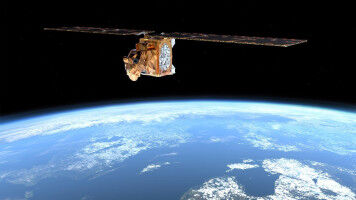
The story doesn’t end with the Newtonian ellipsoid. The real Earth is neither perfectly spherical nor exactly regular. Internal masses,Ölandforms and oceans introduce irregularities that are known as the "geoid". In the 19th century, mathematicians such as Henri Poincaré examined the stability of rotating bodies and developed concepts that also shed light on our understanding of planetary shapes. Today, thanks to satellites and space altimetry, the average surface of the oceans is known with centimetric precision. From Eratosthenes’ stick to orbital instruments, the same intellectual and technical quest continues.
The exhibition, jointly organized by the Royal Society and the Académie des Sciences, retraces this adventure, both scientific and political. First presented in London, it is now on show in Paris, at the Mazarine Library of the Institut de France. Manuscripts, maps, instruments, field notebooks and correspondence bear witness to these debates, voyages and calculations. It shows how, over time, sometimes rival scientists learned to confront their theories with reality, to measure their errors, and to engage in dialogue across borders.
At a time when some still doubt the Earth’s roundness, it’s worth returning to this long and complex history. It reminds us that science is neither dogma nor revealed truth, but a patient, collective, often conflicting construction, always open to revision. To understand how we have measured the Earth is to understand how knowledge is created. And it is perhaps also a way, today, of rebuilding confidence in knowledge.
Étienne Ghys , Mathematician, Emeritus Research Director CNRS, ENS Lyon; Académie des sciences
This article is republished from The Conversation under Creative Commons license. Read the original article.
The Conversation France is an independent online news and current affairs medium, offering articles for the general public written by teachers, researchers and PhD students, in close collaboration with a team of experienced journalists. The aim - to shed light on current affairs with reliable, research-based expertise.
The ENS de Lyon joined The Conversation to offer its members the opportunity to publish in this medium. Researcher, teacher-researcher, doctoral student at the ENS de Lyon or affiliated with one of its laboratories - For more information on this partnership: The Conversation - instructions for use (reserved access - intranet).