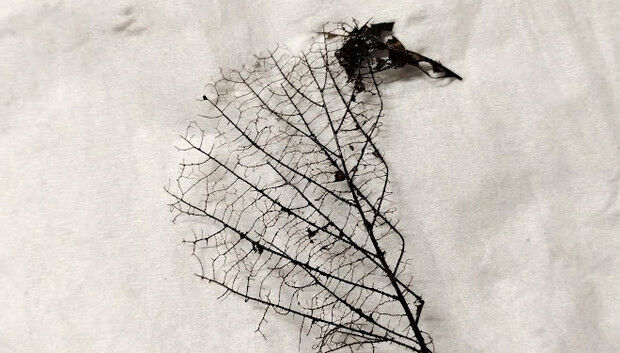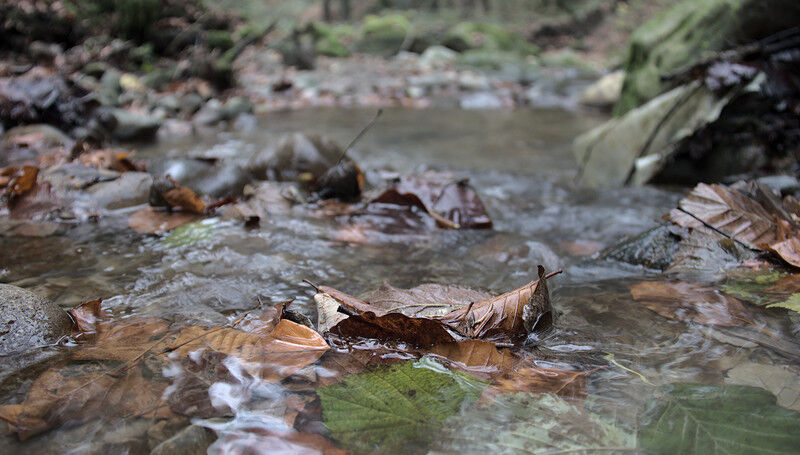

’In our study, we investigated how the order of arrival and duration of exposure of leaves from two tree species can affect ecosystem function,’ explains Luke Ireland, lead author of the study and PhD candidate in the research group of Florian Altermatt at Eawag and University of Zurich. After all, a leaf is not just a leaf. Research distinguishes between high-quality leaves (i.e. nutrient-rich) and low-quality leaves (nutrient-poor). Depending on which leaves fall first and, above all, how long they lie on the ground, this has an impact on the creatures that feed on these very leaves.
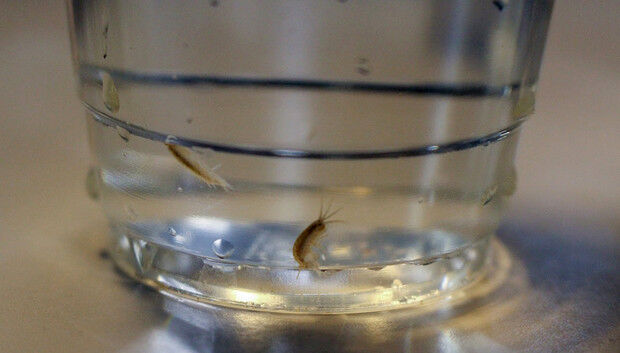
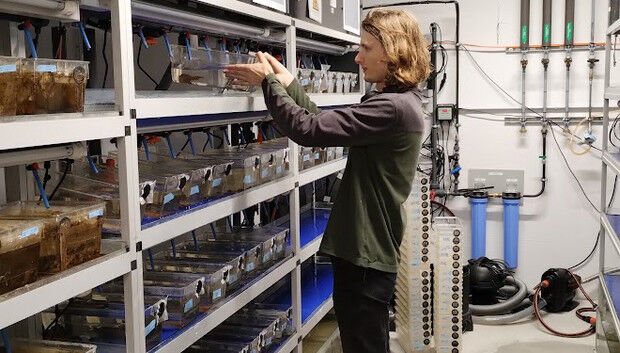
To find out how changes in exposure and sequence affect organisms, Ireland set up a veritable leaf buffet. This menu was enjoyed by amphipods, which occur naturally throughout the year in streams and rivers in Switzerland. In the different test phases, the amphipods were first given either beech leaves (low in nutrients) or black alder leaves (rich in nutrients), for varying periods of time. After this time period, amphipods that were given alder first were then presented with beech and vice versa.
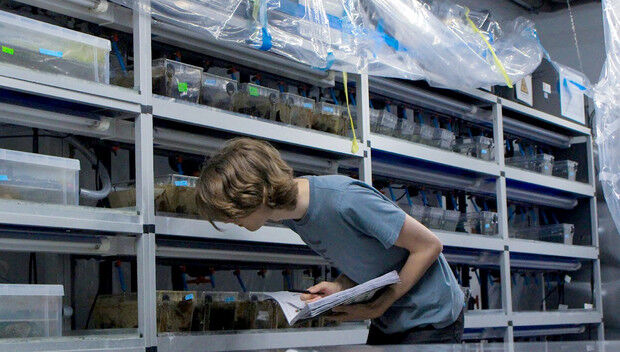
Ireland observed that after longer periods of feeding on nutrient-poor beech leaves, the creatures consumed significantly more of the higher-quality alder leaves - which was to be expected. What surprised Ireland, however, was that the reverse was also true! ’We would have expected the amphipods to be more satiated after prolonged consumption of the nutrient-rich leaves,’ said Ireland. But: they seem to like variety!
Small changes - far-reaching consequences
Ideally, the amphipods have different types of leaves available; they take advantage of the variety and utilise different types of leaves. The problem, however, is that different leaves decompose at different rates. Nutrient-poor leaves decompose more slowly and provide the amphipods with a stable food supply during the winter months, while high-quality leaves decompose more quickly and therefore need to be utilised rapidly. Depending on which leaves fall into the water at what time, this influences how balanced and available the food supply for the amphipods will be in the following months,’ The availability and sequence of the different leaves therefore have a massive impact on the consumption rate of the amphipods. When which leaves fall is determined by the climate, which has changed significantly in recent years and has destabilised this highly structured seasonal system. After hot summers with high drought, certain leaves fall earlier. Or a mild autumn delays the discolouration and fall of certain leaves. Both have now been shown to have a significant impact on the entire ecosystem.