

Health - Today
Cortical thickness, schizophrenia, and causality in psychiatry: when the trace is mistaken for the cause
Cortical thickness, schizophrenia, and causality in psychiatry: when the trace is mistaken for the cause
Career - Today
Low-income students and girls are steered away from 'risky' creative careers at school
Low-income students and girls are steered away from 'risky' creative careers at school



Environment - Today
UCalgary expedition, with NASA, Canadian and European space agencies, sets out to better understand state of Arctic ice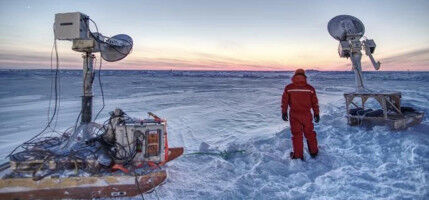
UCalgary expedition, with NASA, Canadian and European space agencies, sets out to better understand state of Arctic ice

Social Sciences - Mar 24
Young people's wellbeing is improving in Greater Manchester, major survey finds
Young people's wellbeing is improving in Greater Manchester, major survey finds

Environment - Mar 24
Australia's environment is improving but climate change is 'accelerating' damage to ecosystems and wildlife
Australia's environment is improving but climate change is 'accelerating' damage to ecosystems and wildlife

Psychology - Mar 23
The grief myth: it doesn't come in stages or follow a checklist - like love, it endures
The grief myth: it doesn't come in stages or follow a checklist - like love, it endures





History & Archeology - Mar 23
The UV has played a part in the discovery of a 3,500-year-old loom that sheds light on key aspects of the Bronze Age textile revolution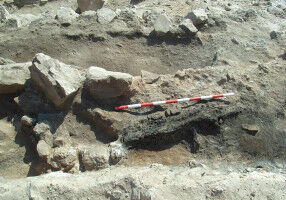
The UV has played a part in the discovery of a 3,500-year-old loom that sheds light on key aspects of the Bronze Age textile revolution

news
Chemistry
Results 1261 - 1280 of 3956.
Environment - Chemistry - 10.06.2021

Researchers have created a plant-based, sustainable, scalable material that could replace single-use plastics in many consumer products. It was a surprise to find our research could also address a big problem in sustainability: that of plastic pollution Tuomas Knowles The researchers, from the University of Cambridge, created a polymer film by mimicking the properties of spider silk, one of the strongest materials in nature.
Physics - Chemistry - 09.06.2021
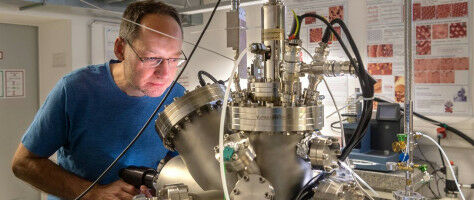
New 2D-materials tailored by self organization and photopolymerisation An international research team led by members from the Technical University of Munich, the Deutsches Museum, the Linköping University has developed a method to manufacture two-dimensional polymers with the thickness of a single molecule.
Physics - Chemistry - 09.06.2021
Expanding the limits of ferroelectrics
Chiara Gattinoni, a materials theorist and Marie Curie Fellow at ETH Zurich, uses the "Piz Daint" supercomputer at CSCS to investigate a special class of materials: ferroelectrics. In the future, these materials could constitute the heart of low-energy-consuming, miniaturised data storage in electrical devices.
Physics - Chemistry - 09.06.2021
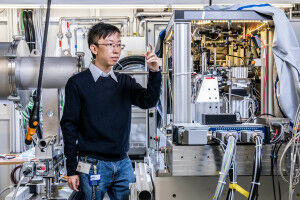
PSI researchers have developed a new tomography method with which they can measure chemical properties inside catalyst materials in 3-D extremely precisely and faster than before. The application is equally important for science and industry. The researchers published their results today in the journal Science Advances .
Physics - Chemistry - 09.06.2021

In a decade-long quest, scientists at Berkeley Lab, the University of Hawaii, and Florida International University uncover new clues to the origins of the universe - and land new chemistry for cleaner combustion engines F or nearly half a century, astrophysicists and organic chemists have been on the hunt for the origins of C6H6, the benzene ring - an elegant, hexagonal molecule comprised of 6 carbon and 6 hydrogen atoms.
Life Sciences - Chemistry - 08.06.2021
Efficiently ’switching on’ bacteria to produce high-value chemicals
Most high-value chemicals are currently produced using fossil fuels - industrial chemistry's use of petroleum accounts for 14% of all greenhouse gas emissions. An exciting alternative is to engineer bacteria as -cell-factories- with a genetic switch that reroutes their chemistry to produce high-value chemicals, such as biofuels, polymers and pharmaceuticals.
Chemistry - Health - 07.06.2021
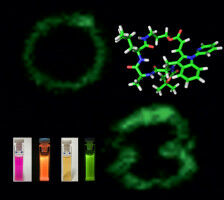
Research team led by the University of Göttingen develops new strategy for labelling peptides Biomolecules regulate the biological functions inside every living cell. If scientists can understand the molecular mechanisms of such functions, then it is possible to detect severe dysfunction which can lead to illness.
Chemistry - 02.06.2021
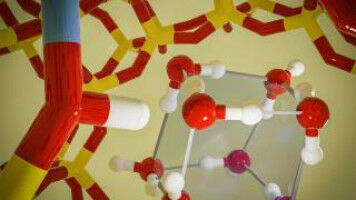
Most materials have a seemingly smooth surface, but under high magnification, they reveal to be full of tiny holes or pores. Zeolites, in particular, have pores in different sizes that allow them to be used in a range of different applications like catalysis, the branch of chemistry that studies how to accelerate chemical reactions, a fundamental pillar for the chemical industry. However, many fundamental questions remain about what actually happens inside the pores of a zeolite and, more precisely, how water influences the overall behaviour of the system.
Physics - Chemistry - 01.06.2021

Scientists at EPFL discover that laser-driven rearrangement of just a few gold atoms inside nanoscale antennas can be observed by the naked eye. Image: Plasmonic nano-antennas fabricated at EPFL: gold nanoparticles are deposited on a gold film covered with a layer of molecules. Light emission from defects near the film surface is strongly enhanced by the antenna effect, enabling its detection. Credit: Nicolas Antille (www.nicolasantille.com).
Physics - Chemistry - 27.05.2021
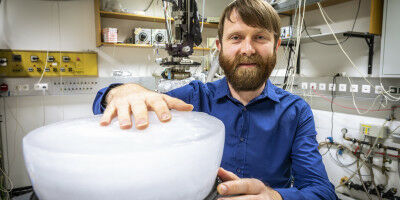
By Susanne Eigner Researchers from TU Graz in Austria and the Universities of Cambridge and Surrey succeeded to track down the first step in ice formation at a surface, revealing that additional energy is needed for water before ice can start to form. Picture material for download at the end of the message Water freezes and turns to ice when brought in contact with a cold surface - a well-known fact.
Physics - Chemistry - 27.05.2021
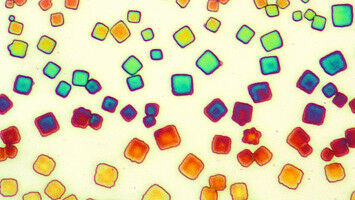
An international team led by Empa and ETH Zurich researchers is playing with shape-engineered nanoscale building blocks that are up to 100-times larger than atoms and ions. And although these nano "Lego bricks" interact with each other with forces vastly different and much weaker than those holding atoms and ions together, they form crystals all by themselves, the structures of which resemble the ones of natural minerals.
Chemistry - 27.05.2021
Understanding membranes better
Team from University of Göttingen and the Hereon present new research strategies A new class of membranes has the potential to deliver highly interesting applications both in biotechnology and in water purification. The theoretical understanding of these polymer membranes is, however, still incomplete.
Chemistry - Physics - 24.05.2021
Complex molecules could hold the secret to identifying alien life
A new system capable of identifying complex molecular signatures could aid in the search for alien life in the universe and could even lead to the creation of new forms of life in the laboratory, scientists say. University of Glasgow researchers have developed a new method called Assembly Theory which can be used to quantify how assembled or complex a molecule is in the laboratory using techniques like mass spectrometry.
Chemistry - Electroengineering - 20.05.2021

A collaborative theoretical study involving three groups from the Institute of Theoretical and Computational Chemistry of the University dofe Barcelona (IQTCUB), published , shows how to reversibly switch between electronic states in organic materials. The paper was also featured as an Editor's Highlight and as a Behind the paper article signed by Stefan Bromley, ICREA Research Professor at IQTCUB and principal researcher in this study.
Physics - Chemistry - 20.05.2021
The first nuclear reactor, explained
In 1942, the Manhattan Project needed to create a chain reaction-a crucial step towards proving that it would be possible to make an atomic bomb. They achieved this first sustained chain reaction , the first created by humans, on Dec. 2, 1942, in a squash court at the University of Chicago. Nicknamed "Chicago Pile-1," the world's first nuclear reactor kicked off the Atomic Age and has a complicated legacy, including the rise of both nuclear energy and nuclear weapons.
Physics - Chemistry - 17.05.2021
Diamonds engage both optical microscopy and MRI for better imaging
The microdiamonds used as biological tracers are about 200 microns across, less than one-hundredth of an inch. They fluoresce red but can also be hyperpolarized, allowing them to be detected both optically - by fluorescence microscopy - and by radio-frequency NMR imaging, boosting the power of both techniques.
Chemistry - Physics - 14.05.2021
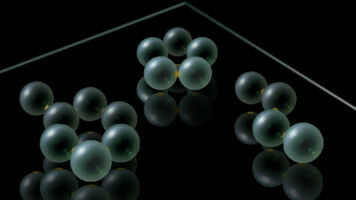
Molecules are so small that we cannot even see them with ordinary microscopes. This makes studying molecules or chemical reactions difficult: researchers are limited to either indirect observations or computer models. A team of researchers from the University of Amsterdam and New York University have now found a way to build micrometre-size model molecules using 'patchy particles'.
Chemistry - Life Sciences - 12.05.2021
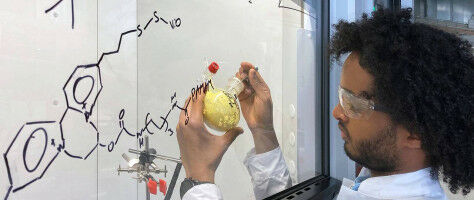
Platinum-free biocatalyst for fuel cells and water electrolysis An enzyme could make a dream come true for the energy industry: It can efficiently produce hydrogen using electricity and can also generate electricity from hydrogen. The enzyme is protected by embedding it in a polymer. An international research team with significant participation of scientists from Technical University of Munich (TUM) has presented the system in the renowned science journal Nature Catalysis.
Chemistry - 12.05.2021
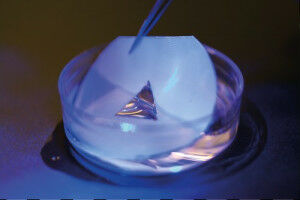
Scientists have created new artificial tissues that mimic some of the complex characteristics and abilities of living tissues, paving the way towards unprecedented advances in medicine, soft-robotics, and micro-engineering. The University of Bristol-led breakthrough, published in Advanced Materials , reports the first way to produce centimetre-sized artificial tissues of any shape and with complex internal structures.
Physics - Chemistry - 12.05.2021
New atomically precise graphene nanoribbon heterojunction sensor developed
A team of physicists and chemists has developed a highly sensitive sensor, which was made possible by a new heterostructure consisting of atomically precise graphene nanoribbons / Publication in 'Nature Communications' An international research team led by the University of Cologne has succeeded for the first time in connecting several atomically precise nanoribbons made of graphene, a modification of carbon, to form complex structures.


Health - Today
Cortical thickness, schizophrenia, and causality in psychiatry: when the trace is mistaken for the cause
Cortical thickness, schizophrenia, and causality in psychiatry: when the trace is mistaken for the cause
Career - Today
Low-income students and girls are steered away from 'risky' creative careers at school
Low-income students and girls are steered away from 'risky' creative careers at school
Environment - Today
UCalgary expedition, with NASA, Canadian and European space agencies, sets out to better understand state of Arctic ice
UCalgary expedition, with NASA, Canadian and European space agencies, sets out to better understand state of Arctic ice
Social Sciences - Mar 24
Young people's wellbeing is improving in Greater Manchester, major survey finds
Young people's wellbeing is improving in Greater Manchester, major survey finds
Environment - Mar 24
Australia's environment is improving but climate change is 'accelerating' damage to ecosystems and wildlife
Australia's environment is improving but climate change is 'accelerating' damage to ecosystems and wildlife
Psychology - Mar 23
The grief myth: it doesn't come in stages or follow a checklist - like love, it endures
The grief myth: it doesn't come in stages or follow a checklist - like love, it endures
History & Archeology - Mar 23
The UV has played a part in the discovery of a 3,500-year-old loom that sheds light on key aspects of the Bronze Age textile revolution
The UV has played a part in the discovery of a 3,500-year-old loom that sheds light on key aspects of the Bronze Age textile revolution