

Health - Mar 30
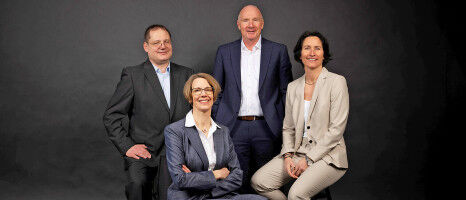
Minister Rianne Letschert visits Twente: education and science as drivers of the hospital of the future
Minister Rianne Letschert visits Twente: education and science as drivers of the hospital of the future

Social Sciences - Mar 30
New Research Project on African American Thought and the German Colonial Imagination
New Research Project on African American Thought and the German Colonial Imagination
Politics - Mar 30
Researcher Carolina Moreno calls for official science communication to counter disinformation in critical periods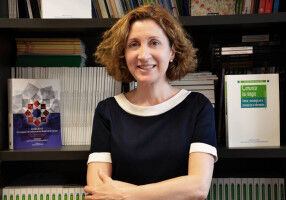
Researcher Carolina Moreno calls for official science communication to counter disinformation in critical periods

Health - Mar 30
Simple screening blood test could help identify undiagnosed heart failure in people living with diabetes
Simple screening blood test could help identify undiagnosed heart failure in people living with diabetes

Economics - Mar 30
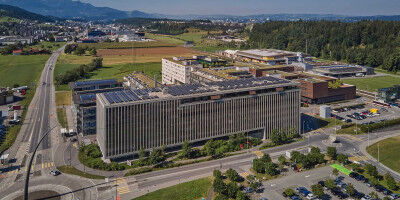
University of Glasgow and Lloyds Banking Group announce groundbreaking agentic AI research programme
University of Glasgow and Lloyds Banking Group announce groundbreaking agentic AI research programme
Astronomy & Space - Mar 30
ANU lends its expertise in laser communications to support NASA's Artemis II crewed moon mission
ANU lends its expertise in laser communications to support NASA's Artemis II crewed moon mission


Life Sciences - Mar 27
Understanding the Brain - TU Ilmenau's EU EMBRACE Project Nominated for European Excellence Award
Understanding the Brain - TU Ilmenau's EU EMBRACE Project Nominated for European Excellence Award
Social Sciences - Mar 27
A manual addresses, for the first time in Spain, child and adolescent sexual exploitation
A manual addresses, for the first time in Spain, child and adolescent sexual exploitation

news
Chemistry
Results 2481 - 2500 of 3959.
Chemistry - Physics - 06.03.2017

Researchers at Caltech and Lawrence Berkeley National Laboratory (Berkeley Lab) have'in just two years'nearly doubled the number of materials known to have potential for use in solar fuels. They did so by developing a process that promises to speed the discovery of commercially viable solar fuels that could replace coal, oil, and other fossil fuels.
Earth Sciences - Chemistry - 06.03.2017

Researchers led by mineralogist Chi Ma have identified three new minerals in a tiny sample of the Khatyrka meteorite. The meteorite, recovered in pieces from the Koryak Mountains in eastern Russia in 1979 and 2011, made news in recent years for containing the first three natural quasicrystals ever found.
Chemistry - Life Sciences - 03.03.2017
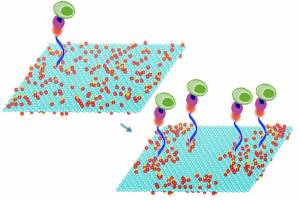
A single cell can contain a wealth of information about the health of an individual. Now, a new method developed at MIT and National Chiao Tung University could make it possible to capture and analyze individual cells from a small sample of blood, potentially leading to very low-cost diagnostic systems that could be used almost anywhere.
Life Sciences - Chemistry - 03.03.2017
Precise technique tracks dopamine in the brain
MIT researchers have devised a way to measure dopamine in the brain much more precisely than previously possible, which should allow scientists to gain insight into dopamine's roles in learning, memory, and emotion. Dopamine is one of the many neurotransmitters that neurons in the brain use to communicate with each other.
Life Sciences - Chemistry - 03.03.2017
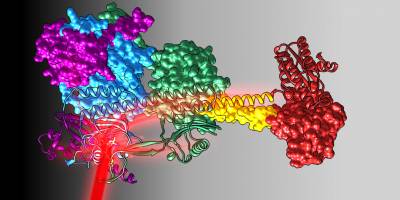
For the first time ever, researchers at TU Graz and the Medical University of Graz have managed to functionally characterise the three-dimensional interaction between red-light receptors and enzymatic effectors. The results, with implications for optogenetics, have been published in Science Advances.
Physics - Chemistry - 02.03.2017

MIT physicists have created a new form of matter, a supersolid, which combines the properties of solids with those of superfluids. By using lasers to manipulate a superfluid gas known as a Bose-Einstein condensate, the team was able to coax the condensate into a quantum phase of matter that has a rigid structure - like a solid - and can flow without viscosity - a key characteristic of a superfluid.
Life Sciences - Chemistry - 01.03.2017

Compared to bacteria, in eukaryotes the genetic material is located in the cell nucleus. Its outer shell consists of the nuclear membrane with numerous nuclear pores. Molecules are transported into or out of the cell nucleus via these pores. Beneath the membrane lies the nuclear lamina, a threadlike meshwork merely a few millionths of a millimeter thick.
Health - Chemistry - 01.03.2017
New research could increase availability of life saving drug
An effective treatment for a deadly strain of meningitis could become more readily available in less developed nations as a result of research led by Professor Graham Sandford of the Department of Chemistry. Cryptococcal Meningitis (CM) is the leading cause of meningitis in Saharan Africa and also accounts for 20% of HIV/AIDs deaths worldwide.
Physics - Chemistry - 27.02.2017
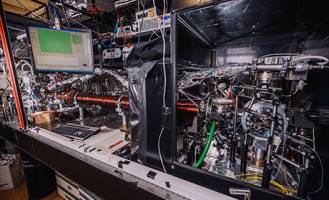
A Heidelberg physics project funded by the German Research Foundation (DFG) will focus on a new type of dating method for use in the earth and environmental sciences. The research team will deploy a special radioactive isotope of the noble gas argon (Ar) for the purpose of water dating. This isotope is useful for determining age in the range of 50 to 1,000 years.
Astronomy & Space - Chemistry - 27.02.2017
Volcanic hydrogen spurs chances of finding exoplanet life
Ramses Ramirez, research associate at Cornell's Carl Sagan Institute, left, and Lisa Kaltenegger, professor of astronomy and director of the Sagan Institute. Hunting for habitable exoplanets now may be easier: Cornell astronomers report that hydrogen pouring from volcanic sources on planets throughout the universe could improve the chances of locating life in the cosmos.
Life Sciences - Chemistry - 24.02.2017
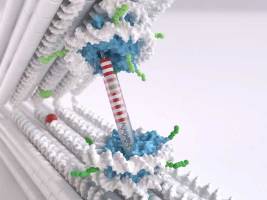
Research news The genome molecule contains the blueprint for life. The manner in which the blueprint is packed into the cell determines which genes are active and which are set to inactive. Disturbing this structure can result in illnesses such as cancer. Munich scientists have now succeeded in using molecular "tweezers" made from DNA to measure interactions at the first packaging level of the genome.
Chemistry - Environment - 24.02.2017

Scientists led by a team at Caltech have developed a new method for potentially removing nearly all sulfur compounds from gas and diesel fuel. Sulfur compounds in fuels such as gasoline and diesel create air pollution when the fuel is burned. To address that challenge, large-scale oil refinery processes remove the majority of sulfur from fuel down to a government-mandated level.
Life Sciences - Chemistry - 22.02.2017

A common strategy to create high-yielding plants is hybrid breeding - crossing two different inbred lines to obtain characteristics superior to each parent. However, getting the inbred lines in the first place can be a hassle. Inbred lines consist of genetically uniform individuals and are created through numerous generations of self-crossing.
Physics - Chemistry - 22.02.2017
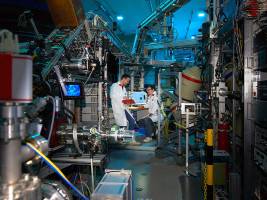
Research news Rechargeable lithium batteries with cathodes comprising nickel, manganese, and cobalt, are viewed as the most potent today. But they, too, have a limited lifespan. Already in the first cycle they lose up to ten percent of their capacity. Why this happens and what can be done to alleviate the ensuing gradual loss of capacity has now been investigated in detail by a team of scientists using positrons at the Technical University of Munich (TUM).
Physics - Chemistry - 21.02.2017
Synthetic Nanoparticles Achieve Complexity of Protein Molecules
Findings Will Help Guide Nanoparticle Construction, Could Lead to New Materials, Drugs By Jocelyn Duffy Graphic shows Au246's hierarchical assembly into an artificial solid. Chemists at Carnegie Mellon University have demonstrated that synthetic nanoparticles can achieve the same level of structural complexity, hierarchy and accuracy as their natural counterparts - biomolecules.
Physics - Chemistry - 21.02.2017
Highly Sensitive Method for Detecting Ion Pairs in Aqueous Solution Developed
Scientists detected a very specialized type of electron transfer in an aqueous salt solution ' 036/2017 from Feb 21, 2017 Scientists of the Helmholtz-Zentrum Berlin, Freie Universität Berlin, Universität Heidelberg, and the University of Chemistry and Technology Prague have empirically detected a very specialized type of electron transfer in an aqueous salt solution, one which had only been predicted theoretically up to now.
Health - Chemistry - 20.02.2017

New molecules which scientists hope could one day become drugs for both cancer and diabetes have been created at the University of Bath. The compounds can increase glucose uptake into fat cells and could help diabetes patients manage their disease. They also reduce the proliferation of colon cancer cells, and could be used to reveal the link between diabetes and cancer, which is poorly understood.
Environment - Chemistry - 17.02.2017
The University of Nottingham launches new tool to evaluate peatland sensitivity to global climate change
Scientists at The University of Nottingham are using radar waves as part of a new tool developed to evaluate peatland sensitivity to global climate change. The new method is based upon an Interferometric Synthetic Aperture Radar (InSAR) technique that uses radar waves to measure vertical land surface motion.
Chemistry - Physics - 17.02.2017
Molecular phenomenon discovered by advanced NMR facility
Cutting edge tech shows molecule self-assembling into different forms passing from solution state to solid state and back again - a curious phenomenon in science - says University of Warwick research Phenomenon discovered using state-of-the-art national solid-state NMR facility at Warwick Research published by Chemistry: A European Journal - designated as 'Very Important Paper' Cutting edge technology has shown a molecule self-assembling into di
Life Sciences - Chemistry - 16.02.2017
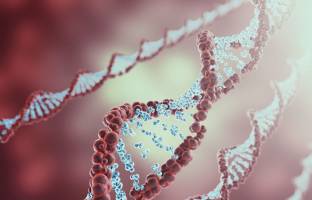
The evolution of cells and organisms is thought to have been preceded by a phase in which informational molecules like DNA could be replicated selectively. New work shows that hairpin structures make particularly effective DNA replicators. In the metabolism of all living organisms there is a clear division of labor: Nucleic acids (DNA and RNA) carry the information for the synthesis of proteins, and proteins provide the structural and executive functions required by cells, such as the controlled and specific catalysis of chemical reactions by enzymes.


Health - Mar 30
Minister Rianne Letschert visits Twente: education and science as drivers of the hospital of the future
Minister Rianne Letschert visits Twente: education and science as drivers of the hospital of the future
Social Sciences - Mar 30
New Research Project on African American Thought and the German Colonial Imagination
New Research Project on African American Thought and the German Colonial Imagination
Politics - Mar 30
Researcher Carolina Moreno calls for official science communication to counter disinformation in critical periods
Researcher Carolina Moreno calls for official science communication to counter disinformation in critical periods
Health - Mar 30
Simple screening blood test could help identify undiagnosed heart failure in people living with diabetes
Simple screening blood test could help identify undiagnosed heart failure in people living with diabetes
Economics - Mar 30
University of Glasgow and Lloyds Banking Group announce groundbreaking agentic AI research programme
University of Glasgow and Lloyds Banking Group announce groundbreaking agentic AI research programme
Astronomy & Space - Mar 30
ANU lends its expertise in laser communications to support NASA's Artemis II crewed moon mission
ANU lends its expertise in laser communications to support NASA's Artemis II crewed moon mission
Life Sciences - Mar 27
Understanding the Brain - TU Ilmenau's EU EMBRACE Project Nominated for European Excellence Award
Understanding the Brain - TU Ilmenau's EU EMBRACE Project Nominated for European Excellence Award
Social Sciences - Mar 27
A manual addresses, for the first time in Spain, child and adolescent sexual exploitation
A manual addresses, for the first time in Spain, child and adolescent sexual exploitation