



Life Sciences - Mar 27
Understanding the Brain - TU Ilmenau's EU EMBRACE Project Nominated for European Excellence Award
Understanding the Brain - TU Ilmenau's EU EMBRACE Project Nominated for European Excellence Award
Social Sciences - Mar 27
A manual addresses, for the first time in Spain, child and adolescent sexual exploitation
A manual addresses, for the first time in Spain, child and adolescent sexual exploitation


Environment - Mar 26
Changing vegetation in thawing permafrost increases emissions of greenhouse gases
Changing vegetation in thawing permafrost increases emissions of greenhouse gases
Environment - Mar 26
University of Manchester hits major sustainability milestone, with Main Campus becoming 100% 'Zero Landfill'
University of Manchester hits major sustainability milestone, with Main Campus becoming 100% 'Zero Landfill'
Social Sciences - Mar 26
"It would be naive to believe that a social media ban will solve all problems"
"It would be naive to believe that a social media ban will solve all problems"


Health - Mar 26
Earlier detection, better outcomes: Irish researchers target rising bowel cancer rates with new blood test
Earlier detection, better outcomes: Irish researchers target rising bowel cancer rates with new blood test

Environment - Mar 26
UK must improve energy efficiency to end 50 years of policy failure and prevent future energy crises, study argues
UK must improve energy efficiency to end 50 years of policy failure and prevent future energy crises, study argues
Mathematics - Mar 26
From Materials to Medical Imaging, Fonseca's Work Shapes the Future of Innovation
From Materials to Medical Imaging, Fonseca's Work Shapes the Future of Innovation


news
Chemistry
Results 2561 - 2580 of 3958.
Chemistry - Physics - 23.11.2016
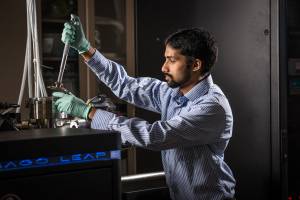
Researchers have revealed new atomic-scale details about pesky deposits that can stop or slow chemical reactions vital to fuel production and other processes. This disruption to reactions is known as deactivation or poisoning. The research team employed a combination of measurements, including X-ray experiments at the Department of Energy's Lawrence Berkeley National Laboratory (Berkeley Lab), to gather the most detailed information yet on problematic carbon-based deposits called "coke,” and to find ways to prevent its formation or reduce its effects.
Environment - Chemistry - 22.11.2016

Naturally occurring chemicals found in road salts commonly used to de-ice paved surfaces can alter the sex ratios in nearby frog populations, a phenomenon that could reduce the size and viability of species populations, according to a new study co-led by scientists at Yale and Rensselaer Polytechnic Institute.
Life Sciences - Chemistry - 21.11.2016
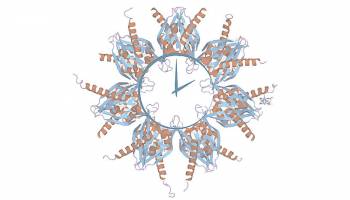
Humans, as well as many other organisms, possess internal clocks. The exact timing, however, can differ between individuals - for instance, some people are early risers whereas others are "night owls". Neurobiologist Kristin Tessmar-Raible and her team at the Max F. Perutz Laboratories (MFPL) of the University of Vienna and Medical University of Vienna investigated that underlie such timing variations or "chronotypes".
Life Sciences - Chemistry - 17.11.2016
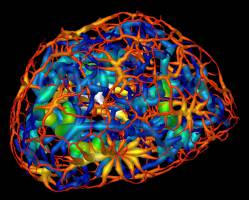
X-ray technique at Berkeley Lab provides high-res views of the structure and movement of genetic material in cell nuclei Scientists have mapped the reorganization of genetic material that takes place when a stem cell matures into a nerve cell. Detailed 3-D visualizations show an unexpected connectivity in the genetic material in a cell's nucleus, and provide a new understanding of a cell's evolving architecture.
Chemistry - Physics - 17.11.2016
Researchers Uncover a New Way Heat Travels Between Molecules
A new model, developed by University of Pennsylvania chemists, could be the first step towards better harnessing heat energy to power nanoscale devices. Scientists have long understood that heat travels through vibrations. Molecules vibrate faster and faster as they heat up, and their vibrations cause other molecules around them to vibrate as well, warming cooler nearby molecules.
Chemistry - Health - 17.11.2016
Researchers create synthetic skin
Wearable technologies could be transformed with a new type of artificial material that can mimic the properties of skin from sensing touch to even being self-healing. Thursday 17 November 2016 It is thought that the device could be used in prosthetics, which would improve on current designs that are heavy, easily damaged and cause difficulty in sensing touch in the wearer.
Health - Chemistry - 16.11.2016
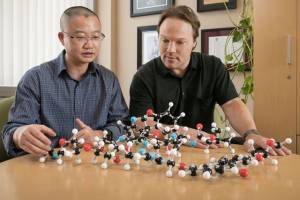
A synthetic version of a rare toxin produced by a sea creature appears to hold promise for treating many different types of cancer while minimizing the harmful side effects of widely used chemotherapy drugs. A study published today Translational Medicine describes research on a substance called diazonamide, which prevents cell division, and was isolated from a marine animal called Diazona angulata .
Physics - Chemistry - 15.11.2016
Carbon Nanotubes Couple Light and Matter
With their research on nanomaterials for optoelectronics, scientists from Heidelberg University and the University of St Andrews (Scotland) have succeeded for the first time to demonstrate a strong interaction of light and matter in semiconducting carbon nanotubes. Such strong light-matter coupling is an important step towards realising new light sources, such as electrically pumped lasers based on organic semiconductors.
Physics - Chemistry - 15.11.2016
A New Way to Image Solar Cells in 3-D
Next-generation solar cells made of super-thin films of semiconducting material hold promise because they're relatively inexpensive and flexible enough to be applied just about anywhere. Researchers are working to dramatically increase the efficiency at which thin-film solar cells convert sunlight to electricity.
Chemistry - 14.11.2016
Battery electric cars are a better choice for reducing emissions than fuel cell vehicles, Stanford study finds
A study of energy use in a community near Stanford finds that all-electric battery vehicles offer a more affordable way to reduce carbon dioxide emissions than cars powered by hydrogen. Many communities would be better off investing in electric vehicles that run on batteries instead of hydrogen fuel cells, in part because the hydrogen infrastructure provides few additional energy benefits for the community besides clean transportation.
Physics - Chemistry - 11.11.2016
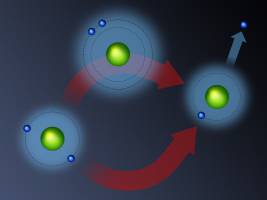
Scientists observe how quantum superpositions build up in a helium atom within femtoseconds. Just like in the famous double-slit experiment, there are two ways to reach the final outcome. It is definitely the most famous experiment in quantum physics: in the double slit experiment, a particle is fired onto a plate with two parallel slits, so there are two different paths on which the particle can reach the detector on the other side.
Physics - Chemistry - 09.11.2016

Scientists have found a way to engineer the atomic-scale chemical properties of a water-splitting catalyst for integration with a solar cell, and the result is a big boost to the stability and efficiency of artificial photosynthesis. Led by researchers at the Department of Energy's Lawrence Berkeley National Laboratory (Berkeley Lab), the project is described in a paper published this week .
Chemistry - 09.11.2016
Spray tuning
If you've ever splattered paint on a canvas or sprayed a cookie sheet with oil, you likely created - aside from a minor mess - a shower of droplets, ranging from dime-sized splotches to pencil-point specks. Such droplet sizes may seem random, but now engineers at MIT can predict a liquid's droplet size distribution, including the likelihood of producing very big and very small droplets, based on one main property: the liquid's viscoelasticity, or stickiness.
Chemistry - Physics - 08.11.2016
Scientists probe underground depths of Earth’s carbon cycle
Carbon in the fluid of the Earth's mantle is not in the form of carbon dioxide but rather in carbonate and bicarbonate ions, researchers found. Understanding how carbon dissolves in water at the molecular level under extreme conditions is critical to understanding the Earth's deep carbon cycle'a process that ultimately influences global climate change.
Physics - Chemistry - 03.11.2016
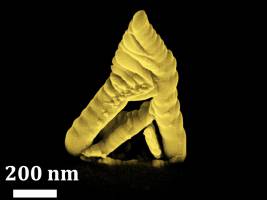
It is the Philosopher's Stone of Nanotechnology: using a technological trick, scientists at TU Wien (Vienna) have succeeded in creating nanostructures made of pure gold.
Chemistry - Physics - 02.11.2016
Liquid crystal design method could speed development of cheap chemical sensors
University of Wisconsin-Madison chemical engineers have developed a new way to create inexpensive chemical sensors for detecting explosives, industrial pollutants or even the chemical markers of disease in a patient's breath. Manos Mavrikakis and Nicholas L. Abbott , UW?Madison professors of chemical and biological engineering, combined their expertise in computational chemistry and liquid crystals to turn a sensor Abbott built to detect a molecular mimic of deadly sarin gas into a roadmap for tuning similar sensors to flag other dangerous or important chemicals.
Physics - Chemistry - 01.11.2016
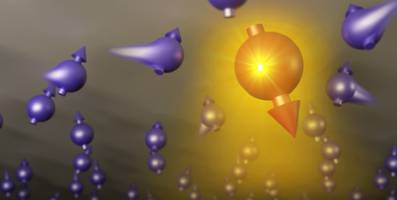
Electrons in a solid can team up to form so-called quasiparticles, which lead to new phenomena. Physicists at ETH in Zurich have now studied previously unidentified quasiparticles in a new class of atomically thin semiconductors.
Environment - Chemistry - 01.11.2016

Low-income and Latina pregnant women who seek care at Zuckerberg San Francisco General have widespread exposure to environmental pollutants, many of which show up in higher levels in newborns than the mothers, according to a new study from UC Berkeley, UC San Francisco and Biomonitoring California. The study is the first in the United States to measure exposure to 59 toxic chemicals in pregnant women and their newborns.
Chemistry - Physics - 31.10.2016
Engineers set record for capturing and storing solar energy in hydrogen fuel
Stanford scientists used the electricity generated by high-efficiency solar cells to turn water into a chemical capable of storing 30 percent of the sun's energy over long periods of time. Solar energy has the potential to provide abundant power, but only if scientists solve two key issues: storing the energy for use at all hours, particularly at night, and making the technology more cost effective.
Materials Science - Chemistry - 30.10.2016

ETH researchers have used an additive manufacturing process to print an extremely porous ceramic component. Manufacturing a material of this kind with a 3D printer is a considerable achievement. Doctoral student Carla Minas, from the Complex Materials group led by ETH Professor André Studart, has succeeded in creating a highly porous and yet extremely robust ceramic material, which she 'printed' using an additive manufacturing process.


Life Sciences - Mar 27
Understanding the Brain - TU Ilmenau's EU EMBRACE Project Nominated for European Excellence Award
Understanding the Brain - TU Ilmenau's EU EMBRACE Project Nominated for European Excellence Award
Social Sciences - Mar 27
A manual addresses, for the first time in Spain, child and adolescent sexual exploitation
A manual addresses, for the first time in Spain, child and adolescent sexual exploitation
Environment - Mar 26
Changing vegetation in thawing permafrost increases emissions of greenhouse gases
Changing vegetation in thawing permafrost increases emissions of greenhouse gases
Environment - Mar 26
University of Manchester hits major sustainability milestone, with Main Campus becoming 100% 'Zero Landfill'
University of Manchester hits major sustainability milestone, with Main Campus becoming 100% 'Zero Landfill'
Social Sciences - Mar 26
"It would be naive to believe that a social media ban will solve all problems"
"It would be naive to believe that a social media ban will solve all problems"
Health - Mar 26
Earlier detection, better outcomes: Irish researchers target rising bowel cancer rates with new blood test
Earlier detection, better outcomes: Irish researchers target rising bowel cancer rates with new blood test
Environment - Mar 26
UK must improve energy efficiency to end 50 years of policy failure and prevent future energy crises, study argues
UK must improve energy efficiency to end 50 years of policy failure and prevent future energy crises, study argues
Mathematics - Mar 26
From Materials to Medical Imaging, Fonseca's Work Shapes the Future of Innovation
From Materials to Medical Imaging, Fonseca's Work Shapes the Future of Innovation