



Life Sciences - Mar 27
Understanding the Brain - TU Ilmenau's EU EMBRACE Project Nominated for European Excellence Award
Understanding the Brain - TU Ilmenau's EU EMBRACE Project Nominated for European Excellence Award
Social Sciences - Mar 27
A manual addresses, for the first time in Spain, child and adolescent sexual exploitation
A manual addresses, for the first time in Spain, child and adolescent sexual exploitation


Environment - Mar 26
Changing vegetation in thawing permafrost increases emissions of greenhouse gases
Changing vegetation in thawing permafrost increases emissions of greenhouse gases
Environment - Mar 26
University of Manchester hits major sustainability milestone, with Main Campus becoming 100% 'Zero Landfill'
University of Manchester hits major sustainability milestone, with Main Campus becoming 100% 'Zero Landfill'
Social Sciences - Mar 26
"It would be naive to believe that a social media ban will solve all problems"
"It would be naive to believe that a social media ban will solve all problems"


Health - Mar 26
Earlier detection, better outcomes: Irish researchers target rising bowel cancer rates with new blood test
Earlier detection, better outcomes: Irish researchers target rising bowel cancer rates with new blood test

Environment - Mar 26
UK must improve energy efficiency to end 50 years of policy failure and prevent future energy crises, study argues
UK must improve energy efficiency to end 50 years of policy failure and prevent future energy crises, study argues
Mathematics - Mar 26
From Materials to Medical Imaging, Fonseca's Work Shapes the Future of Innovation
From Materials to Medical Imaging, Fonseca's Work Shapes the Future of Innovation


news
Chemistry
Results 2581 - 2600 of 3958.
Chemistry - Social Sciences - 25.10.2016
Workers and farmers find social sustainability gains in organic farming
New research from the University of Bristol has found that embracing organic farming methods can bring gains in social sustainability, and benefits for farmers and workers. The study, by PhD candidate Lydia Medland, found workers in organic farming enjoy increased social sustainability of working conditions and relations.
Chemistry - 24.10.2016

Unseen out in the ocean, countless single-celled organisms grow protective shells to keep them safe as they drift along, living off other tiny marine plants and animals. Taken together, the shells are so plentiful that when they sink they provide one of the best records for the history of ocean chemistry.
Chemistry - 24.10.2016
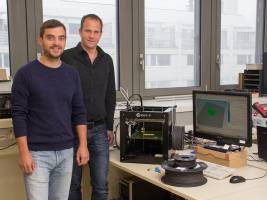
How can you produce a magnet with exactly the right magnetic field? TU Wien has a solution: for the first time, magnets can be made with a 3D printer. Today, manufacturing strong magnets is no problem from a technical perspective. It is, however, difficult to produce a permanent magnet with a magnetic field of a specific pre-determined shape.
Physics - Chemistry - 21.10.2016
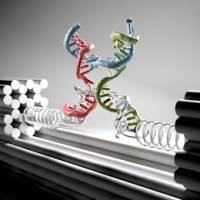
Physicists at LMU have developed a novel nanotool that provides a facile means of characterizing the mechanical properties of biomolecules. Faced with the thousands of proteins and genes found in virtually every cell in the body, biologists want to know how they all work exactly: How do they interact to carry out their specific functions and how do they respond and adapt to perturbations? One of the crucial factors in all of these processes is the question of how biomolecules react to the minuscule forces that operate at the molecular level.
Chemistry - Innovation - 20.10.2016
Turning biofuel waste into wealth in a single step
Lignin is a bulky chain of molecules found in wood and is usually discarded during biofuel production. But in a new method by EPFL chemists, the simple addition of formaldehyde could turn it into the main focus. Reducing our reliance on fossil fuels means turning to plant-derived biofuels and chemicals.
Health - Chemistry - 20.10.2016

Research news Imiquimod is a medication successfully used in the treatment of skin diseases. In addition to its known mechanism of action, it also triggers other processes in the body. Scientists at the Technical University of Munich (TUM) have succeeded in explaining the molecular fundamentals of these additional effects.
Physics - Chemistry - 20.10.2016
Safe new storage method could be key to future of hydrogen-powered vehicles
Hydrogen is often described as the fuel of the future, particularly when applied to hydrogen-powered fuel cell vehicles. One of the main obstacles facing this technology - a potential solution to future sustainable transport - has been the lack of a lightweight, safe on-board hydrogen storage material.
Chemistry - Earth Sciences - 20.10.2016
U-M’s Joel Blum named editor-in-chief of new journal ACS Earth and Space Chemistry
ANN ARBOR?University of Michigan environmental scientist Joel Blum has been named the inaugural editor of a new American Chemical Society journal dedicated to geochemistry, atmospheric and marine chemistry, and astrochemistry research. ACS Earth and Space Chemistry will begin publication early next year and will unite the diverse and global community of scientists who explore the complex chemical nature of materials and processes that occur on Earth, within our solar system, and in the universe beyond.
Chemistry - Health - 17.10.2016
Better, stronger: polymer breakthrough to improve things we use everyday
Medicine, mobile phones, computers and clothes could all be enhanced using the process for making paint, according to research by the University of Warwick. A breakthrough in the understanding of polymers - the molecules from which almost everything we use is made - is set to make commercial products, from water bottles to electrical goods, stronger and more effective for their uses.
Physics - Chemistry - 13.10.2016
Exceptionally robust quantum states found in industrially important semiconductor
This image shows an electron quantum bit (purple arrow near center) in a silicon carbide crystal interacting with nuclear spins that are derived from naturally occurring 29Si (green arrows) and 13C (red arrows) isotopes. A grey pyramid indicates the local crystal symmetry environment of the qubit. The qubit would eventually lose its quantum properties in the presence of the magnetic noise produced by the random nuclear spin fluctuations in these materials, the process known as quantum decoherence.
Life Sciences - Chemistry - 13.10.2016
Study Identifies New Mechanism of RNA Degradation in Plants
The totality of RNA molecules in an organism at any one time is the product of a delicate dance. Genes must be 'turned on,' or expressed, in order to turn DNA into RNA and then that RNA into proteins that accomplish an organism's physiological needs. But, just as important, those RNA transcripts must be cleared away once they are no longer required.
Physics - Chemistry - 13.10.2016
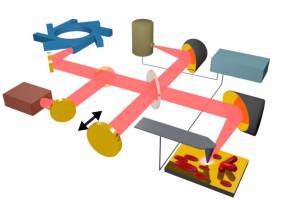
Berkeley Lab and University of Colorado-Boulder team develop new way to reveal crystal features in functional materials. Detailing the molecular makeup of materials'from solar cells to organic light-emitting diodes (LEDs) and transistors, and medically important proteins'is not always a crystal-clear process.
Chemistry - 13.10.2016
Research news Scientists from Technical University of Munich have used the accurate x-ray vision provided by DESY's radiation source PETRA III to observe the degradation of polymer solar cells. Their study suggests an approach for improving the manufacturing process to increase the long-term stability of such organic solar cells.
Chemistry - Physics - 11.10.2016
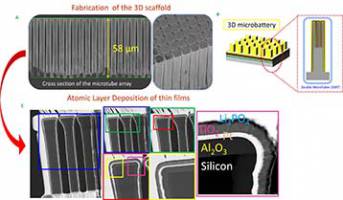
In the race towards miniaturization, a French-US team—mostly involving researchers from the CNRS, Université de Lille, Université de Nantes and Argonne National Laboratory (US) as part of the Research Network on Electrochemical Energy Storage (RS2E) 1 —has succeeded in improving the energy density of a rechargeable battery without increasing its size (limited to a few square millimeters in mobile sensors).
Physics - Chemistry - 11.10.2016
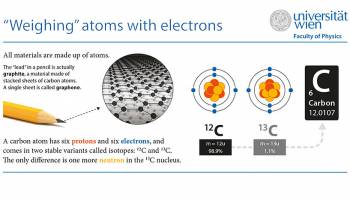
uni:view magazin Videos Presse Social Media The chemical properties of atoms depend on the number of protons in their nuclei, placing them into the periodic table. However, even chemically identical atoms can have different masses - these variants are called isotopes. Although techniques to measure such mass differences exist, these have either not revealed where they are in a sample, or have required dedicated instrumentation and laborious sample preparation.
Physics - Chemistry - 10.10.2016
UCLA physicists have shown that shining multicolored laser light on rubidium atoms causes them to lose energy and cool to nearly absolute zero. This result suggests that atoms fundamental to chemistry, such as hydrogen and carbon, could also be cooled using similar lasers, an outcome that would allow researchers to study the details of chemical reactions involved in medicine.
Physics - Chemistry - 10.10.2016
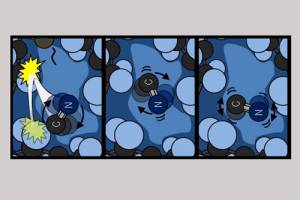
The most detailed exploration to date of how energy flows from a hot molecule into a surrounding liquid has been undertaken by a team of scientists at the University of Bristol. Led by Professors Mike Ashfold and Andrew Orr-Ewing from the School of Chemistry , the research, published recently , has significant implications for a fundamental understanding of the mechanisms of cooling and provides fresh insights into the extraordinarily complex behaviour of liquids.
Chemistry - 07.10.2016
Experts find secret to gold’s catalytic powers
Scientists at the Cardiff Catalysis Institute reveal reason behind gold's unparalleled catalytic ability A team led by experts at Cardiff University have peered deep inside the structure of a gold catalyst to find the reason for the material's remarkable activity. The team, from the Cardiff Catalysis Institute, have discovered a cocktail of different sized gold particles within the catalyst that each contribute, to different degrees, to gold's catalytic ability.
Chemistry - Physics - 07.10.2016
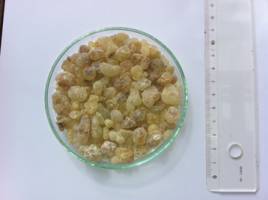
It is one of the oldest fragrances in the world. Nicolas Baldovini's team at the Institut de chimie de Nice (CNRS/UNS) has just discovered the components that give frankincense its distinctive odor: two molecules found for the first time in nature, named “olibanic acids” by the scientists. Their research results have just been published online, on the website of the journal Angewandte Chemie International Edition .
Chemistry - Life Sciences - 06.10.2016
Small droplets feel the vibe
A team of researchers at the University of Bristol have used ultrasonic forces to accurately pattern thousands of microscopic water-based droplets. Each droplet can be designed to perform a biochemical experiment, which could pave the way for highly efficient lab-on-a-chip devices with future applications in drug discovery and clinical diagnostics.


Life Sciences - Mar 27
Understanding the Brain - TU Ilmenau's EU EMBRACE Project Nominated for European Excellence Award
Understanding the Brain - TU Ilmenau's EU EMBRACE Project Nominated for European Excellence Award
Social Sciences - Mar 27
A manual addresses, for the first time in Spain, child and adolescent sexual exploitation
A manual addresses, for the first time in Spain, child and adolescent sexual exploitation
Environment - Mar 26
Changing vegetation in thawing permafrost increases emissions of greenhouse gases
Changing vegetation in thawing permafrost increases emissions of greenhouse gases
Environment - Mar 26
University of Manchester hits major sustainability milestone, with Main Campus becoming 100% 'Zero Landfill'
University of Manchester hits major sustainability milestone, with Main Campus becoming 100% 'Zero Landfill'
Social Sciences - Mar 26
"It would be naive to believe that a social media ban will solve all problems"
"It would be naive to believe that a social media ban will solve all problems"
Health - Mar 26
Earlier detection, better outcomes: Irish researchers target rising bowel cancer rates with new blood test
Earlier detection, better outcomes: Irish researchers target rising bowel cancer rates with new blood test
Environment - Mar 26
UK must improve energy efficiency to end 50 years of policy failure and prevent future energy crises, study argues
UK must improve energy efficiency to end 50 years of policy failure and prevent future energy crises, study argues
Mathematics - Mar 26
From Materials to Medical Imaging, Fonseca's Work Shapes the Future of Innovation
From Materials to Medical Imaging, Fonseca's Work Shapes the Future of Innovation