



Life Sciences - Today
Understanding the Brain - TU Ilmenau's EU EMBRACE Project Nominated for European Excellence Award
Understanding the Brain - TU Ilmenau's EU EMBRACE Project Nominated for European Excellence Award
Social Sciences - Today
A manual addresses, for the first time in Spain, child and adolescent sexual exploitation
A manual addresses, for the first time in Spain, child and adolescent sexual exploitation


Environment - Mar 26
Changing vegetation in thawing permafrost increases emissions of greenhouse gases
Changing vegetation in thawing permafrost increases emissions of greenhouse gases
Environment - Mar 26
University of Manchester hits major sustainability milestone, with Main Campus becoming 100% 'Zero Landfill'
University of Manchester hits major sustainability milestone, with Main Campus becoming 100% 'Zero Landfill'
Social Sciences - Mar 26
"It would be naive to believe that a social media ban will solve all problems"
"It would be naive to believe that a social media ban will solve all problems"


Health - Mar 26
Earlier detection, better outcomes: Irish researchers target rising bowel cancer rates with new blood test
Earlier detection, better outcomes: Irish researchers target rising bowel cancer rates with new blood test

Environment - Mar 26
UK must improve energy efficiency to end 50 years of policy failure and prevent future energy crises, study argues
UK must improve energy efficiency to end 50 years of policy failure and prevent future energy crises, study argues
Mathematics - Mar 26
From Materials to Medical Imaging, Fonseca's Work Shapes the Future of Innovation
From Materials to Medical Imaging, Fonseca's Work Shapes the Future of Innovation


news
Chemistry
Results 2641 - 2660 of 3958.
Chemistry - Pharmacology - 09.08.2016

Synthetic biology is an emerging and rapidly evolving engineering discipline.
Chemistry - Astronomy & Space - 08.08.2016

Scientists suggest signs of life from under Mars' surface may not survive in rocks excavated by some meteorite impacts. Scientists analysing samples from Mars' surface have so far not conclusively detected organic compounds that are indigenous to Mars, which would be indicators of past or present life.
Health - Chemistry - 06.08.2016
Rush-hour for neutrophils
LMU researchers have shown that circadian oscillations in the influx of immune cells into the damaged tissue play a crucial role in exacerbating the effects of an acute heart attack in the early morning hours. The extent of the inflammatory reaction triggered by an acute heart attack, and of the resulting damage to the heart muscle, varies depending on the time of day at which the infarct occurs.
Astronomy & Space - Chemistry - 03.08.2016
Astronomers make first accurate measurement of oxygen in distant galaxy
Quantifying the amount of oxygen is key to understanding how matter cycles in and out of galaxies Stuart Wolpert Ryan Sanders and the CANDELS team UCLA astronomy graduate student Ryan Sanders discovered a way to precisely measure oxygen in distant galaxies like COSMOS-1908, indicated by the arrow. UCLA astronomers have made the first accurate measurement of the abundance of oxygen in a distant galaxy.
Chemistry - Physics - 03.08.2016
5 Nanoscience Research Projects That Could Deliver Big Results
Berkeley Lab researchers are using the science of the very small to help solve big challenges. That's because, at the nanoscale'the scale of molecules and proteins'new and exciting properties emerge that can possibly be put to use. Here are five projects, now underway and recently highlighted in the news center , which promise big results from the smallest of building blocks: 1.
Physics - Chemistry - 02.08.2016
Researchers Invent Cheaper, Flexible Smart Windows
AUSTIN, Texas - Researchers in the Cockrell School of Engineering at The University of Texas at Austin have invented a new flexible smart window material that, when incorporated into windows, sunroofs, or even curved glass surfaces, will have the ability to control both heat and light from the sun. Their article about the new material will be published in the September .
Mechanical Engineering - Chemistry - 01.08.2016
Method opens a window on how stress and strain affect battery performance
CHAMPAIGN, Ill. — Batteries that charge faster and have greater capacity could boost portable electronic devices and electric cars. A new method to simultaneously test stress and strain in battery electrodes gives researchers a window into the mechanical, electrical and chemical forces within lithium-ion batteries.
Life Sciences - Chemistry - 28.07.2016
Metabolic molecule speeds up process by which stem cells differentiate
UCLA Broad Stem Cell Research Center Neural cells produced from human pluripotent stem cells in the presence of a metabolite called alpha-ketoglutarate. Researchers at the UCLA Eli and Edythe Broad Center of Regenerative Medicine and Stem Cell Research have discovered that a metabolic molecule called alpha-ketoglutarate helps pluripotent stem cells mature early in the process of becoming adult organs and tissues.
Chemistry - Health - 27.07.2016
All E-Cigarettes Emit Harmful Chemicals, but Some Emit More Than Others
: Jon Weiner , (510)486-4014 While previous studies have found that electronic cigarettes emit toxic compounds, a new study from Lawrence Berkeley National Laboratory (Berkeley Lab) has pinpointed the source of these emissions and shown how factors such as the temperature, type, and age of the device play a role in emission levels, information that could be valuable to both manufacturers and regulators seeking to minimize the health impacts of these increasingly popular devices.
Chemistry - Physics - 27.07.2016
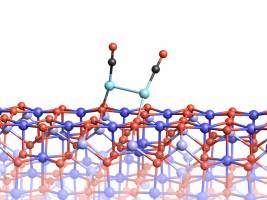
The remarkable behaviour of platinum atoms on magnetite surfaces could lead to better catalysts. Scientists at TU Wien (Vienna) can now explain how platinum atoms can form pairs with the help of carbon monoxide. At first glance, magnetite appears to be a rather inconspicuous grey mineral. But on an atomic scale, it has remarkable properties: on magnetite, single metal atoms are held in place, or they can be made to move across the surface.
Life Sciences - Chemistry - 26.07.2016
Biological wizardry ferments carbon monoxide into biofuel
Cornell biological engineers have deciphered the cellular strategy to make the biofuel ethanol, using an anaerobic microbe feeding on carbon monoxide - a common industrial waste gas. 'Instead of having the waste - pardon the pun - go to waste, you make it into something you want,' said Ludmilla Aristilde , assistant professor in biological and environmental engineering.
Life Sciences - Chemistry - 25.07.2016
Imaging the brain at multiple size scales
MIT researchers have developed a new technique for imaging brain tissue at multiple scales, allowing them to peer at molecules within cells or take a wider view of the long-range connections between neurons.
Astronomy & Space - Chemistry - 21.07.2016

Normally computers speed up calculations. But with his new pen-and-paper formula Kevin Heng of the University of Bern gets his results thousands of times faster than using conventional computer codes. The astrophysicist calculates the abundances of molecules (known as atmospheric chemistry) in exoplanetary atmospheres.
Life Sciences - Chemistry - 20.07.2016
Genes find their partners without matchmakers
A new study provides more evidence that identical sections of DNA can match up with each other without the help of other molecules. DNA molecules in our bodies carry genetic information encoded in segments called genes. Each gene encodes a certain attribute, feature or function in living organisms. However, genes are regularly damaged and need to be repaired.
Chemistry - Life Sciences - 19.07.2016
ANU leads effort to develop drought-proof crops<»
International research led by The Australian National University (ANU) has found how plants, such as rice and wheat, sense and respond to extreme drought stress, in a breakthrough that could lead to the development of next-generation drought-proof crops. Lead researcher Dr Kai Xun Chan from the ANU Research School of Biology said the team discovered an enzyme that senses adverse drought and sunlight conditions, and how it works from atomic to overall plant levels.
Physics - Chemistry - 18.07.2016
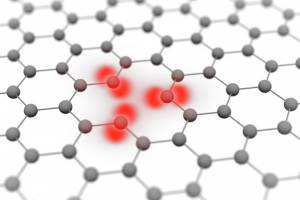
Using electron microscopes, it is possible to image individual atoms. Scientists at TU Wien have calculated how it is possible to look inside the atom to image individual electron orbitals. An electron microscope can't just snap a photo like a mobile phone camera can. The ability of an electron microscope to image a structure - and how successful this imaging will be - depends on how well you understand the structure.
Chemistry - Physics - 14.07.2016
Computer Simulation Renders Transient Chemical Structures Visible
Chemists at the University of Basel have succeeded in using computer simulations to elucidate transient structures in proteins. In the journal Angewandte Chemie, the researchers set out how computer simulations of details at the atomic level can be used to understand proteins? modes of action. Using computational chemistry, it is possible to characterize the motion of individual atoms of a molecule.
Physics - Chemistry - 13.07.2016
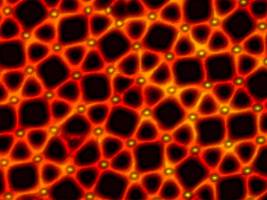
Research news Unlike classical crystals, quasicrystals do not comprise periodic units, even though they do have a superordinate structure. The formation of the fascinating mosaics that they produce is barely understood. In the context of an international collaborative effort, researchers at the Technical University of Munich (TUM) have now presented a methodology that allows the production of two-dimensional quasicrystals from metal organic networks, opening the door to the development of promising new materials.
Life Sciences - Chemistry - 07.07.2016
New clues could help scientists harness the power of photosynthesis
This illustration shows a model of the newly-identified clorophyll f synthase enzyme that converts chlorophyll a into chlorophyll f. The model is based on the known structure of the Photosystem II reaction center - a core unit of the machinery of photosynthesis to which the enzyme is related.
Chemistry - Pharmacology - 06.07.2016
Replacing oil with wood for the production of chemicals
Two research projects of the National Research Programme Resource Wood have developed new processes to replace petroleum with wood for the production of important chemicals.


Life Sciences - Today
Understanding the Brain - TU Ilmenau's EU EMBRACE Project Nominated for European Excellence Award
Understanding the Brain - TU Ilmenau's EU EMBRACE Project Nominated for European Excellence Award
Social Sciences - Today
A manual addresses, for the first time in Spain, child and adolescent sexual exploitation
A manual addresses, for the first time in Spain, child and adolescent sexual exploitation
Environment - Mar 26
Changing vegetation in thawing permafrost increases emissions of greenhouse gases
Changing vegetation in thawing permafrost increases emissions of greenhouse gases
Environment - Mar 26
University of Manchester hits major sustainability milestone, with Main Campus becoming 100% 'Zero Landfill'
University of Manchester hits major sustainability milestone, with Main Campus becoming 100% 'Zero Landfill'
Social Sciences - Mar 26
"It would be naive to believe that a social media ban will solve all problems"
"It would be naive to believe that a social media ban will solve all problems"
Health - Mar 26
Earlier detection, better outcomes: Irish researchers target rising bowel cancer rates with new blood test
Earlier detection, better outcomes: Irish researchers target rising bowel cancer rates with new blood test
Environment - Mar 26
UK must improve energy efficiency to end 50 years of policy failure and prevent future energy crises, study argues
UK must improve energy efficiency to end 50 years of policy failure and prevent future energy crises, study argues
Mathematics - Mar 26
From Materials to Medical Imaging, Fonseca's Work Shapes the Future of Innovation
From Materials to Medical Imaging, Fonseca's Work Shapes the Future of Innovation