

Environment - Today
UCalgary expedition, with NASA, Canadian and European space agencies, sets out to better understand state of Arctic ice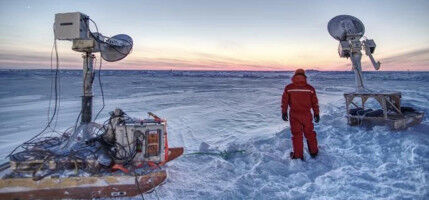
UCalgary expedition, with NASA, Canadian and European space agencies, sets out to better understand state of Arctic ice
Social Sciences - Mar 24
Young people's wellbeing is improving in Greater Manchester, major survey finds
Young people's wellbeing is improving in Greater Manchester, major survey finds

Environment - Mar 24
Australia's environment is improving but climate change is 'accelerating' damage to ecosystems and wildlife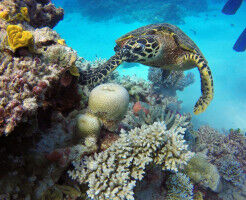
Australia's environment is improving but climate change is 'accelerating' damage to ecosystems and wildlife

Psychology - Mar 23
The grief myth: it doesn't come in stages or follow a checklist - like love, it endures
The grief myth: it doesn't come in stages or follow a checklist - like love, it endures



History & Archeology - Mar 23
The UV has played a part in the discovery of a 3,500-year-old loom that sheds light on key aspects of the Bronze Age textile revolution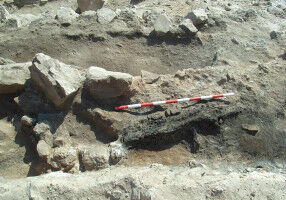
The UV has played a part in the discovery of a 3,500-year-old loom that sheds light on key aspects of the Bronze Age textile revolution
Innovation - Mar 23
The University of Valencia launches ClioViz, an open digital platform for accessing cultural heritage data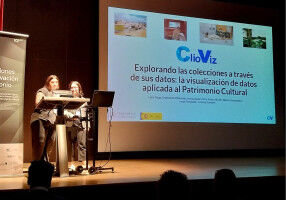
The University of Valencia launches ClioViz, an open digital platform for accessing cultural heritage data

Social Sciences - Mar 23
Study links higher concentration of pokie machines to increase in family and domestic violence
Study links higher concentration of pokie machines to increase in family and domestic violence
Health - Mar 23
Screening blitz could achieve cervical cancer elimination among Indigenous communities within a generation
Screening blitz could achieve cervical cancer elimination among Indigenous communities within a generation

Computer Science - Mar 20
New computer chip material inspired by the human brain could slash AI energy use
New computer chip material inspired by the human brain could slash AI energy use
news
Chemistry
Results 3021 - 3040 of 3956.
Chemistry - Agronomy & Food Science - 10.12.2014
Can organic crops compete with industrial agriculture?
A systematic overview of more than 100 studies comparing organic and conventional farming finds that the crop yields of organic agriculture are higher than previously thought. The study, conducted by UC Berkeley researchers, also found that certain practices could further shrink the productivity gap between organic crops and conventional farming.
Life Sciences - Chemistry - 09.12.2014

CHAMPAIGN, Ill. When a large protein unfolds in transit through a cell, it slows down and can get stuck in traffic. Using a specialized microscope - a sort of cellular traffic camera - University of Illinois chemists now can watch the way the unfolded protein diffuses. Studying the relationship between protein folding and transport could provide great insight into protein-misfolding diseases such as Alzheimer's and Huntington's.
Chemistry - Electroengineering - 08.12.2014
Chemists create ’artificial chemical evolution’ for the first time
Scientists have taken an important step towards the possibility of creating synthetic life with the development of a form of artificial evolution in a simple chemistry set without DNA. A team from the University of Glasgow's School of Chemistry report in a new paper today (Monday 8 December) on how they have managed to create an evolving chemical system for the first time.
Chemistry - Physics - 01.12.2014
New chemical sponge has potential to lessen the carbon footprint of oil industry
UK scientists have discovered a ground-breaking technique with the potential to dramatically reduce the amount of energy used in the refinement of crude oil. Professor Martin Schröder and Dr Sihai Yang from The University of Nottingham have led a multi-disciplinary team of scientists from Nottingham, the Science and Technology Facilities Council's (STFC) ISIS Neutron Facility, Oak Ridge National Laboratory, and Diamond Light Source, to discover a porous material that works like a chemical sponge to separate a number of important gases from mixtures generated during crude oil refinement.
Life Sciences - Chemistry - 01.12.2014
World’s first artificial enzymes created using synthetic biology
Enzymes made from artificial molecules which do not occur anywhere in nature have been shown to trigger chemical reactions in the lab, challenging existing views about the conditions that are needed to enable life to happen. Our assumptions about what is required for biological processes - the 'secret of life' - may need some further revision Alex Taylor A team of researchers have created the world's first enzymes made from artificial genetic material.
Chemistry - Physics - 26.11.2014
Protons fuel graphene prospects
Our structure (research) Impact of our research Postgraduate research 26 Nov 2014 Graphene, impermeable to all gases and liquids, can easily allow protons to pass through it, University of Manchester researchers have found. Published in the journal Nature , the discovery could revolutionise fuel cells and other hydrogen-based technologies as they require a barrier that only allow protons - hydrogen atoms stripped off their electrons - to pass through.
Life Sciences - Chemistry - 19.11.2014
New similarities and differences between mice and humans
Powerful clues have been discovered about why the human immune system, metabolism, stress response, and other life functions are so different from those of the mouse. A new, comprehensive study of the mouse genome by an international group of researchers including Penn State University scientists reveals striking similarities and differences with the human genome.
Chemistry - Physics - 19.11.2014
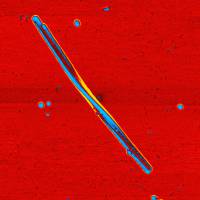
ANN ARBOR-As hands come in left and right versions that are mirror images of each other, so do the amino acids and sugars within us. But unlike hands, only the left-oriented amino acids and the right-oriented sugars ever make into life as we know it. Scientists know the other varieties exist because when they synthesize these amino acids and sugars in a lab, roughly equal numbers of leftand right-facing arrangements form.
Life Sciences - Chemistry - 19.11.2014
Similarities and differences between mice and humans revealed
Powerful clues have been discovered about why the human immune system, metabolism, stress response, and other life functions are so different from those of the mouse. A new, comprehensive study of the mouse genome by an international group of researchers including Penn State University scientists reveals striking similarities and differences with the human genome.
Life Sciences - Chemistry - 18.11.2014
A novel method for identifying the body’s ’noisiest’ networks
A team of scientists led by Yale University systems biologist and biomedical engineer Andre Levchenko has developed a novel method for mapping the biochemical variability, or "noise," in how human cells respond to chemical signals. The research, published Nov. 17 in Proceedings of the National Academy of Science, could be used to tailor drug delivery to a patient's individual cell responses and may have further implications for advances in semiconductor chip design.
Chemistry - Event - 18.11.2014
Molecular event mapping opens door to more tests "in silico"
Scientists report a new method for establishing whether chemical compounds are safe for human use without "in vivo" testing, based on so-called "molecular initiating events" at the boundary between chemistry and biology.
Chemistry - Health - 18.11.2014
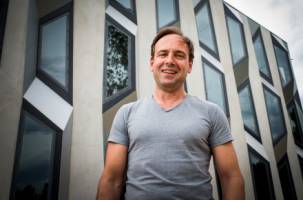
Chemists have developed a revolutionary new way to manufacture natural chemicals and used it to assemble a scarce anti-inflammatory drug with potential to treat cancer and malaria. The breakthrough could lead to new and cheaper ways to produce rare drugs in large quantities. "We took small molecules and clipped them together like Lego," said lead researcher Professor Michael Sherburn, from the Research School of Chemistry.
Chemistry - Physics - 17.11.2014
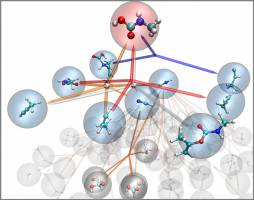
A new computer model could identify unknown chemical mechanisms that could improve energy production and storage, or the development of new medicines. In 1952, the famous Urey-Miller experiment mixed together chemicals that were present early in Earth's history, then approximately replicated the environmental conditions on the planet at that time to see if biologically relevant organic molecules would form spontaneously.
Health - Chemistry - 17.11.2014
The Dirty Side of Soap
Triclosan is an antimicrobial additive found in many liquid hand soaps and other household products. Image source: Arlington County Triclosan is an antimicrobial commonly found in soaps, shampoos, toothpastes and many other household items. Despite its widespread use, researchers at University of California, San Diego School of Medicine report potentially serious consequences of long-term exposure to the chemical.
Chemistry - Mechanical Engineering - 14.11.2014

Researchers at the UCLA Henry Samueli School of Engineering and Applied Science have developed a more efficient way to turn methanol into useful chemicals, such as liquid fuels, and that would also reduce carbon dioxide emissions. Methanol, which is a product of natural gas, is well-known as a common "feedstock" chemical — one that is processed into gasoline and other chemicals such as solvents, adhesives, paints and plastics.
Health - Chemistry - 13.11.2014
Molecule fights cancer on two fronts
Researchers at the University of Leeds have made a new synthetic anti-cancer molecule that targets two key mechanisms in the spread of malignant tumours through the body. A study published in the journal PLOS ONE reports that the synthetic molecule JK-31 blocks the signalling of a “growth factor” chemical that promotes the creation of networks of blood vessels to feed tumours.
Health - Chemistry - 13.11.2014
New imaging method could improve the treatment of the 5 million asthma sufferers in the UK
A new method of observing exactly what happens to drug particles as they travel from an asthma inhaler to the lungs could lead to the development of more efficient asthma treatments. Knowing exactly what happens to these drugs as they enter the human body could lead to the development of new asthma treatments that can be taken up more quickly by the body Markus Kalberer A team of researchers, led by the Universities of Cambridge and Birmingham, have used a laser beam trap to examine how drug particles from asthma inhalers behave as they are projected through the air.
Life Sciences - Chemistry - 13.11.2014
Molecular time signalling controls stem cells during brain developmen
Researchers at Karolinska Institutet have succeeded in explaining how stem cells in the brain change to allow one type of stem cell to produce different cell types at different stages. In a study being published in the journal Neuron , researchers show that the signal molecule TGF-beta acts as a time signal that regulates the nerve stem cells' potential at different stages of the brain's development - knowledge that may be significant for future pharmaceutical development.
Life Sciences - Chemistry - 11.11.2014
Some plants regenerate by duplicating their DNA
Animal biology professor Ken Paige (left) and postdoctoral fellow Daniel Scholes found that a plant's ability to duplicate its genome within individual cells influences its ability to regenerate. CHAMPAIGN, Ill. When munched by grazing animals (or mauled by scientists in the lab), some herbaceous plants overcompensate - producing more plant matter and becoming more fertile than they otherwise would.
Chemistry - Health - 05.11.2014
Researchers use simple chemicals to minimise organ damage following heart attack and stroke
Scientists have identified chemicals that could protect vital organs from long-term damage following a heart attack or stroke. The researchers now hope the chemicals will provide a starting point for developing new injectable drugs that could be used to prevent some of the long-term damage caused by heart attack and stroke.


Environment - Today
UCalgary expedition, with NASA, Canadian and European space agencies, sets out to better understand state of Arctic ice
UCalgary expedition, with NASA, Canadian and European space agencies, sets out to better understand state of Arctic ice
Social Sciences - Mar 24
Young people's wellbeing is improving in Greater Manchester, major survey finds
Young people's wellbeing is improving in Greater Manchester, major survey finds
Environment - Mar 24
Australia's environment is improving but climate change is 'accelerating' damage to ecosystems and wildlife
Australia's environment is improving but climate change is 'accelerating' damage to ecosystems and wildlife
Psychology - Mar 23
The grief myth: it doesn't come in stages or follow a checklist - like love, it endures
The grief myth: it doesn't come in stages or follow a checklist - like love, it endures
History & Archeology - Mar 23
The UV has played a part in the discovery of a 3,500-year-old loom that sheds light on key aspects of the Bronze Age textile revolution
The UV has played a part in the discovery of a 3,500-year-old loom that sheds light on key aspects of the Bronze Age textile revolution
Innovation - Mar 23
The University of Valencia launches ClioViz, an open digital platform for accessing cultural heritage data
The University of Valencia launches ClioViz, an open digital platform for accessing cultural heritage data
Social Sciences - Mar 23
Study links higher concentration of pokie machines to increase in family and domestic violence
Study links higher concentration of pokie machines to increase in family and domestic violence
Health - Mar 23
Screening blitz could achieve cervical cancer elimination among Indigenous communities within a generation
Screening blitz could achieve cervical cancer elimination among Indigenous communities within a generation
Computer Science - Mar 20
New computer chip material inspired by the human brain could slash AI energy use
New computer chip material inspired by the human brain could slash AI energy use