




Environment - Mar 26
Changing vegetation in thawing permafrost increases emissions of greenhouse gases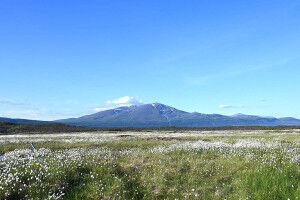
Changing vegetation in thawing permafrost increases emissions of greenhouse gases
Environment - Mar 26
University of Manchester hits major sustainability milestone, with Main Campus becoming 100% 'Zero Landfill'
University of Manchester hits major sustainability milestone, with Main Campus becoming 100% 'Zero Landfill'
Social Sciences - Mar 26
"It would be naive to believe that a social media ban will solve all problems"
"It would be naive to believe that a social media ban will solve all problems"


Health - Mar 26
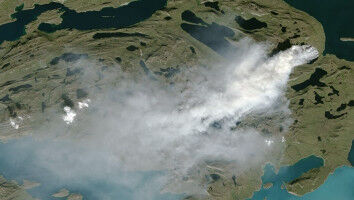
Earlier detection, better outcomes: Irish researchers target rising bowel cancer rates with new blood test
Earlier detection, better outcomes: Irish researchers target rising bowel cancer rates with new blood test
Environment - Mar 26
UK must improve energy efficiency to end 50 years of policy failure and prevent future energy crises, study argues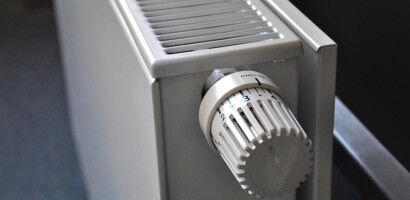
UK must improve energy efficiency to end 50 years of policy failure and prevent future energy crises, study argues
Mathematics - Mar 26
From Materials to Medical Imaging, Fonseca's Work Shapes the Future of Innovation
From Materials to Medical Imaging, Fonseca's Work Shapes the Future of Innovation



news
EMPA, Swiss Federal Laboratories for Materials Science and Technology
Results 301 - 320 of 328.
Materials Science - Health - 30.05.2017
3D printer inks from the woods
Empa researchers have succeeded in developing an environmentally friendly ink for 3D printing based on cellulose nanocrystals.
Transport - Administration - 26.04.2017

As of October 2017, newly launched car models will have to pass more stringent exhaust gas tests in the EU and in Switzerland. The new test method includes measuring drives in actual traf-fic. Empa already tested currently available cars with the new method - with alarming results. By now, it's no secret: the certification requirements for cars in the EU and in Switzerland have precious little to do with the cars' actual exhaust emissions on the roads.
Materials Science - Health - 19.04.2017
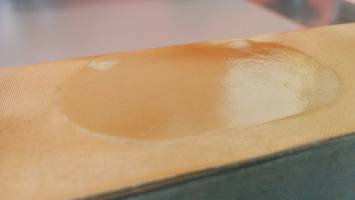
The characteristics of human skin are heavily dependent on the hydration of the tissue - in simple terms, the water content.
Environment - Innovation - 06.04.2017
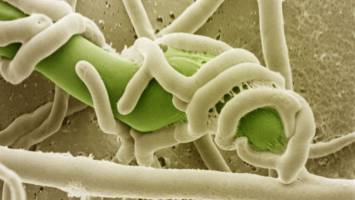
The St. Gallen-based Empa biotech spin-off, MycoSolutions AG, has developed a new fungal product that improves the soil and controls pest fungi in an environmentally friendly way. Wooden poles remain in use much longer, leading to cost savings of millions for operators. A "Proof-of-Concept" is now available for the integrated wood preservation method.
Economics - 22.03.2017

On the long journey from the fruit plantation to the retailer's shelf, fruits can quickly perish. In particular, the refrigeration inside the cargo containers is not always guaranteed and existing methods for measuring the temperature are not sufficiently reliable.
Materials Science - Health - 09.03.2017
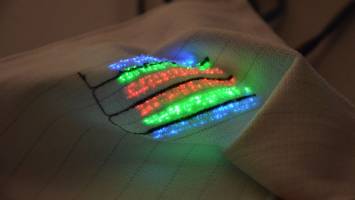
Researchers from Empa in St. Gallen have succeeded in producing optic fibers for sensors that are ideal for textiles. This would enable hospitals to monitor whether a patient is developing pressure sores, for instance. Thanks to a melting technique, the team headed by Luciano Boesel from the materials research institution Empa produced what are known as polymer optic fibers in a particularly flexible form.
Physics - Chemistry - 14.02.2017
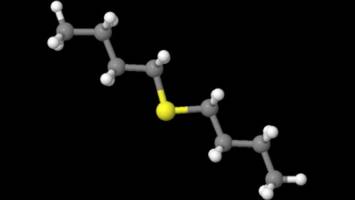
A scanning-tunneling microscope (STM), used to study changes in the shape of a single molecule at the atomic scale, impacts the ability of that molecule to make these changes - the entropy of the molecule is changed and, in turn, can be measured.
Electroengineering - 22.12.2016
The fight against creeping cables
Switzerland's overhead power lines are showing signs of old age and can be damaged by power surges. But how long will they actually last? Empa researchers have developed a tool to keep tabs on the aging process.
Health - Pharmacology - 07.12.2016

Magnets instead of antibiotics could provide a possible new treatment method for blood infection. This involves the blood of patients being mixed with magnetic iron particles, which bind the bacteria to them after which they are removed from the blood using magnets.
Materials Science - Physics - 17.11.2016
Switching off vibrations
Macroscopic crystal structures can absorb unwanted vibrations or filter noise - without any electronics or electricity whatsoever.
Astronomy & Space - 27.10.2016
Finally red!
Empa researchers have pulled off a masterstroke of ceramics research: as of now, a dark-red ceramic bezel adorns a Swiss luxury watch - a world premiere and stunning example of top-flight materials science.
Physics - Health - 13.10.2016
Peptides vs. superbugs
Several peptides have an antibacterial effect - but they are broken down in the human body too quickly to exert this effect. Empa researchers have now succeeded in encasing peptides in a protective coat, which could prolong their life in the human body. This is an important breakthrough because peptides are considered to be a possible solution in the fight against antibiotic-resistant bacteria.
Physics - Pharmacology - 08.09.2016
Affordable detectors for gamma radiation
A research team at Empa and ETH Zurich has developed single crystals made of lead halide perovskites, which are able to gage radioactive radiation with high precision. Initial experiments have shown that these crystals, which can be manufactured from aqueous solutions or low-priced solvents, work just as well as conventional cadmium telluride semi-conductors, which are considerably more complicated to produce.
Life Sciences - 17.07.2016
Toxicological cross-check
Flame retardants are invisible assistants in car seats, gasket sealants, furniture and even in aeroplanes. However, their ingredients are not always harmless. Empa researchers developed three innovative flame retardants and tested them for toxicity; not all of them passed the test. Researchers are constantly striving to develop better and safer flame retardants.
Environment - Innovation - 22.06.2016

In the district of the future, favors amongst neighbors will go much further than lending a lawnmower or giving some sugar for baking.
Earth Sciences - Environment - 16.06.2016

Measurements at 49 sites all over the world show that, since 2010, long-declining global atmospheric ethane concentrations are on the uptick again in the Northern Hemisphere. The new study by an international team of researchers concluded that the rise was most likely largely due to greater oil and gas production in the US.
Materials Science - Environment - 07.06.2016

As part of the "LightChEC" research project at the University of Zurich, Empa scientists are working with other researchers on a novel method of artificial photosynthesis - photocatalysis, which uses a purely chemical process to split water into hydrogen and oxygen. Unlike other methods, it does not involve the electrolysis of water.
Materials Science - 25.04.2016

Any cyclist who wears a helmet knows the feeling: heat builds up under your helmet and the sweat starts to flow, especially in summer. As a result, many cyclists will take a risk and not even wear a helmet. A research team at Empa has now studied the flow of heat under cycling helmets in detail - the first step towards "sweat-free" protective headgear.
Physics - Chemistry - 24.03.2016
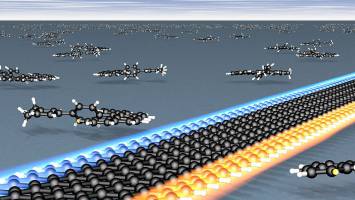
As reported by the journal Nature in its latest issue, researchers from Empa, the Max Planck Institute in Mainz and the Technical University of Dresden have for the first time succeeded in producing graphene nanoribbons with perfect zigzag edges from molecules. Electrons on these zigzag edges exhibit different (and coupled) rotational directions ("spin").
Chemistry - Computer Science - 27.10.2014
A GPS from the chemistry set
Scientists teamed up to develop a chemical "processor" which reliably shows the fastest way through a City maze. As the method is basically faster than a satnav system, it could be useful in transport planning and logistics in the future, for instance, as the scientists report. You don't always need GPS, a map or a compass to find the right way.


Environment - Mar 26
Changing vegetation in thawing permafrost increases emissions of greenhouse gases
Changing vegetation in thawing permafrost increases emissions of greenhouse gases
Environment - Mar 26
University of Manchester hits major sustainability milestone, with Main Campus becoming 100% 'Zero Landfill'
University of Manchester hits major sustainability milestone, with Main Campus becoming 100% 'Zero Landfill'
Social Sciences - Mar 26
"It would be naive to believe that a social media ban will solve all problems"
"It would be naive to believe that a social media ban will solve all problems"
Health - Mar 26
Earlier detection, better outcomes: Irish researchers target rising bowel cancer rates with new blood test
Earlier detection, better outcomes: Irish researchers target rising bowel cancer rates with new blood test
Environment - Mar 26
UK must improve energy efficiency to end 50 years of policy failure and prevent future energy crises, study argues
UK must improve energy efficiency to end 50 years of policy failure and prevent future energy crises, study argues
Mathematics - Mar 26
From Materials to Medical Imaging, Fonseca's Work Shapes the Future of Innovation
From Materials to Medical Imaging, Fonseca's Work Shapes the Future of Innovation