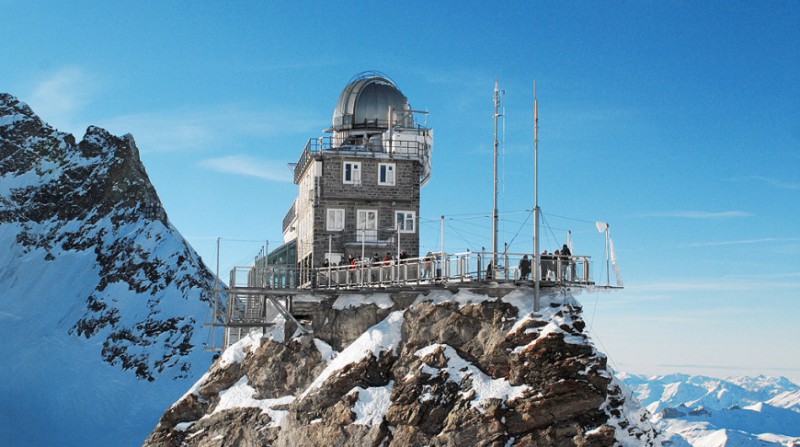
Empa is part of a global atmospheric research network and collects data and air samples at Jungfraujoch. Picture: www.jungfrau.ch
Measurements at 49 sites all over the world show that, since 2010, long-declining global atmospheric ethane concentrations are on the uptick again in the Northern Hemisphere. The new study by an international team of researchers concluded that the rise was most likely largely due to greater oil and gas production in the US. Ethane, propane and a host of other NMHCs are released naturally by the seepage of fossil carbon deposits, volcanic activity and wildfires. But human activities, which also include biomass burning and industrial use, constitute roughly three-quarters of the atmospheric ethane that is being emitted worldwide. The team, which also included researchers from Empa, found that a steady decline of global ethane emissions following a peak in about 1970 ended between 2005 and 2010 in most of the Northern Hemisphere and has since reversed. Between 2009 and 2014, ethane emissions in the Northern Hemisphere increased by about 400,000 tons annually. The decline of ethane and other non-methane hydrocarbons (NMHC) starting around 1970 is believed to be primarily due to better emission controls.
TO READ THIS ARTICLE, CREATE YOUR ACCOUNT
And extend your reading, free of charge and with no commitment.