

Life Sciences - Mar 27
Understanding the Brain - TU Ilmenau's EU EMBRACE Project Nominated for European Excellence Award
Understanding the Brain - TU Ilmenau's EU EMBRACE Project Nominated for European Excellence Award
Social Sciences - Mar 27
A manual addresses, for the first time in Spain, child and adolescent sexual exploitation
A manual addresses, for the first time in Spain, child and adolescent sexual exploitation

Environment - Mar 26
Changing vegetation in thawing permafrost increases emissions of greenhouse gases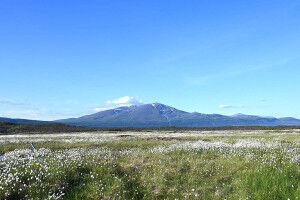
Changing vegetation in thawing permafrost increases emissions of greenhouse gases
Environment - Mar 26
University of Manchester hits major sustainability milestone, with Main Campus becoming 100% 'Zero Landfill'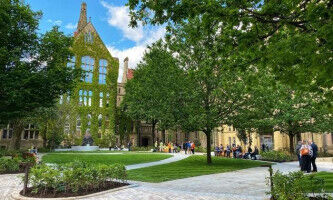
University of Manchester hits major sustainability milestone, with Main Campus becoming 100% 'Zero Landfill'
Social Sciences - Mar 26
"It would be naive to believe that a social media ban will solve all problems"
"It would be naive to believe that a social media ban will solve all problems"

Health - Mar 26
Earlier detection, better outcomes: Irish researchers target rising bowel cancer rates with new blood test
Earlier detection, better outcomes: Irish researchers target rising bowel cancer rates with new blood test
Environment - Mar 26
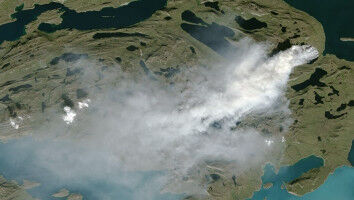
UK must improve energy efficiency to end 50 years of policy failure and prevent future energy crises, study argues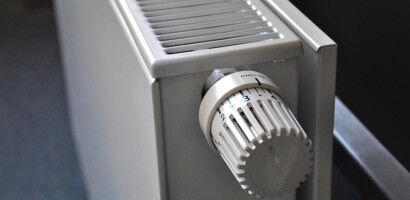
UK must improve energy efficiency to end 50 years of policy failure and prevent future energy crises, study argues
Mathematics - Mar 26
From Materials to Medical Imaging, Fonseca's Work Shapes the Future of Innovation
From Materials to Medical Imaging, Fonseca's Work Shapes the Future of Innovation

news
Swiss Federal Institute of Technology Lausanne, EPFL
Results 761 - 780 of 1376.
Pharmacology - Health - 03.02.2020
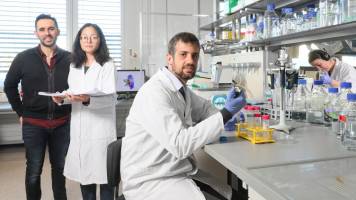
CAR T-cell therapy is a highly promising treatment strategy for tumors, but is associated with life-threatening side effects. Researchers at EPFL, UNIL and CHUV have developed a new way to "switch off" the therapy when a cancer patient's life is in danger, paving the way for safer immunotherapy approaches to target solid tumors.
Environment - Physics - 03.02.2020
What if half of Switzerland's rooftops produced electricity?
Researchers at EPFL are assessing Switzerland's solar power potential. Their results show that photovoltaic panels could be installed on more than half of the country's 9.6 million rooftops. The resulting power would meet more than 40% of Swiss electricity demand. The widespread installation of photovoltaic panels on building rooftops could play an important role in Switzerland's transition to a low-carbon energy system.
Materials Science - 31.01.2020
Harnessing the moiré effect to make transparent images
Researchers at EPFL have developed a material that combines transparent properties with the moiré effect to produce images. The technology could have interesting decorative and anti-forgery applications. Applying a moiré pattern to a transparent material is a new and surprising way of creating images.
Environment - Earth Sciences - 30.01.2020

Researchers at EPFL and the Swiss Federal Institute for Forest, Snow and Landscape Research (WSL) have found that the temperature of Swiss rivers is rising steadily. This situation is straining ecosystems and could limit the use of this water in Switzerland's nuclear and hydropower industries. For a long time, meltwater from snow and glaciers has limited the warming of the Swiss rivers, allowing them to maintain a relatively low temperature throughout the year.
Health - 29.01.2020
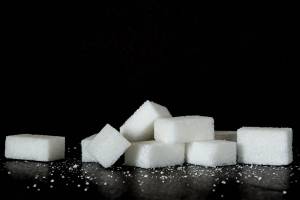
New antiviral materials made from sugar have been developed by researchers from the University of Manchester, the University of Geneva and the EPFL in Lausanne. They can destroy viruses on contact and may help in the fight against viral outbreaks. Although at an early stage of development, the broad-spectrum activity of this compound could also be effective against new emerging viruses such as the recent coronavirus currently of concern in China.
Administration - 29.01.2020

An initial survey by researchers at EPFL has found that local and regional governments are increasingly turning to digital technology to understand the views of their citizens, especially on planning and development proposals. Governments across Switzerland are embracing civic technology. This is one of the headline findings of the first Civic Tech Barometer, a survey conducted by researchers from EPFL's Urban Sociology Laboratory (LaSUR) in partnership with Geneva Canton's Consultation and Communication Department.
Life Sciences - 27.01.2020
Could depression be linked to our cells' metabolism?
EPFL researchers have discovered a compound that stimulates brain-cell metabolism and reduces signs of depression in mice. The next step will be to test their findings on humans. Chronic stress can be a major cause of depression. The exact mechanism of how that works isn't clear, but the missing link could be found in the metabolic processes of brain cells.
Health - Physics - 22.01.2020
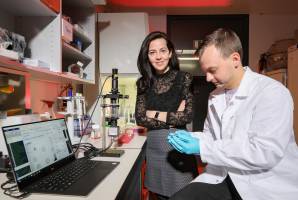
EPFL researchers have developed a highly sensitive and portable optical biosensor that stands to accelerate the diagnosis of fatal conditions like sepsis. It could be used by ambulances and hospitals to improve the triage process and save lives. Sepsis claims one life every four seconds. It is the primary cause of death in hospitals, and one of the ten leading causes of death worldwide.
Environment - 21.01.2020
"Green economy": an ambiguous concept that is on the way out
Concerns about climate change have given rise to a whole series of concepts that are widely used despite their lack of a concrete definition. EPFL researchers have taken a closer look at the "green economy" concept in particular to clarify exactly what it means. Today's consumers want a cleaner, greener society.
Life Sciences - Health - 17.01.2020

Scientists at EPFL have published two papers showing how genetics affects the ability of different individuals to fight off gut infections. ?he ability of the immune system to fight off bacterial, viral and other invading agents in the gut differs between individuals. However, the biological mechanism by which this happens is not well understood, but at least part of this difference may be explained by genetic factors.
Environment - Earth Sciences - 16.01.2020

Researchers at EPFL have developed a new model to calculate hydraulic fracture propagation. Acclaimed for its accuracy by experts, the model better predicts fracture geometry and the energy cost of hydraulic fracturing - a widely used technique in areas such as CO2 storage, hydrocarbon extraction, dams and volcano hazard monitoring.
Astronomy & Space - 08.01.2020
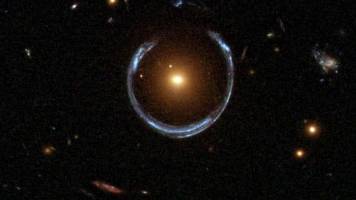
New measurements using gravitational lensing, an innovative method that EPFL researchers have been working on for many years, suggest the universe is expanding faster than previously thought. A team of astronomers using NASA's Hubble Space Telescope have announced that the universe is expanding faster than expected.
Earth Sciences - Environment - 06.01.2020

Researchers at EPFL and the Swiss Federal Office of Energy have devised strategies for reducing the earthquake risk associated with geothermal energy, CO2 storage and other human activities happening deep underground. Although most earthquakes are attributable to natural causes, some are triggered - directly or indirectly - by human activity.
Environment - 03.01.2020
Climate researchers can now detect the fingerprint of global warming in daily weather observations at the global level. They are thus amending a long-established paradigm: weather is not climate ' but climate change can now be detected in daily weather. This research was carried out by ETH Zurich and the Swiss Data Science Center, co-directed by EPFL.
Environment - Transport - 23.12.2019
Capturing CO2 from trucks and reducing their emissions by 90%
Researchers at EPFL have patented a new concept that could cut trucks' CO2 emissions by almost 90%. It involves capturing CO2 within the exhaust system, converting it into a liquid and storing it on the vehicle. The liquid CO2 would then be delivered to a service station and where it will be turned back into fuel using renewable energy.
Computer Science - Innovation - 19.12.2019
New technology to observe and quantify intracellular phenomena
Researchers at EPFL and spin-off Nanolive have used a special microscope that combines two imaging technologies to observe and quantify new intracellular phenomena. In an article published today in the journal PLOS Biology, also reveals a range of computer tools that can be used in the future by other research laboratories.
Microtechnics - Electroengineering - 18.12.2019

Researchers at EPFL have developed an ultra-light robotic insect that uses its soft artificial muscles to move at 3 cm per second across different types of terrain. It can be folded or crushed and yet continue to move. Imagine swarms of robotic insects moving around us as they perform various tasks.
Environment - Chemistry - 11.12.2019

Chemical engineers at EPFL have designed a material that can capture carbon dioxide from wet flue gasses better than current commercial materials. Generally speaking, "flue gas" refers to any gas coming out of a pipe, exhaust, chimney etc. as a product of combustion in a fireplace, oven, furnace, boiler, or steam generator.
Life Sciences - Chemistry - 11.12.2019

Researchers at EPFL have developed a new way to predict a protein's interactions with other proteins and biomolecules, and its biochemical activity, merely by observing its surface. The method, published in open-source format, opens up new possibilities for artificial protein design. Proteins are the building blocks of life and play a key role in all biological processes.
Life Sciences - Health - 10.12.2019

To uncover the relationship between variation in genes and phenotypic diversity, geneticists use a set of fully sequenced fruit-fly genomes. But little is known about the variation in the mitochondrial genome, for which mutations are linked to an array of diseases. Now, EPFL scientists have created a high-resolution map of mitochondrial DNA variants in the fruit fly, connecting mitochondrial genes to metabolic traits and diseases.


Life Sciences - Mar 27
Understanding the Brain - TU Ilmenau's EU EMBRACE Project Nominated for European Excellence Award
Understanding the Brain - TU Ilmenau's EU EMBRACE Project Nominated for European Excellence Award
Social Sciences - Mar 27
A manual addresses, for the first time in Spain, child and adolescent sexual exploitation
A manual addresses, for the first time in Spain, child and adolescent sexual exploitation
Environment - Mar 26
Changing vegetation in thawing permafrost increases emissions of greenhouse gases
Changing vegetation in thawing permafrost increases emissions of greenhouse gases
Environment - Mar 26
University of Manchester hits major sustainability milestone, with Main Campus becoming 100% 'Zero Landfill'
University of Manchester hits major sustainability milestone, with Main Campus becoming 100% 'Zero Landfill'
Social Sciences - Mar 26
"It would be naive to believe that a social media ban will solve all problems"
"It would be naive to believe that a social media ban will solve all problems"
Health - Mar 26
Earlier detection, better outcomes: Irish researchers target rising bowel cancer rates with new blood test
Earlier detection, better outcomes: Irish researchers target rising bowel cancer rates with new blood test
Environment - Mar 26
UK must improve energy efficiency to end 50 years of policy failure and prevent future energy crises, study argues
UK must improve energy efficiency to end 50 years of policy failure and prevent future energy crises, study argues
Mathematics - Mar 26
From Materials to Medical Imaging, Fonseca's Work Shapes the Future of Innovation
From Materials to Medical Imaging, Fonseca's Work Shapes the Future of Innovation