


Life Sciences - Mar 27
Understanding the Brain - TU Ilmenau's EU EMBRACE Project Nominated for European Excellence Award
Understanding the Brain - TU Ilmenau's EU EMBRACE Project Nominated for European Excellence Award
Social Sciences - Mar 27
A manual addresses, for the first time in Spain, child and adolescent sexual exploitation
A manual addresses, for the first time in Spain, child and adolescent sexual exploitation


Environment - Mar 26
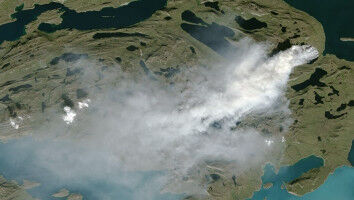
Changing vegetation in thawing permafrost increases emissions of greenhouse gases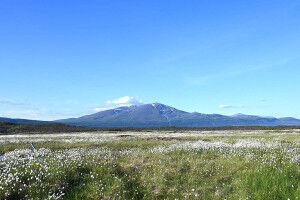
Changing vegetation in thawing permafrost increases emissions of greenhouse gases
Environment - Mar 26
University of Manchester hits major sustainability milestone, with Main Campus becoming 100% 'Zero Landfill'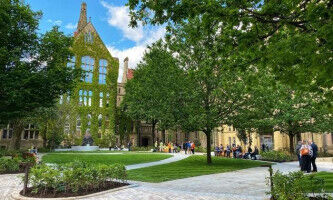
University of Manchester hits major sustainability milestone, with Main Campus becoming 100% 'Zero Landfill'
Social Sciences - Mar 26
"It would be naive to believe that a social media ban will solve all problems"
"It would be naive to believe that a social media ban will solve all problems"


Health - Mar 26
Earlier detection, better outcomes: Irish researchers target rising bowel cancer rates with new blood test
Earlier detection, better outcomes: Irish researchers target rising bowel cancer rates with new blood test
Environment - Mar 26
UK must improve energy efficiency to end 50 years of policy failure and prevent future energy crises, study argues
UK must improve energy efficiency to end 50 years of policy failure and prevent future energy crises, study argues
Mathematics - Mar 26
From Materials to Medical Imaging, Fonseca's Work Shapes the Future of Innovation
From Materials to Medical Imaging, Fonseca's Work Shapes the Future of Innovation

news
Swiss Federal Institute of Technology Lausanne, EPFL
Results 841 - 860 of 1376.
Microtechnics - 10.07.2019

A team of EPFL researchers has developed tiny 10-gram robots that are inspired by ants: they can communicate with each other, assign roles among themselves and complete complex tasks together. These reconfigurable robots are simple in structure, yet they can jump and crawl to explore uneven surfaces.
Life Sciences - Innovation - 05.07.2019

Data from Mental Work project, conducted as an experimental artwork at EPFL's Artlab, indicates that BMI is robust and accessible to the general public, spurring new research collaborations in Switzerland on user experience. Brain-machine interfaces are rarely found outside of medical clinics, where the disabled receive hours or days of training in order to operate wheelchairs with their minds.
Physics - Mathematics - 05.07.2019

A new computational method, based on neural networks, can simulate open quantum systems with unprecedented versatility. The method was independently developed by physicists at EPFL, France, the UK, and the US, and is published in Physical Review Letters. Even on the scale of everyday life, nature is governed by the laws of quantum physics.
Innovation - Administration - 04.07.2019
New approach to energy strategy accounts for uncertainty
EPFL scientists have developed a model that can help policymakers factor in uncertainty when they map out their energy strategies. Today such strategies are based largely on forecasts of fuelprices, technology costs and energy demand. However, these forecasts are often incorrect and can lead to flawed decisions.
Environment - Civil Engineering - 03.07.2019

Researchers at EPFL have developed a method that uses artificial intelligence to design next-generation heat-pump compressors. Their method can cut the pumps' power requirement by around 25%. In Switzerland, 50-60% of new homes are equipped with heat pumps. These systems draw in thermal energy from the surrounding environment - such as from the ground, air, or a nearby lake or river - and turn it into heat for buildings.
Computer Science - Social Sciences - 28.06.2019

EPFL researchers have studied the dynamics of network structures using one of the world's most-visited websites: Wikipedia. In addition to a better understanding of online networks, their work brings exciting insights into human social behavior and collective memory. Have you ever visited a Wikipedia page to answer a question, only to find yourself clicking from page to page, until you end up on a topic wildly different from the one you started with?
Life Sciences - Health - 27.06.2019
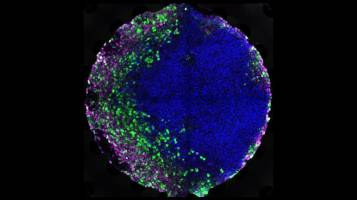
Researchers at EPFL have developed a method to stimulate human stem cells to organize themselves into ordered layers of different cell types. Published , the method is based on microfluidics and can help better understand how tissues are formed in the embryo, setting the stage for fabricating functional tissues and organs for drug testing and transplantation.
Health - Pharmacology - 27.06.2019
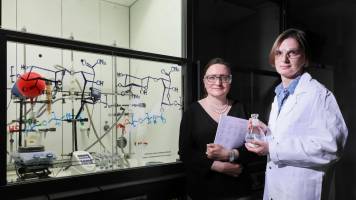
Researchers at EPFL have developed a hydrogel that offers unrivaled protection against transplanted cell rejection. The School's Technology Transfer Office has licensed the new product to Cell-Caps, a Geneva-based startup specialized in cell encapsulation for treating diabetes. Transplanted tissue often comes under attack from the body's immune system and struggles to survive in the hostile host environment.
Environment - Innovation - 25.06.2019

Researchers at EPFL have precisely quantified convection heat transfer in rail tunnels. Using the new model, they estimated how much energy Lausanne could save by fitting the future M3 metro line with a geothermal heat-recovery system, in what would be a world first. Heat transfer happens in various ways in rail tunnels.
Materials Science - Environment - 21.06.2019
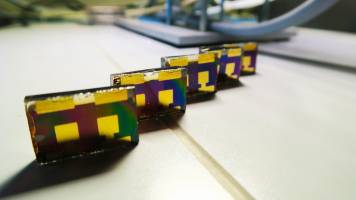
Researchers bring diurnal and seasonal variations into the lab to test the performance of perovskite solar cells under realistic conditions. It was only ten years ago that metal-halide perovskites were discovered to be photovoltaic materials. Today, perovskite solar cells made are almost as efficient as the best conventional silicon ones, and there is much hope that they will become a highly efficient and low-cost alternative, as they can be manufactured by rather simple and fast methods like printing.
Environment - Life Sciences - 20.06.2019
Software to protect the world's most endangered species
By combining genetic and environmental databases, researchers at EPFL are seeking to help biologists identify more accurately the animal and plant species most exposed to climate change, in order to develop appropriate conservation methods. Northern Morocco is home to a type of sheep that has a specific gene, developed over thousands of years of evolution.
Pharmacology - Health - 14.06.2019

Urolithin A, a metabolite of biomolecules found in pomegranates and other fruits, could help slow certain aging processes. EPFL spin-off Amazentis, in conjunction with EPFL and the Swiss Institute of Bioinformatics, has published a paper Metabolism outlining the results of their clinical trial. It is a fact of life that skeletal muscles begin to lose strength and mass once a person reaches the age of 50.
Chemistry - Environment - 13.06.2019
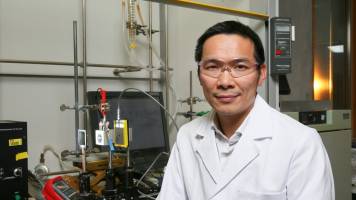
Chemists at EPFL have developed an efficient process for converting carbon dioxide into carbon monoxide, a key ingredient of synthetic fuels and materials. The carbon dioxide (CO2) produced when fossil fuels are burned is normally released into the atmosphere. Researchers working on synthetic fuels - also known as carbon-neutral fuels - are exploring ways to capture and recycle that CO2.
Health - 11.06.2019
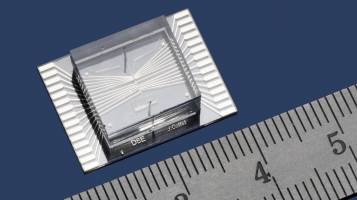
Researchers at EPFL and the University of Lyon have developed a device for creating cell aggregates in a fully controlled manner. Their aim is to model tumors more accurately in order to test potential new treatments. When researchers develop new therapies, such as for cancer, they need to be able to test them on models that closely resemble human tissue.
Life Sciences - Health - 10.06.2019

The cholera bacterium uses a grappling hook-like appendage to take up DNA, bind to nutritious surfaces and recognise 'family' members, EPFL scientists have found. These discoveries will advance our understanding of how the bacterium that causes cholera adapts and survives in its natural environment.
Music - 06.06.2019

What makes Beethoven sound like Beethoven? EPFL researchers have completed a first analysis of Beethoven's writing style, applying statistical techniques to unlock recurring patterns. EPFL researchers are investigating Beethoven's composition style and they are using statistical techniques to quantify and explore the patterns that characterize musical structures in the Western classical tradition.
Physics - Mathematics - 28.05.2019

Researchers from EPFL have found the mechanism that lies behind a mysterious physics phenomenon in fluid mechanics: the fact that turbulence in fluids spontaneously self-organizes into parallel patterns of oblique turbulent bands - an example of order emerging spontaneously from chaos. In so doing, they solved a problem that had stumped generations of physicists.
Physics - 27.05.2019

Researchers have developed a new theory for heat conduction that can finally describe and predict the thermal conductivity of any insulating material. This new formulation will let scientists make accurate predictions of thermal conductivity in a range of materials for critical engineering applications - from electronics to lasers to waste-heat recovery.
Materials Science - Physics - 23.05.2019
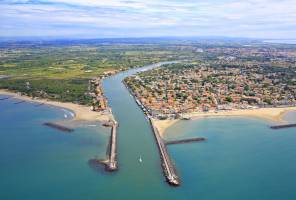
Researchers at EPFL are working on a technology to exploit osmotic energy - a source of power that's naturally available at estuaries, where fresh water comes into contact with seawater. In a laboratory experiment, the team reproduced the real-world conditions that occur where rivers meet the sea (pH and salt concentration) and showed that, by shining light on a system comprising salt, water and a membrane three atoms thick, it was possible to optimize electricity production.
Health - Chemistry - 22.05.2019
Cancerous tumors can be made to bioluminesce, like fireflies, according to the level of their glucose uptake, giving rise to a technique for quantifying metabolite absorption. The firefly imaging technique for sugar can be translated from cancer to many other metabolic diseases. EPFL scientists have invented a new way to quantify - in real-time - glucose metabolism of cancerous tumors by making them bioluminesce.


Life Sciences - Mar 27
Understanding the Brain - TU Ilmenau's EU EMBRACE Project Nominated for European Excellence Award
Understanding the Brain - TU Ilmenau's EU EMBRACE Project Nominated for European Excellence Award
Social Sciences - Mar 27
A manual addresses, for the first time in Spain, child and adolescent sexual exploitation
A manual addresses, for the first time in Spain, child and adolescent sexual exploitation
Environment - Mar 26
Changing vegetation in thawing permafrost increases emissions of greenhouse gases
Changing vegetation in thawing permafrost increases emissions of greenhouse gases
Environment - Mar 26
University of Manchester hits major sustainability milestone, with Main Campus becoming 100% 'Zero Landfill'
University of Manchester hits major sustainability milestone, with Main Campus becoming 100% 'Zero Landfill'
Social Sciences - Mar 26
"It would be naive to believe that a social media ban will solve all problems"
"It would be naive to believe that a social media ban will solve all problems"
Health - Mar 26
Earlier detection, better outcomes: Irish researchers target rising bowel cancer rates with new blood test
Earlier detection, better outcomes: Irish researchers target rising bowel cancer rates with new blood test
Environment - Mar 26
UK must improve energy efficiency to end 50 years of policy failure and prevent future energy crises, study argues
UK must improve energy efficiency to end 50 years of policy failure and prevent future energy crises, study argues
Mathematics - Mar 26
From Materials to Medical Imaging, Fonseca's Work Shapes the Future of Innovation
From Materials to Medical Imaging, Fonseca's Work Shapes the Future of Innovation