



Economics - Today
University of Glasgow and Lloyds Banking Group announce groundbreaking agentic AI research programme
University of Glasgow and Lloyds Banking Group announce groundbreaking agentic AI research programme
Astronomy & Space - Today
ANU lends its expertise in laser communications to support NASA's Artemis II crewed moon mission
ANU lends its expertise in laser communications to support NASA's Artemis II crewed moon mission


Life Sciences - Mar 27
Understanding the Brain - TU Ilmenau's EU EMBRACE Project Nominated for European Excellence Award
Understanding the Brain - TU Ilmenau's EU EMBRACE Project Nominated for European Excellence Award
Social Sciences - Mar 27
A manual addresses, for the first time in Spain, child and adolescent sexual exploitation
A manual addresses, for the first time in Spain, child and adolescent sexual exploitation


Environment - Mar 26
Changing vegetation in thawing permafrost increases emissions of greenhouse gases
Changing vegetation in thawing permafrost increases emissions of greenhouse gases
Environment - Mar 26
University of Manchester hits major sustainability milestone, with Main Campus becoming 100% 'Zero Landfill'
University of Manchester hits major sustainability milestone, with Main Campus becoming 100% 'Zero Landfill'
Social Sciences - Mar 26
"It would be naive to believe that a social media ban will solve all problems"
"It would be naive to believe that a social media ban will solve all problems"


Health - Mar 26
Earlier detection, better outcomes: Irish researchers target rising bowel cancer rates with new blood test
Earlier detection, better outcomes: Irish researchers target rising bowel cancer rates with new blood test


news
Institut national de la santé et de la recherche médicale (INSERM)
Results 261 - 273 of 273.
Life Sciences - 19.10.2016
Hepatitis C virus observed under a microscope for the first time
Scientists have finally observed the hepatitis C virus (or HCV) using an electron microscope. This is the first time since the virus became known in 1990. Inserm researchers at Tours (Inserm unit 966, 'HIV and Hepatitis Viruses: Morphogenesis and Antigenicity') have taken other scientists by surprise, including an American team believed to have accomplished this feat in 2013.
Health - 07.10.2016
Rituximab effective in the treatment of membranous glomerulonephritis
A national trial on membranous glomerulonephritis in 80 patients was coordinated by Prof. Pierre Ronco, of the Department of Nephrology and Dialysis at Tenon Hospital AP-HP, of the Inserm Unit 'Rare and common kidney diseases, matrix remodelling and tissue repair' and Pierre and Marie Curie University, and by Dr Karine Dahan, of the Nephrology Day Hospital at Tenon Hospital AP-HP.
Health - 06.10.2016
New immunotherapy-based approach for post-transplant leukaemia relapse
An Inserm team from the Mondor Institute for Biomedical Research (IMRB) has just identified a key switch in the immune response, and proposes a new immunotherapy-based approach for combating leukaemia. And maybe other cancers in time. This work is published in the journal Blood . Towards a new immunotherapy for cancer?
Life Sciences - Health - 05.10.2016
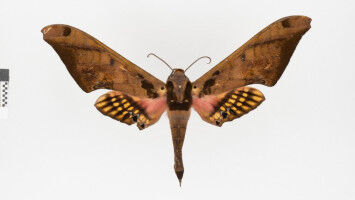
Eating well to grow well: discovery of a missing link
Rénald Delanoue, Inserm Researcher, and his colleagues at the Institute of Biology Valrose in Nice (Inserm-CNRS-Université Côte d'Azur) have identified the missing links in the process that regulates the size of an organism based on the richness of its diet. Their research was conducted on Drosophila , an insect that seems very distant from humans, but the study of which has nonetheless enabled many advances in biomedical research.
Life Sciences - Health - 30.08.2016
Caffeine reverts memory deficits
The mechanism by which caffeine counteracts age-related cognitive deficits in animals has been revealed. The study coordinated by Portuguese researchers from Instituto de Medicina Molecular (iMM Lisboa) and collaborators from Inserm in Lille, France, along with teams from Germany and United States, showed that the abnormal expression of a particular receptor - the adenosine A2A, target for caffeine - in the brain of rats induces an aging-like profile namely memory impairments linked to the loss of stress controlling mechanisms.
Life Sciences - Health - 29.07.2016
A virtual brain helps decrypt epilepsy
Researchers at CNRS, INSERM, Aix-Marseille University and AP-HM have just created a virtual brain that can reconstitute the brain of a person affected by epilepsy for the first time. From this work we understand better how the disease works and can also better prepare for surgery. These results are published in Neuroimage, on July 28, 2016.
Health - Administration - 27.07.2016
Inserm, France’s rising research star according to Nature
The French National Institute of Health and Medical Research (Inserm) is the only research institution in France listed in the World Top 100 institutions with the most progress in the last 3 years.
Life Sciences - Health - 21.07.2016
Long term correction of hyperbilirubinemia in animal models of Crigler-Najjar syndrome
Dr. Federico MINGOZZI, Team Leader of the Immunology and Liver Gene Transfer unit at Généthon, (Inserm U951/UPMC), France, has demonstrated the long-term efficacy of an optimized AAV-UGT1A1 ve
Health - Life Sciences - 20.07.2016
An antibody-based drug for multiple sclerosis
Inserm Unit U919, directed by Prof. Denis Vivien ('Serine Proteases and Physiopathology of the Neurovascular Unit') has developed an antibody with potential therapeutic effects against multiple sclerosis.
Health - 06.07.2016
Very premature infants: towards better care
Born too soon, very premature infants are particularly vulnerable and need appropriate care. The European project EPICE (Effective Perinatal Intensive Care in Europe) examines how medical practices based on scientific evidence are incorporated into the care of these neonates . The study, coordinated by Inserm and published in The British Medical Journal , highlights the underuse of four effective practices for improving their survival and long-term health, and estimates its impact on mortality and morbidity.
Philosophy - Health - 30.06.2016
Ethical issues surrounding CRISPR-Cas9 technology
Font size Bookmark Print Tip a friend On 13 June last, the Inserm Ethics Committee assembled over a hundred individuals at its annual seminar. All those present had the benefit of an ethical perspective on many problems posed by biomedical research. One of the questions addressed was that of CRISPR-Cas9 technology.
Health - Life Sciences - 19.04.2016
The origin of heart dysfunctions in myotonic dystrophy identified
Font size Bookmark Print Tip a friend An international team, including researchers in France at Inserm, CNRS and the University of Strasbourg, brought together at IGBMC is lifting the veil on the mol
Life Sciences - Health - 05.04.2016
Jumping genes: all guilty?
Font size Bookmark Print Tip a friend Transposable elements, also known as 'jumping genes? are DNA fragments that can move or copy themselves from one location to another on the chromosomes.


Economics - Today
University of Glasgow and Lloyds Banking Group announce groundbreaking agentic AI research programme
University of Glasgow and Lloyds Banking Group announce groundbreaking agentic AI research programme
Astronomy & Space - Today
ANU lends its expertise in laser communications to support NASA's Artemis II crewed moon mission
ANU lends its expertise in laser communications to support NASA's Artemis II crewed moon mission
Life Sciences - Mar 27
Understanding the Brain - TU Ilmenau's EU EMBRACE Project Nominated for European Excellence Award
Understanding the Brain - TU Ilmenau's EU EMBRACE Project Nominated for European Excellence Award
Social Sciences - Mar 27
A manual addresses, for the first time in Spain, child and adolescent sexual exploitation
A manual addresses, for the first time in Spain, child and adolescent sexual exploitation
Environment - Mar 26
Changing vegetation in thawing permafrost increases emissions of greenhouse gases
Changing vegetation in thawing permafrost increases emissions of greenhouse gases
Environment - Mar 26
University of Manchester hits major sustainability milestone, with Main Campus becoming 100% 'Zero Landfill'
University of Manchester hits major sustainability milestone, with Main Campus becoming 100% 'Zero Landfill'
Social Sciences - Mar 26
"It would be naive to believe that a social media ban will solve all problems"
"It would be naive to believe that a social media ban will solve all problems"
Health - Mar 26
Earlier detection, better outcomes: Irish researchers target rising bowel cancer rates with new blood test
Earlier detection, better outcomes: Irish researchers target rising bowel cancer rates with new blood test