

Health - Mar 30
Minister Rianne Letschert visits Twente: education and science as drivers of the hospital of the future
Minister Rianne Letschert visits Twente: education and science as drivers of the hospital of the future


Social Sciences - Mar 30
New Research Project on African American Thought and the German Colonial Imagination
New Research Project on African American Thought and the German Colonial Imagination
Politics - Mar 30
Researcher Carolina Moreno calls for official science communication to counter disinformation in critical periods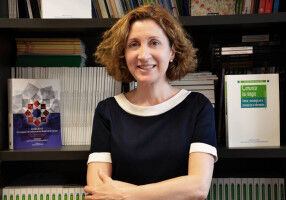
Researcher Carolina Moreno calls for official science communication to counter disinformation in critical periods

Health - Mar 30
Simple screening blood test could help identify undiagnosed heart failure in people living with diabetes
Simple screening blood test could help identify undiagnosed heart failure in people living with diabetes



Economics - Mar 30
University of Glasgow and Lloyds Banking Group announce groundbreaking agentic AI research programme
University of Glasgow and Lloyds Banking Group announce groundbreaking agentic AI research programme
Astronomy & Space - Mar 30
ANU lends its expertise in laser communications to support NASA's Artemis II crewed moon mission
ANU lends its expertise in laser communications to support NASA's Artemis II crewed moon mission



Life Sciences - Mar 27
Understanding the Brain - TU Ilmenau's EU EMBRACE Project Nominated for European Excellence Award
Understanding the Brain - TU Ilmenau's EU EMBRACE Project Nominated for European Excellence Award
Social Sciences - Mar 27
A manual addresses, for the first time in Spain, child and adolescent sexual exploitation
A manual addresses, for the first time in Spain, child and adolescent sexual exploitation

news
OXFORD
Results 601 - 620 of 1428.
Life Sciences - Health - 04.05.2017
Using pain-related brain activity to improve pain relief in infants
Researchers have developed a non-invasive means to measure pain-related brain activity, which could help to reduce pain in babies undergoing medical procedures. One of the major challenges to assessing and managing pain in very young children is that they are unable to articulate their feelings. Instead, paediatricians rely on observations of facial expressions or heart rates to infer whether babies are experiencing pain.
Life Sciences - Health - 04.05.2017
A simple brain scan can detect pain in infants
Researchers have developed a non-invasive means to measure whether infants are in pain, which could prevent babies from undergoing excessive discomfort during medical treatments. One of the major challenges to assessing and managing pain in very young children is that they are unable to articulate their feelings.
Life Sciences - History & Archeology - 03.05.2017
Medieval fasting ’linked with genetic changes in domesticated chickens?
A team of international scientists led by the University of Oxford has combined ancient DNA analyses with statistical modelling to pinpoint the timing of the selection for traits associated with modern chickens. They found that medieval Christians who fasted may have played a part in producing less aggressive farm birds.
Health - Life Sciences - 27.04.2017
Controlling the spread of antibiotic resistant bacteria
A focus on preventing the introduction of antibiotic resistant bacteria from perceived high risk hospitals may be undermining efforts to control their spread across England. A study published in the journal BMC Medicine has shown that a larger number of patient transfers from lower risk hospitals may pose a greater absolute threat of spread than a small number of transfers from hospitals that have been identified as higher risk.
Health - 24.04.2017
Star Wars in a petri dish
Researchers from Oxford University created the technique to test the effects of new or commonly used drugs on heart function, as well as exploring new ways to treat diabetes. The new method involves flashing blue light onto the cell and watching how it responds by looking at it with a red light. The technique involves inserting genes from blue-green algae and tropical coral into heart or pancreatic cells, which are created in the laboratory.
Physics - 20.04.2017
Widely used engineering technique has unintended consequences new research reveals
Felix Hofmann and Edmund Tarleton, both authors of the paper, at the Focused Ion Beam (FIB) instrument at the Department of Materials, University of Oxford, UK. A technique that revolutionised scientists' ability to manipulate and study materials at the nano-scale may have dramatic unintended consequences, new Oxford University research reveals.
Physics - 20.04.2017
Widely used engineering technique has unintended consequences
Felix Hofmann and Edmund Tarleton, both authors of the paper, at the Focused Ion Beam (FIB) instrument at the Department of Materials, University of Oxford, UK. A technique that revolutionised scientists' ability to manipulate and study materials at the nano-scale may have dramatic unintended consequences, new Oxford University research reveals.
Health - History & Archeology - 18.04.2017
Highs and lows of an Englishman’s average height over 2000 years
Researchers have used data on skeletal remains to calculate how the average height of Englishmen rose or fell over 2,000 years of history. They reasoned that height, which is linked with childhood nutrition, is a good alternative measure of wellbeing and can be estimated accurately from the length of a full grown man's femur.
Life Sciences - 12.04.2017
Homing pigeons share our ability to build knowledge across generations
Homing pigeons may share the human capacity to build on the knowledge of others, improving their navigational efficiency over time, a new Oxford University study has found. The ability to gather, pass on and improve on knowledge over generations is known as cumulative culture. Until now humans and, arguably some other primates, were the only species thought to be capable of it.
Life Sciences - 12.04.2017
Homing pigeons share our human ability to build knowledge across generations
Homing pigeons may share the human capacity to build on the knowledge of others, improving their navigational efficiency over time, a new Oxford University study has found. The ability to gather, pass on and improve on knowledge over generations is known as cumulative culture. Until now humans and, arguably some other primates, were the only species thought to be capable of it.
Life Sciences - Health - 10.04.2017
Hepatitis C interacts with humans
A big data study of hepatitis C and more than 500 patients with the virus has opened the way for a better understanding of how the virus interacts with its human hosts. Researchers at the University of Oxford have for the first time developed a method for analysing and comparing the genetic makeup of the hepatitis C virus (HCV), as well as that of more than 500 patients with the virus.
Economics - Environment - 06.04.2017
’Better data needed’ on measures of sustainability in business
Oxford research shows increasing numbers of investors want better reporting on the environmental, social and governmental (ESG) factors that affect performance so they can make more informed decisions on where to put their money. These factors are the main way of measuring the sustainability and ethical effect of an investment in a company or business.
Media - 06.04.2017
Wikipedia articles on plane crashes show what we remember
Oxford University researchers have tracked how recent aircraft incidents or accidents trigger past events and the factors making some consistently more memorable than others. Using the English version of Wikipedia, they analysed articles about airline crashes between 2008 and 2016. They then measured how the traffic to articles about airline crashes or incidents before 2008 changed due to more recent events.
Health - 05.04.2017
Ketamine shows positive results for treating severe depression
A new paper published in The Lancet Psychiatry sets out principles for responsibly testing innovative treatments for severe depression, based on treating more than 100 patients with approximately 1,000 infusions of ketamine over six years in Oxford. Ketamine is known to be an effective antidepressant for people whose depression has not responded to other treatment.
Health - Life Sciences - 31.03.2017
New potential treatment target for inflammatory bowel disease patients
Inflamed mouse colon mucosa, with an expanded population of intestinal stromal cells identified by expression of podoplanin (green). Epithelium is identified by expression of EpCAM (magenta); cyan, nuclei. A new study could change the lives of millions of people living with inflammatory bowel diseases (IBD) who don't respond to the current standard of care.
Life Sciences - 30.03.2017
New study sheds light on how mosquitoes wing it
The unique mechanisms involved in mosquito flight have been shared for the first time in a new Oxford University collaboration, which could inform future aerodynamic innovations, including tiny scale flying tech. Much is known about mosquito behaviour but scientists have long had questions about the aerodynamics of how they manage to fly.
Health - Sport - 24.03.2017
Tetris used to prevent post-traumatic stress symptoms
A single dose psychological intervention, which includes using the computer game Tetris, can prevent the unpleasant, intrusive memories that develop in some people after suffering a traumatic event. Researchers have been able to demonstrate how the survivors of motor vehicle accidents have fewer such symptoms if they play Tetris in hospital within six hours of admission after also having been asked to recall their memory of the accident.
Health - Administration - 24.03.2017
New era in precision medicine for pancreatic cancer
The development of new treatments for pancreatic cancer is set to be transformed by a network of clinical trials, aiming to find the right trial for the right patient, after a £10 million investment from Cancer Research UK. The investment will support the PRECISION Panc project which aims to develop personalised treatments for pancreatic cancer patients, improving the options and outcomes for a disease where survival rates have remained stubbornly low.
Religions - Social Sciences - 24.03.2017
Study into who is least afraid of death
A new study examines all robust, available data on how fearful we are of what happens once we shuffle off this mortal coil. They find that atheists are among those least afraid of dying..and, perhaps not surprisingly, the very religious. Religion has long been thought to be a solution to the problem of death.
Mathematics - 22.03.2017
Maths formula offers key to sperm fertility
The rhythm with which individual sperm move could explain why some successfully fertilise the female egg and others fail, a new Oxford University collaboration has found. From studying the rhythmic movements, researchers at the Universities of York, Birmingham, Oxford and Kyoto University, Japan, have developed a mathematical formula which makes it easier to understand how sperm make the journey to fertilise an egg.


Health - Mar 30
Minister Rianne Letschert visits Twente: education and science as drivers of the hospital of the future
Minister Rianne Letschert visits Twente: education and science as drivers of the hospital of the future
Social Sciences - Mar 30
New Research Project on African American Thought and the German Colonial Imagination
New Research Project on African American Thought and the German Colonial Imagination
Politics - Mar 30
Researcher Carolina Moreno calls for official science communication to counter disinformation in critical periods
Researcher Carolina Moreno calls for official science communication to counter disinformation in critical periods
Health - Mar 30
Simple screening blood test could help identify undiagnosed heart failure in people living with diabetes
Simple screening blood test could help identify undiagnosed heart failure in people living with diabetes
Economics - Mar 30
University of Glasgow and Lloyds Banking Group announce groundbreaking agentic AI research programme
University of Glasgow and Lloyds Banking Group announce groundbreaking agentic AI research programme
Astronomy & Space - Mar 30
ANU lends its expertise in laser communications to support NASA's Artemis II crewed moon mission
ANU lends its expertise in laser communications to support NASA's Artemis II crewed moon mission
Life Sciences - Mar 27
Understanding the Brain - TU Ilmenau's EU EMBRACE Project Nominated for European Excellence Award
Understanding the Brain - TU Ilmenau's EU EMBRACE Project Nominated for European Excellence Award
Social Sciences - Mar 27
A manual addresses, for the first time in Spain, child and adolescent sexual exploitation
A manual addresses, for the first time in Spain, child and adolescent sexual exploitation