

Environment - Today
UCalgary expedition, with NASA, Canadian and European space agencies, sets out to better understand state of Arctic ice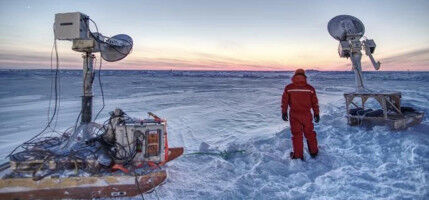
UCalgary expedition, with NASA, Canadian and European space agencies, sets out to better understand state of Arctic ice
Social Sciences - Mar 24
Young people's wellbeing is improving in Greater Manchester, major survey finds
Young people's wellbeing is improving in Greater Manchester, major survey finds

Environment - Mar 24
Australia's environment is improving but climate change is 'accelerating' damage to ecosystems and wildlife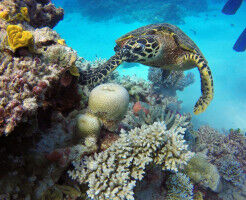
Australia's environment is improving but climate change is 'accelerating' damage to ecosystems and wildlife

Psychology - Mar 23
The grief myth: it doesn't come in stages or follow a checklist - like love, it endures
The grief myth: it doesn't come in stages or follow a checklist - like love, it endures


History & Archeology - Mar 23
The UV has played a part in the discovery of a 3,500-year-old loom that sheds light on key aspects of the Bronze Age textile revolution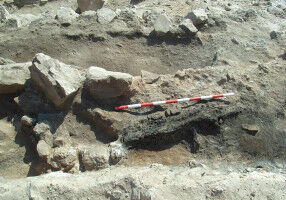
The UV has played a part in the discovery of a 3,500-year-old loom that sheds light on key aspects of the Bronze Age textile revolution
Innovation - Mar 23
The University of Valencia launches ClioViz, an open digital platform for accessing cultural heritage data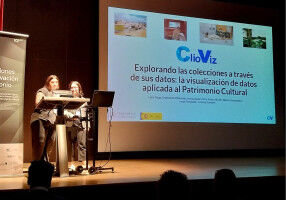
The University of Valencia launches ClioViz, an open digital platform for accessing cultural heritage data

Social Sciences - Mar 23
Study links higher concentration of pokie machines to increase in family and domestic violence
Study links higher concentration of pokie machines to increase in family and domestic violence
Health - Mar 23
Screening blitz could achieve cervical cancer elimination among Indigenous communities within a generation
Screening blitz could achieve cervical cancer elimination among Indigenous communities within a generation
Computer Science - Mar 20
New computer chip material inspired by the human brain could slash AI energy use
New computer chip material inspired by the human brain could slash AI energy use
news
University College London
Results 1521 - 1540 of 2143.
Health - Administration - 08.03.2018
Few global health organisations promote gender equality
Only a select group of the world's top global health organisations have placed gender equality at the centre of their operations, according to a new report involving UCL researchers. The findings come from the new research and accountability initiative, Global Health 50/50, part funded by Wellcome and co-led by Professor Sarah Hawkes of UCL's Centre for Gender and Global Health and Dr Kent Buse of UNAIDS.
Health - Administration - 08.03.2018
Study analyses how far people will travel for specialist cancer care
People are willing to travel 75 minutes longer for specialist cancer surgery if it reduces their risk of complications by 1%, according to new UCL-led research. The study, published today in the British Journal of Surgery, and funded by the NIHR Health Services and Delivery Research Programme, analysed patients' and health professionals' preferences for centralising specialist cancer surgery services.
Life Sciences - Environment - 07.03.2018
Animals shield their families from a harsh world
Animals living in volatile habitats can gain major evolutionary benefits by shielding their families from the changing environment, suggests research from UCL, the University of Bristol and University of Exeter. In a study , biologists investigated an overlooked reason for widespread cooperation amongst animals and found that when their environment is prone to fluctuate unexpectedly, staying at home to help raise relatives can be much better than going solo.
Life Sciences - Health - 06.03.2018
Rigor mortis in worms offers new insight into death
A dying worm experiences rigor mortis early in the death process, rather than after the main event as it is for humans, according to a new study by an international team of scientists at UCL and Washington University School of Medicine in St. Louis. The study, published in the journal Cell Reports , is the first discovery of rigor mortis in worms and provides new insight into the process of 'organismal' death.
Physics - Chemistry - 26.02.2018
Supercomputer model reveals how sticky tape makes graphene
Scientists at UCL have explained for the first time the mystery of why adhesive tape is so useful for graphene production. The study, published in Advanced Materials , used supercomputers to model the process through which graphene sheets are exfoliated from graphite, the material in pencils. Graphene is known for being the strongest material in the world, lightweight and with extraordinary electrical, thermal and optical properties.
Life Sciences - History & Archeology - 22.02.2018
Beaker culture in Britain came about through large-scale migration
Beaker pottery and culture spread through large-scale migration of people and through the exchange of new ideas, according to new research by an international team involving UCL scientists. The study involved analysis of ancient-DNA data from 400 prehistoric skeletons drawn from sites across Europe. It is the largest study of ancient human DNA ever conducted.
Health - 20.02.2018
Light exercise may lower death risk in older men
Clocking up just a few minutes at a time of any level of physical activity, including of light intensity, is linked to a lower risk of death in older men, suggests UCL-led research. The study, which was published in the British Journal of Sports Medicine , found that although there were greater benefits from doing moderate or more intense activity, even light intensity physical activity lowered the risk of death.
Health - Life Sciences - 16.02.2018
Regional brain shrinkage in MS predicts disability
A UCL-led research team has identified the pattern of brain tissue loss in multiple sclerosis, enabling improved prediction of disability progression. The study, published in Annals of Neurology , was one of the largest brain imaging studies ever conducted investigating multiple sclerosis (MS). "It's well known that brain atrophy occurs in people with MS and varies by region, but we typically only measure the shrinkage of the whole brain.
Environment - 16.02.2018
Laser technology reveals the weight of some of UK’s and world’s biggest trees
New laser scanning technology is being used by UCL scientists to provide fresh and unprecedented insights into the structure and mass of trees, a development that will help plot how much carbon they absorb and how they might respond to climate change. Two studies, published today (Friday) by the Royal Society, by researchers at UCL and the universities of Oxford, Sonoma State, Ghent and Wageningen, reveal the technology has captured the 3D structure of individual trees in ways they have never been seen before.
Health - Life Sciences - 15.02.2018
UCL cancer trials to get £9m funding boost
Cancer Research UK is planning to invest nearly £9m over the next five years into research at the Cancer Research UK & UCL Cancer Trials Centre. The announcement is part of a £45 million investment into Cancer Research UK's network of clinical trials units across the UK, one of the charity's largest investments in clinical research to date.
Life Sciences - Health - 15.02.2018
Amyloid protein transmission through neurosurgery
Amyloid beta pathology - protein deposits in the brain - might have been transmitted by contaminated neurosurgical instruments, suggests a new UCL-led study. For the paper, published today in Acta Neuropathologica , researchers studied the medical records of four people who had brain bleeds caused by amyloid beta build-up in the blood vessels of the brain.
Life Sciences - Mechanical Engineering - 14.02.2018
Tissue mechanics essential for cell movement
Cells that form facial features need surrounding embryonic tissues to stiffen so they can move and develop, according to new UCL-led research. The discovery has important implications for understanding the causes of facial defects which account for a third of all birth defects globally (3.2 million each year) and are the primary cause of infant mortality.
History & Archeology - Environment - 13.02.2018
Citrus fruit peel offers new evidence on early cultivation
Citrus fruit was being cultivated in India in the Late Neolithic period and in southern Thailand in the Iron Age, according to new findings by archaeologists at UCL and Peking University, Beijing. Citrus fruit are widespread and well known nearly everywhere today, but very little is known about how they were domesticated and diversified.
Health - 13.02.2018
North-south divide revealed as prescription of opioid drugs rise
The prescription of opioid drugs by GPs in England is steadily rising, especially in more deprived communities, even though they can cause complications and adverse effects and do not work for chronic pain, a UCL study has revealed. The study, led by Dr Luke Mordecai, a pain research fellow at University College London Hospital (UCLH) found that over a 43 month period between 2010 and 2014 there was a rise in opioid prescribing.
Health - Life Sciences - 13.02.2018
’Off the shelf’ living artificial tissues could repair severe nerve injuries
Severe nerve damage has been successfully repaired in the laboratory using a new living artificial nerve tissue developed by UCL, ReNeuron and Sartorius Stedim Biotech. It opens up the possibility of a new 'off the shelf', universal therapy to improve the treatment of peripheral nerve injuries by removing the need for nerve grafts which cause additional damage and personalised stem cell therapies which take weeks to prepare.
Life Sciences - History & Archeology - 07.02.2018
Face of first Brit revealed
The face of 'Cheddar Man', Britain's oldest nearly complete skeleton at 10,000 years old, is revealed for the first time and with unprecedented accuracy by UCL and Natural History Museum researchers. The results indicate that Cheddar Man had blue eyes, dark coloured curly hair and 'dark to black' skin pigmentation.
Environment - Life Sciences - 06.02.2018
New alien species invasions still rising globally
Up to 16% of all species on Earth could qualify as potential alien species and if they invade new regions, impacts will be difficult to predict, according to new research involving UCL. The study shows that the number of newly emerging alien species - those never before encountered as aliens - continues to rise, posing a significant challenge to biosecurity interventions worldwide.
Life Sciences - Chemistry - 05.02.2018
When did flowers originate?
Flowering plants likely originated between 149 and 256 million years ago according to new UCL-led research. The study, published today in New Phytologist by researchers from the UK and China, shows that flowering plants are neither as old as suggested by previous molecular studies, nor as young as a literal interpretation of their fossil record.
Health - Life Sciences - 05.02.2018
Memory loss identified years before Alzheimer’s symptoms appear
A UCL-led team has developed a cognitive test to detect subtle memory deficits years before Alzheimer's disease symptoms develop, set out in a new paper published in The Lancet Neurology. The study involved 21 people who carry the mutation for early onset Alzheimer's disease who have not shown any symptoms based on standard cognitive tests, alongside 14 controls.
Social Sciences - Health - 25.01.2018
Racism linked to uptake of smoking in young people
Adolescents who have experienced some form of racism between the ages of 11 and 23 are more likely to take up smoking than those who have not, according to a new study led by King's College London involving UCL. The study, analysed questionnaire and interview data from the Determinants of young Adult Social well-being and Health (DASH) study, the UK's largest longitudinal study of ethnically diverse young people.


Environment - Today
UCalgary expedition, with NASA, Canadian and European space agencies, sets out to better understand state of Arctic ice
UCalgary expedition, with NASA, Canadian and European space agencies, sets out to better understand state of Arctic ice
Social Sciences - Mar 24
Young people's wellbeing is improving in Greater Manchester, major survey finds
Young people's wellbeing is improving in Greater Manchester, major survey finds
Environment - Mar 24
Australia's environment is improving but climate change is 'accelerating' damage to ecosystems and wildlife
Australia's environment is improving but climate change is 'accelerating' damage to ecosystems and wildlife
Psychology - Mar 23
The grief myth: it doesn't come in stages or follow a checklist - like love, it endures
The grief myth: it doesn't come in stages or follow a checklist - like love, it endures
History & Archeology - Mar 23
The UV has played a part in the discovery of a 3,500-year-old loom that sheds light on key aspects of the Bronze Age textile revolution
The UV has played a part in the discovery of a 3,500-year-old loom that sheds light on key aspects of the Bronze Age textile revolution
Innovation - Mar 23
The University of Valencia launches ClioViz, an open digital platform for accessing cultural heritage data
The University of Valencia launches ClioViz, an open digital platform for accessing cultural heritage data
Social Sciences - Mar 23
Study links higher concentration of pokie machines to increase in family and domestic violence
Study links higher concentration of pokie machines to increase in family and domestic violence
Health - Mar 23
Screening blitz could achieve cervical cancer elimination among Indigenous communities within a generation
Screening blitz could achieve cervical cancer elimination among Indigenous communities within a generation
Computer Science - Mar 20
New computer chip material inspired by the human brain could slash AI energy use
New computer chip material inspired by the human brain could slash AI energy use