

Environment - Today
UCalgary expedition, with NASA, Canadian and European space agencies, sets out to better understand state of Arctic ice
UCalgary expedition, with NASA, Canadian and European space agencies, sets out to better understand state of Arctic ice
Social Sciences - Mar 24
Young people's wellbeing is improving in Greater Manchester, major survey finds
Young people's wellbeing is improving in Greater Manchester, major survey finds

Environment - Mar 24
Australia's environment is improving but climate change is 'accelerating' damage to ecosystems and wildlife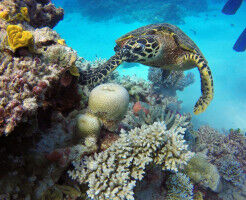
Australia's environment is improving but climate change is 'accelerating' damage to ecosystems and wildlife

Psychology - Mar 23
The grief myth: it doesn't come in stages or follow a checklist - like love, it endures
The grief myth: it doesn't come in stages or follow a checklist - like love, it endures



History & Archeology - Mar 23
The UV has played a part in the discovery of a 3,500-year-old loom that sheds light on key aspects of the Bronze Age textile revolution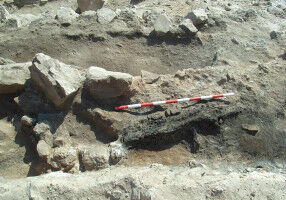
The UV has played a part in the discovery of a 3,500-year-old loom that sheds light on key aspects of the Bronze Age textile revolution
Innovation - Mar 23
The University of Valencia launches ClioViz, an open digital platform for accessing cultural heritage data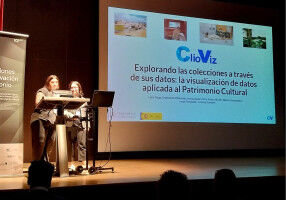
The University of Valencia launches ClioViz, an open digital platform for accessing cultural heritage data

Social Sciences - Mar 23
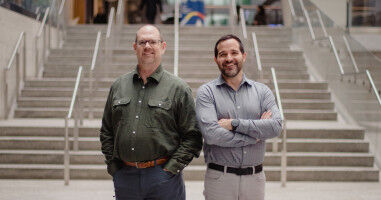
Study links higher concentration of pokie machines to increase in family and domestic violence
Study links higher concentration of pokie machines to increase in family and domestic violence
Health - Mar 23
Screening blitz could achieve cervical cancer elimination among Indigenous communities within a generation
Screening blitz could achieve cervical cancer elimination among Indigenous communities within a generation

Computer Science - Mar 20
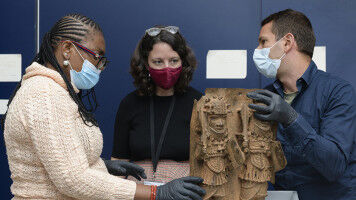
New computer chip material inspired by the human brain could slash AI energy use
New computer chip material inspired by the human brain could slash AI energy use
news
University College London
Results 1601 - 1620 of 2143.
Health - Psychology - 05.07.2017
Being on a zero-hours contract is bad for your health, new study reveals
Young adults who are employed on zero-hours contracts are less likely to be in good health, and are at higher risk of poor mental health than workers with stable jobs. Researchers from the Centre for Longitudinal Studies at UCL Institute of Education (IOE) analysed data on more than 7,700 people living in England who were born in 1989-90 and are being followed by a study called Next Steps.
Health - Administration - 04.07.2017
End of life support is lacking for homeless people
A UCL-led study found that homeless people who are terminally ill are falling between cracks in services, and not able to access the same level of support as others. Researchers from the UCL Marie Curie Palliative Care Research Department, Pathway, St Mungo's and Coordinate My Care worked with homeless people and care professionals and found that many homeless people who may be approaching the end of their lives are living in homeless hostels.
Health - 03.07.2017
New HIV self-testing kit aims to increase diagnosis rates
A new study from UCL, London School of Hygiene & Tropical Medicine, and Public Health England seeks to discover whether providing free HIV self-tests to men, transgender men and transgender women who have sex with men could reduce the number of people who have undiagnosed HIV. Funded by the National Institute for Health Research (NIHR), SELPHI is an internet-based study where respondents will be asked to register their details through an online survey that is being promoted through apps such a Grindr and Hornet, social media sites and the gay press.
Career - 28.06.2017
Artists and architects think differently compared to other people
Architects, painters and sculptors conceive of spaces in different ways from other people and from each other, finds a new study by UCL and Bangor University researchers. When asked to talk about images of places, painters are more likely to describe the depicted space as a two-dimensional image, while architects are more likely to focus on paths and the boundaries of the space.
Architecture & Buildings - 28.06.2017
High-rise buildings much more energy-intensive than low-rise
Office and residential buildings use more energy per square metre, the taller they are, according to new research from UCL. Researchers at UCL's Energy Institute have found that electricity use, per square metre of floor area, is nearly two and a half times greater in high-rise office buildings of 20 or more storeys than in low-rise buildings of 6 storeys or less.
Health - Life Sciences - 26.06.2017
Sex differences important for medical research
The sex of animals frequently has an effect in biomedical research and therefore should be considered in scientific studies, according to UCL scientists. In the largest study of its kind, researchers from 10 centres that form the International Mouse Phenotyping Consortium (IMPC) found that differences between male and female mice had significant effects that could impact research results in many biomedical studies.
Psychology - Career - 22.06.2017
Authenticity key to landing a new job
At job interviews, relax and be yourself - if you're good, being yourself may be the best way to secure a job offer, according to a new study involving UCL researchers. Published today in the Journal of Applied Psychology , the study by UCL, Bocconi University, Hong Kong Polytechnic University, and London Business School, found that high-quality candidates who strive to present themselves accurately during the interview process significantly increase the likelihood of receiving a job offer.
Health - Life Sciences - 20.06.2017
Genetic modifier for Huntington’s disease progression identified
A team led by UCL and Cardiff University researchers has developed a novel measure of disease progression for Huntington's disease, which enabled them to identify a genetic modifier associated with how rapidly the disease progresses. 'We've identified a gene that could be a target for treating Huntington's disease.
Life Sciences - 16.06.2017
Egocentric hearing: Study clarifies how we can tell where a sound is coming from
A new UCL and University of Nottingham study has found that most neurons in the brainâ?'s auditory cortex detect where a sound is coming from relative to the head, but some are tuned to a sound sourceâ''s actual position in the world. The study, published in PLOS Biology , looked at whether head movements change the responses of neurons that track sound location.
Health - Life Sciences - 08.06.2017
Blood test can predict onset and track progression of Huntingtonâ? s disease
The first blood test that can predict the onset and progression of Huntingtonâ??s disease has been identified by a UCL-led study. The researchers say their findings, published in Lancet Neurology , should help test new treatments for the genetic brain disorder, which is fatal and currently incurable.
Health - Life Sciences - 07.06.2017
Further evidence statins could help control multiple sclerosis
A dose of the drug simvastatin results in cognitive improvement in people with secondary progressive multiple sclerosis (SPMS), according to research published in the Lancet Neurology . Researchers, led by Dr Jeremy Chataway (UCL Institute of Neurology), previously reported the effect of a high dosage of simvastatin, a type of statin widely used to reduce cholesterol and already known to be safe, on brain atrophy (shrinkage) in SPMS in 2014.
Agronomy & Food Science - Health - 02.06.2017
Children with bedroom TVs at significantly higher risk of being overweight
A UCL-led study of over 12,000 young children in the UK has revealed that 11-year-olds who had TVs in their bedroomâ'at ageâ'7 had a significantly higher body mass (BMI) and fat mass (FMI) and were more likely to be overweight compared to children who did not have a bedroom TV. Girls who had a TV in their bedroom at age 7 were at an approximately 30% higher risk of being overweight at age 11 compared to children who did not have a TV in their bedroom, and for boys the risk was increased by about 20%.
Life Sciences - 01.06.2017
How our brains integrate online reviews into our own product preferences
UCL researchers have identified how the human brain integrates social information when a person decides how much they like something, by studying how user reviews on Amazon influence how people rate the products. The study, published in the Journal of Neuroscience and funded by Wellcome, found that people take into account not only a product's average rating, but also the number of reviews, as their brains factor in the reliability of social information.
Health - 31.05.2017
Adding tobacco to cannabis doesn’t affect the high, but impacts memory and heart
Adding tobacco to a cannabis joint doesn't improve the experience of being stoned, but it does reduce the memory impairment inherent to cannabis use, finds a new UCL study published in Psychological Medicine . The study is the first to look at how cannabis and tobacco interact when mixed together in joints, which is how the majority of cannabis users in Europe consume the drug.
Health - Mechanical Engineering - 31.05.2017
Motor neuron disease discovery offers new insights into potential treatment targets
Scientists have discovered how certain forms of motor neuron disease begin and progress at cellular and molecular levels, revealing potential new ways to slow down or even stop this process. The team are already working closely with pharmaceutical companies to use this knowledge to develop new treatments for motor neuron disease and other neurodegenerative conditions.
Life Sciences - 26.05.2017
People match confidence levels to make decisions in groups
When trying to make a decision with another person, people tend to match their confidence levels, which can backfire if one person has more expertise than the other, finds a new study led by UCL and University of Oxford researchers. The study, published in Nature Human Behaviour , shows that the degree of stated confidence in one's opinion is infectious when working in a team, which can blur the boundary between well-informed and poorly-informed opinion, sometimes to the detriment of group decision making.
Chemistry - Life Sciences - 23.05.2017
Himalayan powerhouses: how Sherpas have evolved superhuman energy efficiency
Sherpas have evolved to become superhuman mountain climbers, extremely efficient at producing the energy to power their bodies even when oxygen is scarce, suggests a new study led by University of Cambridge and UCL researchers, published today in the Proceedings of National Academy of Sciences (PNAS) .
Chemistry - Life Sciences - 19.05.2017
How RNA formed at the origins of life
A single process for how a group of molecules called nucleotides were made on the early Earth, before life began, has been suggested by a UCL-led team of researchers. Nucleotides are essential to all life on Earth as they form the building blocks of DNA or RNA, and understanding how they were first made is a long-standing challenge that must be resolved to elucidate the origins of life.
Social Sciences - 19.05.2017
Grammar schools fail to help middle-income families
Selective education harms the university prospects of bright pupils who just miss out on a place at a grammar school, according to new research from the UCL Institute of Education (IOE), University of Bristol and University of Warwick. Primary school children in areas with a selective education system who perform well in Key Stage 2 assessments but do not manage to get into a grammar school are 3 percentage points less likely to attend university and 8 percentage points less likely to attend a high quality university compared to similar peers in non-selective areas.
Health - 15.05.2017
BMI not the only reliable indicator of heart disease
Waist-to-hip ratio may be a stronger indicator of some cardiovascular illnesses than the commonly-used measure BMI, according to a new UCL-led study. Previous research has concentrated on the relationship between BMI and risk of cardiovascular illnesses. However, the large collaborative study, published today in Circulation, finds waist-to-hip ratio may be a stronger predictor of health issues such as coronary heart disease and stroke.


Environment - Today
UCalgary expedition, with NASA, Canadian and European space agencies, sets out to better understand state of Arctic ice
UCalgary expedition, with NASA, Canadian and European space agencies, sets out to better understand state of Arctic ice
Social Sciences - Mar 24
Young people's wellbeing is improving in Greater Manchester, major survey finds
Young people's wellbeing is improving in Greater Manchester, major survey finds
Environment - Mar 24
Australia's environment is improving but climate change is 'accelerating' damage to ecosystems and wildlife
Australia's environment is improving but climate change is 'accelerating' damage to ecosystems and wildlife
Psychology - Mar 23
The grief myth: it doesn't come in stages or follow a checklist - like love, it endures
The grief myth: it doesn't come in stages or follow a checklist - like love, it endures
History & Archeology - Mar 23
The UV has played a part in the discovery of a 3,500-year-old loom that sheds light on key aspects of the Bronze Age textile revolution
The UV has played a part in the discovery of a 3,500-year-old loom that sheds light on key aspects of the Bronze Age textile revolution
Innovation - Mar 23
The University of Valencia launches ClioViz, an open digital platform for accessing cultural heritage data
The University of Valencia launches ClioViz, an open digital platform for accessing cultural heritage data
Social Sciences - Mar 23
Study links higher concentration of pokie machines to increase in family and domestic violence
Study links higher concentration of pokie machines to increase in family and domestic violence
Health - Mar 23
Screening blitz could achieve cervical cancer elimination among Indigenous communities within a generation
Screening blitz could achieve cervical cancer elimination among Indigenous communities within a generation
Computer Science - Mar 20
New computer chip material inspired by the human brain could slash AI energy use
New computer chip material inspired by the human brain could slash AI energy use